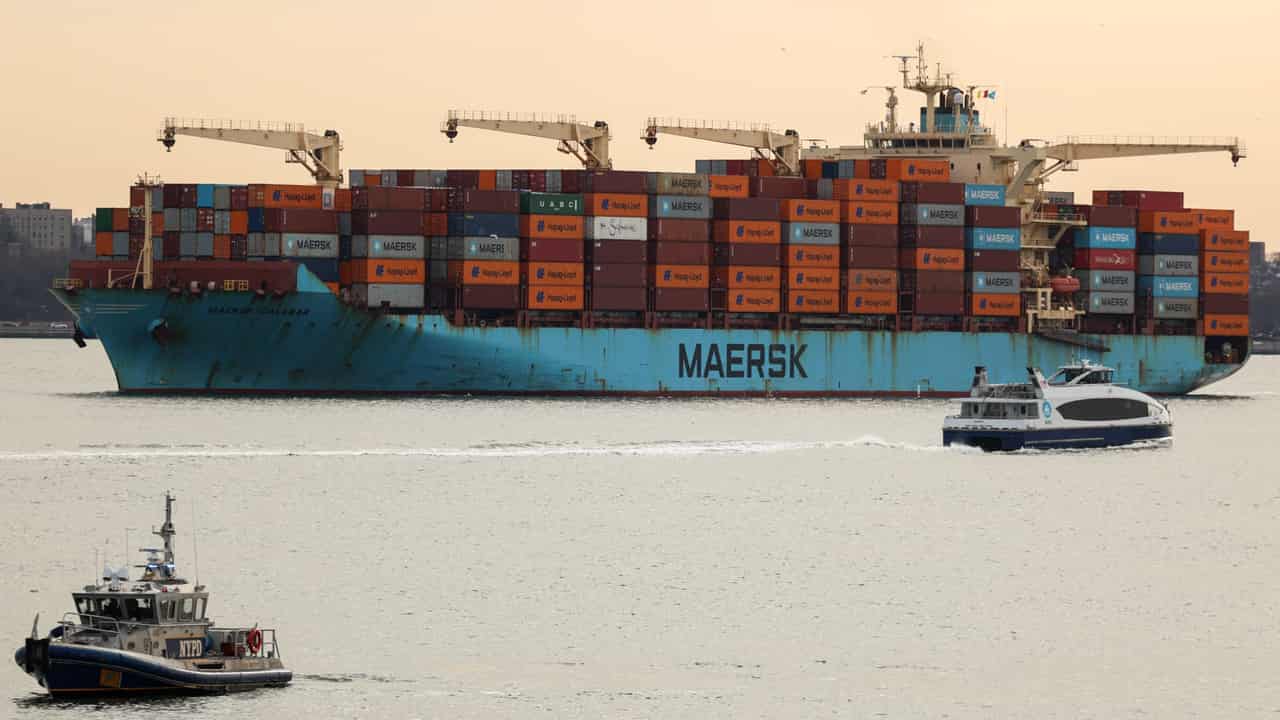
Maersk raises profit outlook again on strong demand, freight rates
window 24h
IN SHORT
Global shipping companies Maersk and Hapag-Lloyd report contrasting financial results, influenced by distinct market dynamics. Maersk has raised its profit outlook for the second time this year, driven by robust global container demand and elevated freight rates attributed to port congestion. In contrast, Hapag-Lloyd experienced a significant financial impact of $600 million in the second quarter due to the Middle East conflict and the closure of the Strait of Hormuz, which led to a substantial drop in its net profit.
✉Newsletter
PiQ Daily
Pick your topics. Get only what matters, on your cadence.
Key Numbers
$3.0 billionMaersk Q2 operating profit
$600 millionHapag-Lloyd financial impact from Middle East crisis
$83 millionHapag-Lloyd Q2 net profit
$306 millionHapag-Lloyd Q2 net profit year-on-year comparison
Who's Involved
Maersk
Danish shipping giant raising profit outlook
Vincent Clerc
CEO of Maersk citing market factors
Hapag-Lloyd
Leading container shipping firm impacted by Middle East crisis
1 / 2
Key facts
Maersk increased its full-year earnings guidance for the second time.
Maersk reported a Q2 operating profit of $3.0 billion.
Maersk CEO Vincent Clerc cited resilient global container demand and surging freight rates.
Port congestion is a key factor driving freight rates for Maersk.
Hapag-Lloyd reported a $600 million financial impact in the second quarter.
The Middle East conflict and closure of the Strait of Hormuz impacted Hapag-Lloyd.
Hapag-Lloyd's net profit fell to $83 million from $306 million year-on-year.
The Strait of Hormuz closure is a significant factor for Hapag-Lloyd.
Global shipping giants Maersk and Hapag-Lloyd present divergent financial outcomes, shaped by differing market pressures. Maersk, the Danish shipping conglomerate, has once again boosted its full-year earnings forecast, marking the second upward revision. The company announced a second-quarter operating profit of $3.0 billion, exceeding analyst expectations. CEO Vincent Clerc attributed this strong performance to sustained global container demand and sharply rising freight rates. These rate increases are largely a consequence of ongoing port congestion, which is disrupting supply chains and increasing transit times.
Conversely, Hapag-Lloyd, another major player in the container shipping industry, reports a substantial financial setback stemming from geopolitical instability in the Middle East. The company detailed a $600 million financial impact in the second quarter, directly linked to the conflict in the region and the consequential closure of the Strait of Hormuz. This disruption significantly affected Hapag-Lloyd's profitability, with net profit declining to $83 million from $306 million in the same period last year. The closure of this critical shipping lane forces vessels to take longer, more expensive routes, impacting operational costs and delivery schedules.
The contrasting results highlight the complex and often bifurcated nature of the global shipping market. While Maersk benefits from general supply chain pressures and strong demand, Hapag-Lloyd is directly contending with the severe operational and financial consequences of regional conflict. The situation underscores how geopolitical events can create distinct challenges and opportunities within the same industry, affecting different companies based on their operational routes and exposure to specific trade disruptions.
↳ Why This Matters
Global shipping giants Maersk and Hapag-Lloyd present divergent financial outcomes, shaped by differing market pressures. Maersk, the Danish shipping conglomerate, has once again boosted its full-year earnings forecast, marking the second upward revision. The company announced a second-quarter operating profit of $3.0 billion, exceeding analyst expectations. CEO Vincent Clerc attributed this strong performance to sustained global container demand and sharply rising freight rates. These rate increases are largely a consequence of ongoing port congestion, which is disrupting supply chains and increasing transit times.
Frequently asked questions
Maersk's operating profit before interest, taxes, depreciation, and amortization (EBITDA) for the second quarter was $3.0 billion.
Yes, Maersk raised its full-year earnings guidance for the second time this year.
Strong demand, particularly in Asia, and disruptions in global trade that pushed up freight rates contributed to the company's performance.
Yes, Maersk and Hapag-Lloyd have announced they will resume some services through the Suez Canal as part of a gradual return, contingent on stable security conditions.
What Happens Next
01Maersk will continue to monitor Red Sea security conditions.
02Maersk and Hapag-Lloyd will assess security for resuming Suez Canal services.
03Analysts will evaluate the sustainability of current freight rates.
Get the newsletter.
Pick the topics you actually care about. We'll email when there's news worth your time, on the cadence you choose. Cancel any time from your account.