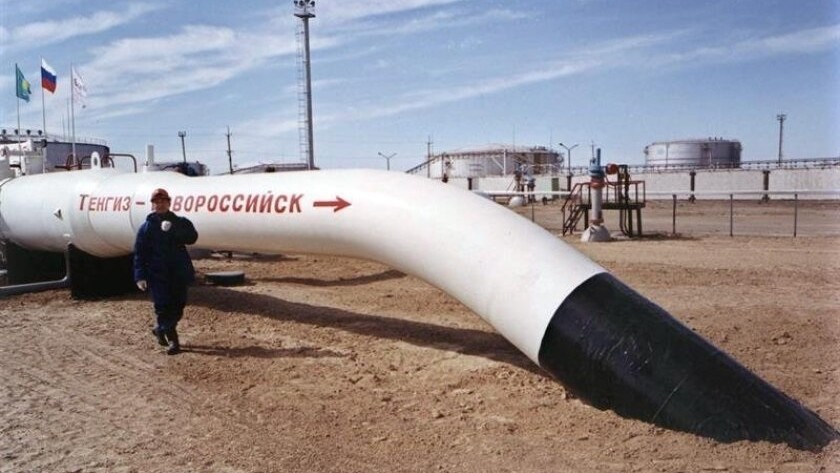
Key facts
- Kazakhstan's oil exports are heavily reliant on the Caspian Pipeline Consortium (CPC), which transports crude to a Black Sea terminal near Novorossiysk, Russia.
- Ukrainian drone attacks on the Novorossiysk region and tankers have led to repeated suspensions of CPC loadings.
- Tanker owners are reluctant to call at the CPC terminal due to security risks, effectively halting exports.
- Europe, a major recipient of CPC Blend, faces potential supply shortages and higher prices.
- Alternative export routes for Kazakhstan are insufficient to compensate for CPC disruptions.
- Major Kazakh oil fields, including Tengiz and Karachaganak, have experienced recurring operational failures and production cuts.
Kazakhstan's oil exports are facing severe disruptions due to Ukrainian drone attacks targeting Russian infrastructure, particularly the Caspian Pipeline Consortium (CPC) terminal near Novorossiysk. The CPC pipeline is crucial, carrying 80% of Kazakhstan's crude exports to international markets, primarily Europe.
Repeated drone strikes on the Novorossiysk region and tankers have led to the suspension of CPC loadings, with tanker owners refusing to call at the terminal due to security concerns. This has effectively halted a significant portion of Kazakhstan's oil trade, impacting European refiners who rely on CPC Blend for its specific quality profile.
Kazakhstan has limited viable alternatives. The Atyrau–Samara pipeline and the Kazakhstan–China pipeline have insufficient capacity or are already integrated with Russian flows. The Caspian Sea route is constrained by shallow waters and inadequate port and tanker infrastructure. Even expanded capacity would only replace a fraction of CPC flows.
Adding to the crisis, major Kazakh oil fields are experiencing recurring operational disruptions. A drone strike on Orenburg reduced output from the Karachaganak field, while a fire and power outage at the Tengiz field previously halted production. These field-level issues compound the export infrastructure problems.
The confluence of these factors has led to a significant drop in Kazakhstan's total crude oil production, creating a three-part oil crisis that threatens not only the country's oil and gas industry but also its state budget, which relies heavily on oil revenues.