Key facts
- Oil prices surged on Thursday, reversing earlier declines.
- Prices remain lower than the previous week, despite the recent spike.
- Tensions in the Middle East escalated, contributing to the price increase.
- Mojtaba Khamenei was named Iran's new supreme leader following his father's death.
- The U.S. was set to resume its naval blockade of the Strait of Hormuz.
Oil prices surged on Thursday, reversing earlier declines that followed President Donald Trump's announcement of resuming negotiations with Iran. Despite the recent spike, prices remain lower than the previous week, according to market analysts.
Escalating tensions in the Middle East have contributed to the price increase, with Brent crude futures reaching $84.50 a barrel on Tuesday, marking a roughly 12% rise in three days and the highest level since June 15. However, prices retreated from their peak after Trump backed off a threat to impose a 20% toll on cargo passing through the Strait of Hormuz.
The U.S. was set to resume its naval blockade of the Strait of Hormuz, a critical shipping lane for approximately one-fifth of the global oil supply, after Iran fired upon oil tankers in the waterway. The death of Iran's supreme leader, Ayatollah Ali Khamenei, and the subsequent naming of Mojtaba Khamenei to the position, have also added to regional tensions.
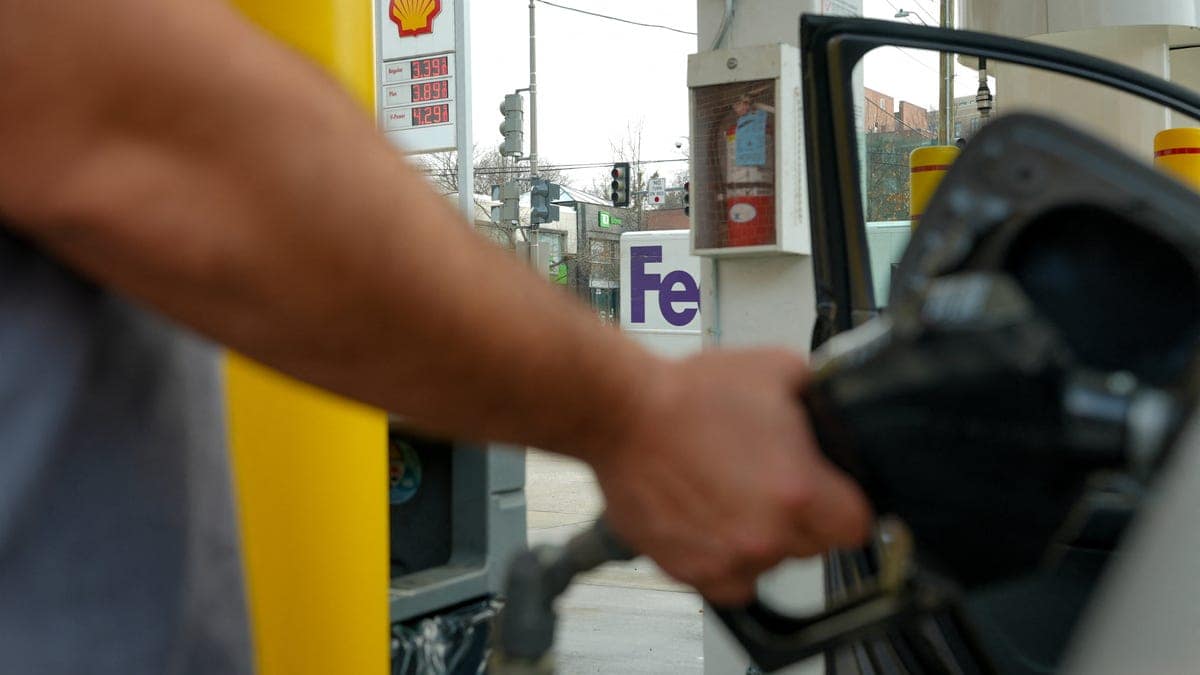
While oil prices have risen, the average price of a gallon of gas currently stands at $3.85, a 5% decrease from the previous month, though still nearly 30% above pre-war levels. Analysts predict that the average national gas price could exceed $4 per gallon within the next week if the situation continues to escalate.