Key facts
- Durian prices in Malaysia have plummeted due to a significant oversupply.
- The oversupply is attributed to a decade-long expansion of durian farming, driven by high demand from China.
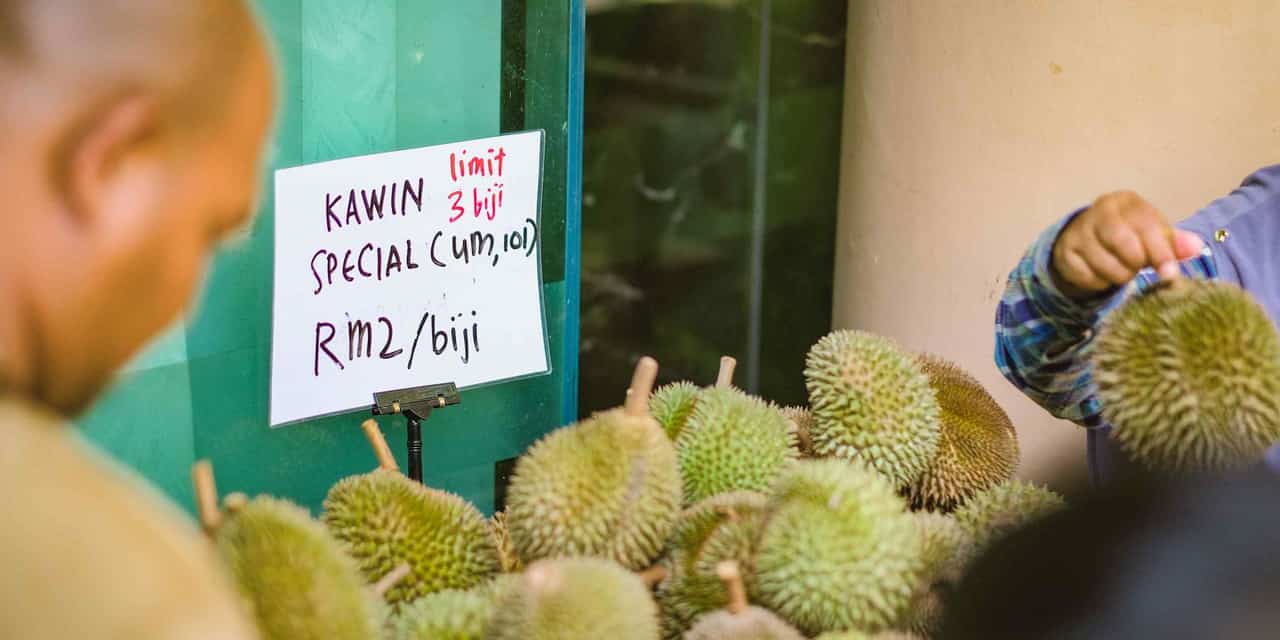
- Consumers in Malaysia and Singapore are benefiting from heavily discounted durians, with some stalls giving fruit away for free.
- Malaysian farmers are experiencing substantial profit drops, with some reporting a 60% decrease.
- A shift in Chinese consumer preference towards fresh durian exports, rather than frozen, is creating logistical challenges.
- Increased competition from other Southeast Asian countries exporting fresh durians is also impacting the market.
Malaysia's durian industry is grappling with a severe price collapse, described as a 'durian tsunami,' driven by an unprecedented oversupply. This situation stems from a decade-long expansion of durian cultivation, particularly for premium varieties like Musang King, spurred by soaring demand from China.
Farmers who invested heavily in durian farming, sometimes converting land from rubber or oil palm, are now facing the consequences as newly mature trees flood the market. Prices have plummeted, with some farmers selling their produce at half the previous season's rates or even giving it away for free. Retailers in Malaysia and Singapore are offering significant discounts, leading to long queues of consumers eager to purchase the fruit at lower prices.
Adding to the challenges, a shift in Chinese consumer preferences towards fresh durian imports over frozen products has disrupted traditional export channels. Limited flight capacity for fresh produce and increased competition from regional exporters in Thailand, Vietnam, and Indonesia are further pressuring Malaysian growers. Some farmers also report that a portion of the fruit entering the market is of lower quality and not suitable for export, exacerbating the glut.
Despite the current market difficulties, demand from Chinese consumers for durian has not fundamentally faded. However, economic slowdowns have made buyers more selective and price-sensitive. The long maturation period for durian trees, typically five to 10 years, forces farmers to make long-term forecasts that have proven inaccurate in the face of changing market dynamics and increased production.