Key facts
- China's heavy electric truck exports more than doubled in the four months following February 28 compared to the previous year.
- Shipments to South Asia increased over fivefold, and to Southeast Asia nearly tripled.
- Higher diesel prices in countries like Sri Lanka and the Philippines, exacerbated by the Iran war, are driving demand for e-trucks.
- Sany, a leading electric heavy truck manufacturer, is focusing on developing cheaper models for Southeast Asia.
- China's e-truck fleet is estimated to save 141 million barrels of oil this year.
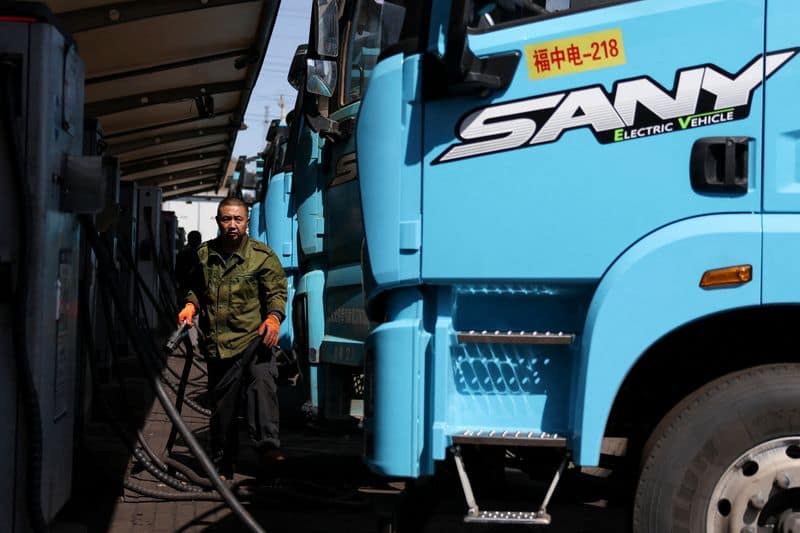
China's electric truck exports to Asian countries have seen a significant surge, driven by rising fuel costs resulting from the conflict in Iran. This trend is accelerating regional electrification efforts as nations seek alternatives to diesel.
In the four months following the February 28 launch of the war by the U.S. and Israel, China's exports of heavy electric trucks more than doubled year-on-year, reaching 16,823 vehicles. Half of these exports were destined for South and Southeast Asia, with shipments to South Asia increasing more than fivefold and to Southeast Asia nearly tripling.
The Strait of Hormuz closure has led to substantial increases in diesel prices in oil-dependent regions like South and Southeast Asia. For instance, diesel prices in Sri Lanka rose 48% and in the Philippines by 57% since the war began, according to GlobalPetrolPrices.com. China, the world's largest e-truck manufacturer, is capitalizing on this opening.
Zhaoting Yue, vice president of international marketing at Sany, stated that the war has opened doors to new markets. While current export volumes are relatively small compared to China's car and bike exports, sustained growth could significantly impact diesel consumption and carbon emissions.
China has experienced rapid adoption of e-trucks, with their share of truck sales rising from nearly zero in 2021 to 30% last year. Sany, previously focused on Europe, is now pivoting to Southeast Asia and developing more affordable models. Yue noted that the payback period for an electric heavy truck investment has shortened from 28 months to 18 months due to higher oil prices. Sany anticipates this rapid growth to continue for at least another year in Asia, Africa, and Latin America.
While electric delivery vans are common in the U.S. and Europe, the rollout of larger e-trucks has been slower. China's e-truck fleet is projected to save 141 million barrels of oil this year, representing over 3% of the country's total consumption. The Centre for Research on Energy and Clean Air estimates that Chinese e-truck exports are currently replacing fuel at an annual rate of 1.6 million barrels.
Challenges to e-truck adoption include higher initial purchase prices and the need for expanded charging infrastructure. In Australia, an e-truck can cost twice as much as its diesel equivalent, though fuel savings can offset this. Sany is addressing infrastructure concerns by offering integrated power generation, storage, and charging systems. The expansion of Chinese electric passenger car networks is also expected to support e-truck adoption.