Key facts
- The FAO is seeking $38.3 million to support Afghanistan's wheat harvest.
- Rising fertilizer prices, linked to the 2026 Middle East crisis, are impacting farmers.
- The support aims to help 600,000 farming households access fertilizer and certified wheat seed.
- Without adequate fertilizer, wheat yields could significantly decrease, impacting food availability.
- FAO will use a biometric registration and e-voucher platform to deliver subsidized inputs.
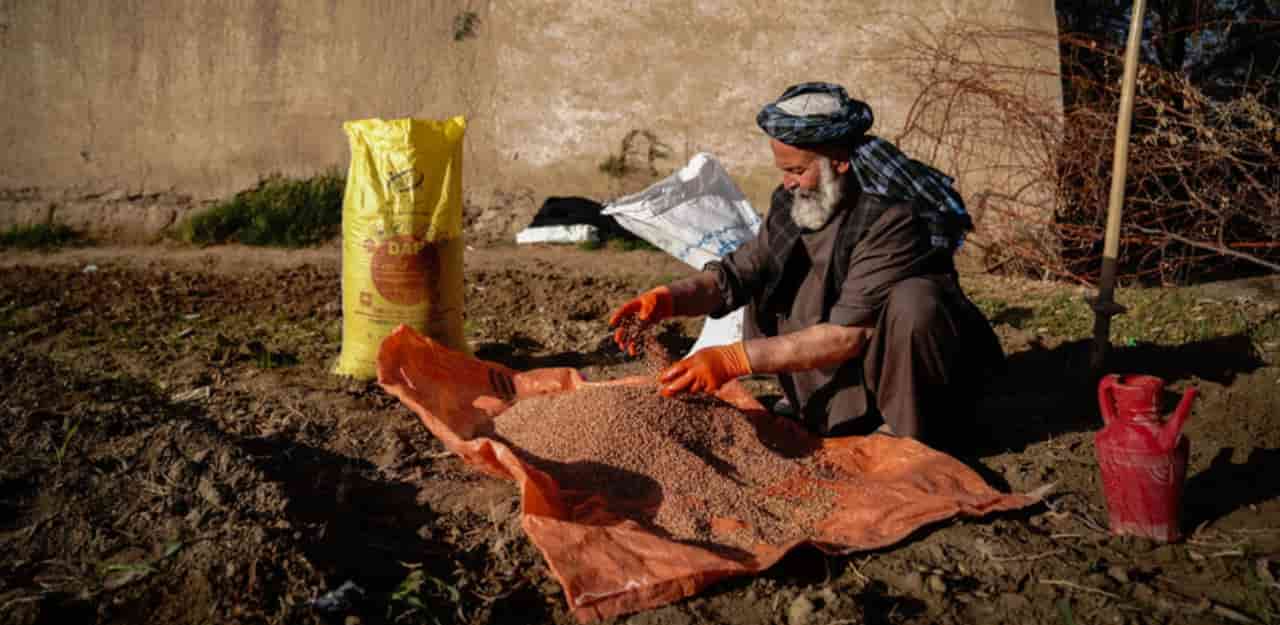
Rising fertilizer prices, exacerbated by global market disruptions stemming from the 2026 Middle East crisis, are jeopardizing Afghanistan's upcoming winter wheat harvest. The Food and Agriculture Organization of the United Nations (FAO) has launched an appeal for $38.3 million to provide essential fertilizer and certified wheat seed to up to 600,000 farming households.
Winter wheat is Afghanistan's primary staple crop, and its production is heavily reliant on diammonium phosphate (DAP) and urea. The surge in fertilizer costs means many farmers may be forced to reduce application rates or cultivate less land, potentially leading to lower yields, diminished household food security, and increased indebtedness. The impact is expected to disproportionately affect vulnerable groups, including women-headed households and food-insecure rural communities.
Richard Trenchard, FAO Representative in Afghanistan, stated that the issue is an "affordability crisis" rather than a supply shortage, as fertilizer is available but out of reach for many farmers. Farmers like Din Mohammad and Wakil in Nimroz province are already experiencing these difficulties, with informal credit arrangements disappearing and difficult choices arising between purchasing agricultural inputs and meeting immediate family needs.
FAO's intervention strategy involves targeted subsidies delivered through local private-sector suppliers, utilizing its Identification, Delivery and Empowerment Application (IDEA) platform for biometric farmer registration and e-voucher redemption. This approach aims to protect production while simultaneously strengthening agricultural markets. Over 100,000 farmers have already registered for the upcoming campaign, ensuring that support can be deployed efficiently.