Key facts
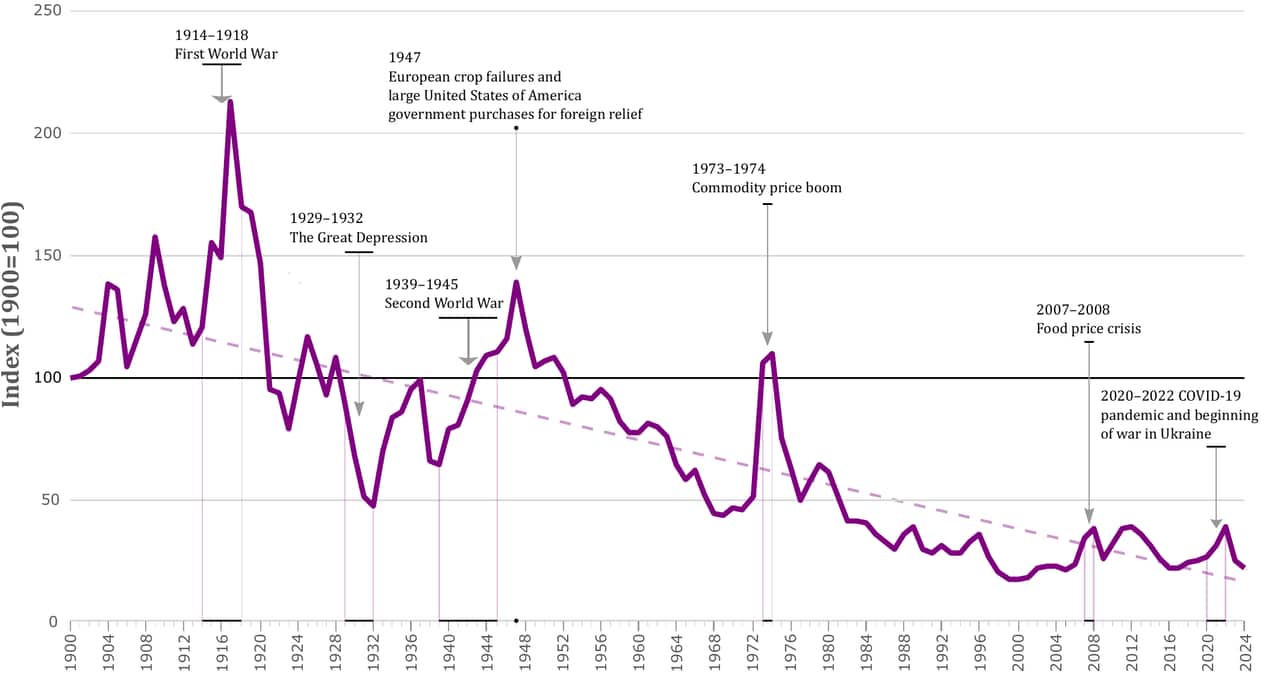
- Global food and agricultural markets are facing shocks with growing frequency and intensity.
- The FAO's SOCO 2026 report emphasizes the importance of international cooperation and trade networks for resilience.
- Countries with more diverse trade partners are better equipped to handle market disruptions.
- Export restrictions by producing nations can destabilize global markets and worsen food insecurity.
- Effective policy frameworks and integrated trade systems can mitigate the impact of shocks on food security.
Shocks to the global food and agricultural markets are increasing in frequency and intensity, according to a new report from the Food and Agriculture Organization of the United Nations (FAO). The State of Agricultural Commodity Markets (SOCO) 2026 report highlights that countries with diversified trade partners and strong international cooperation are better positioned to navigate these disruptions.
The value of global food and agricultural trade has surged fivefold since 2000 to approximately $2 trillion, integrating more countries into trade networks. The FAO emphasizes that bolstering resilience in the face of these shocks is a global concern. Crafting supportive policy frameworks, which necessitate international cooperation, has demonstrably positive effects in curbing price spikes and hunger consequences.
During the COVID-19 pandemic, fewer and shorter-lived export restrictions resulted in only 8 percent of globally traded calories being impacted, a significant decrease from the 16 percent affected during the 2007-08 period when a confluence of shocks led to a sharp rise in food commodity prices. The SOCO 2026 report analyzes how global markets can absorb disruptions and restore equilibrium following events such as extreme weather, socioeconomic crises, conflicts, pandemics, and energy price fluctuations.
Key findings indicate that better connectivity within trade networks strengthens buffering capacities, making countries that can source food from multiple partners more resilient. Conversely, when major producers implement export restrictions to protect domestic markets, they transfer instability to global markets and contribute to increased food insecurity worldwide. The report also notes that export volumes across bilateral trade links decline significantly after a shock, with effects fading within six months, and that shock-triggered price spikes can have persistent impacts without corresponding downward movements.
Food stocks are identified as an integral component of resilience strategies. While maintaining large buffer stocks for price stabilization is costly and fiscally unsustainable, smaller emergency food reserves integrated into social protection safety nets can effectively address food insecurity without distorting markets. The report's launch event included a panel discussion with representatives from Switzerland, Egypt, and Australia, alongside FAO officials.