Key facts
- Extreme heatwaves are impacting milk production for Parmigiano Reggiano cheese in Italy.
- Cows produce up to 10% less milk in temperatures exceeding 40 degrees Celsius.
- Drought conditions hinder the growth of grass and hay needed for cattle feed.
- Energy costs for farms and cheese aging warehouses have significantly increased.
- The Parmigiano Reggiano industry generates approximately €4.5 billion in annual revenue.
Extreme heatwaves are posing a significant threat to the production of Parmigiano Reggiano cheese in Italy's Emilia-Romagna region, a centuries-old industry vital to the local economy. Farmers are struggling with reduced milk yields and increased costs as they implement measures to protect their cattle from soaring temperatures.
Temperatures exceeding 40 degrees Celsius (104 degrees Fahrenheit) cause cows to lie down more, eat less, and produce up to 10% less milk, which is a primary ingredient for the cheese. The region's strict production rules require cows to be fed exclusively with local grass and hay. Drought conditions, exacerbated by the heat, make it difficult to produce sufficient hay, further impacting milk availability.
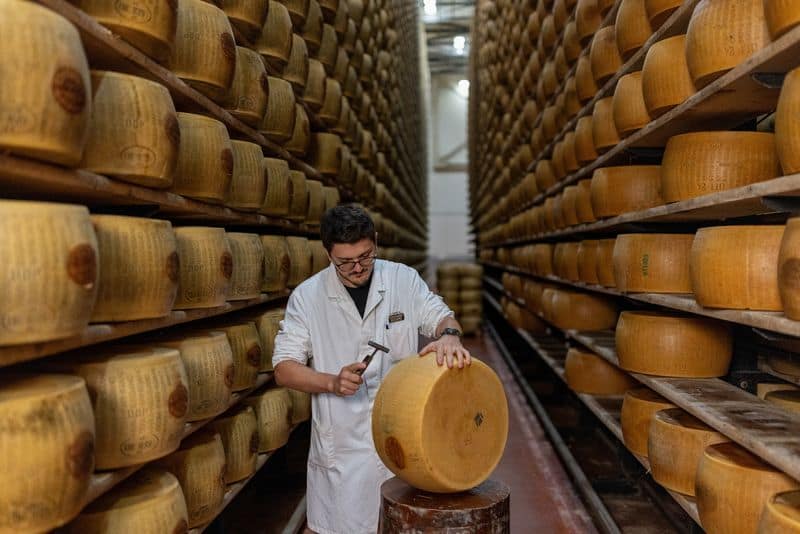
To mitigate the effects of the heat, farmers have installed fans and water-mist systems, leading to soaring energy costs. The warehouses where the cheese wheels are aged for at least 12 months, and sometimes much longer, are also facing higher energy bills. Magazzini Generali delle Tagliate (MGT), which operates warehouses in Reggio Emilia and Modena, reported a 30% increase in daily energy consumption during recent heatwaves. MGT has invested in improving cooling systems, boilers, insulation, and renewable energy production to enhance efficiency.
The Parmigiano Reggiano industry generates an estimated €4.5 billion ($5.15 billion) in revenue annually and employs thousands of people. Exports account for over 50% of its global sales, with the United States being the largest foreign market. Concerns are rising that prolonged and intense extreme weather events could impact both the quantity and quality of milk, leading to higher costs and potentially threatening the future of this historic cheese.