Key facts
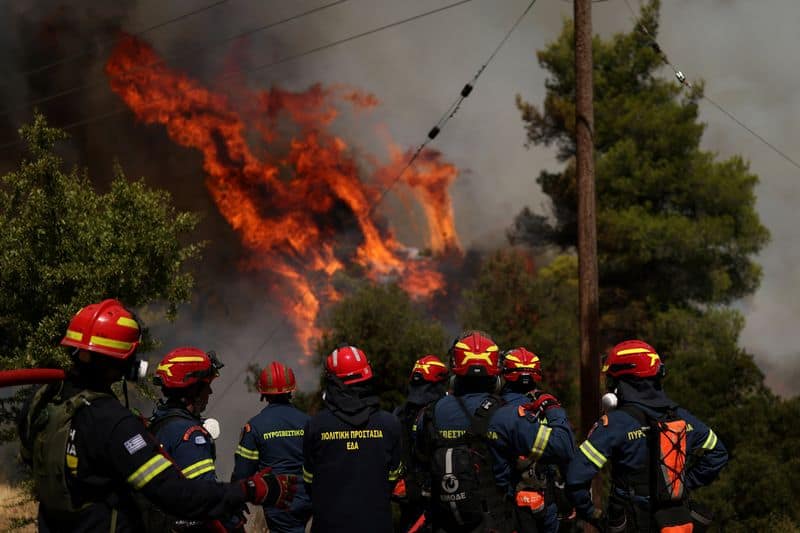
- Greece is battling significant wildfires, particularly near Athens and on Kefalonia island, with high winds complicating firefighting efforts.
- Spain's wildfire situation is improving, though some areas are experiencing re-ignitions.
- France has reported its largest wildfire since 1949 in the Gironde region is contained.
- Hungary has shut its only nuclear power plant due to drought and critically low water levels in the Danube River.
- Low water levels in the Danube River are impacting shipping and hydropower generation in Serbia and other Balkan countries.
Europe is grappling with severe weather conditions, with Greece battling multiple wildfires exacerbated by high winds. The blaze northwest of Athens has destroyed over 100 homes, and a fresh fire on Kefalonia island forced evacuations. Firefighters are deploying vehicles, heavy machinery, and aircraft, with support from France and Romania.
Across Europe, record heatwaves and drought have led to widespread wildfires. While fires in France and Spain are showing signs of easing, Greece faces continued challenges. The fire near Porto Germeno has likely destroyed over 10,000 hectares, and the total devastation in Greece exceeds 12,000 hectares. Tragically, three firefighters have died this week.
In France, the largest wildfire since 1949 in the Gironde region, which burned 42,000 hectares and destroyed 240 homes, is now contained. Most of the 220,000 evacuated residents have returned home. The fire in the Var department has not spread overnight.
Spain's wildfire situation has improved following the lifting of a state of emergency, though some fires have reignited. In the western province of Caceres, around 800 people evacuated due to a forest blaze were allowed to return home.
Beyond wildfires, several European countries are experiencing severe drought, leading to critically low water levels in major rivers like the Rhine and Danube. Hungary's sole nuclear power plant has been forced to shut down for the first time in over four decades due to the drying Danube, with a new heatwave looming. Serbia's Danube levels have fallen to their lowest since 1985, significantly reducing hydropower output.