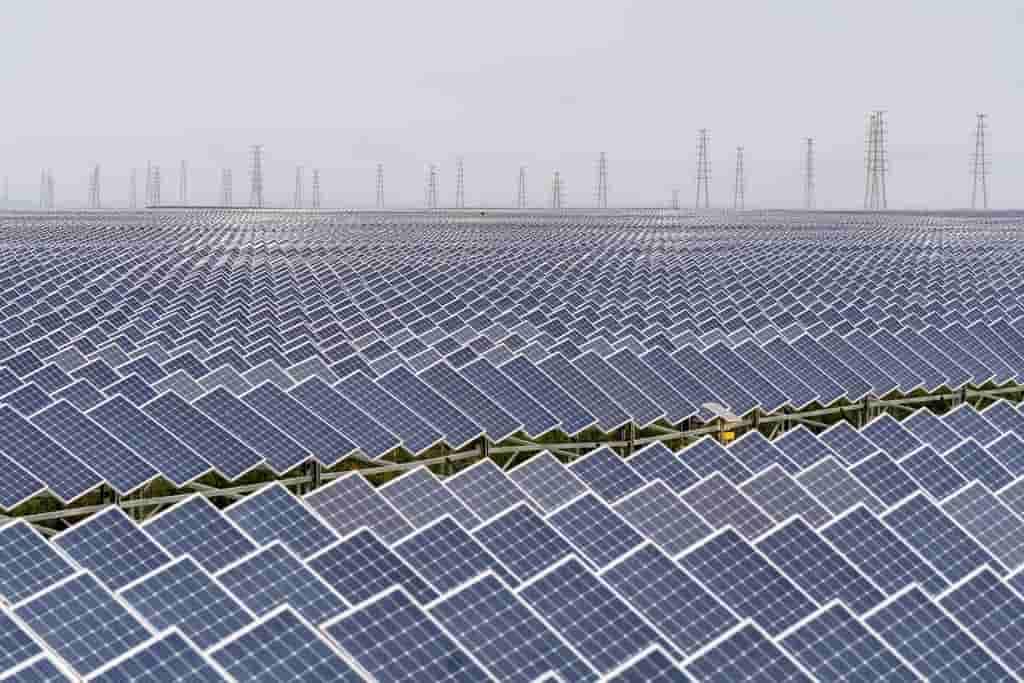
Key facts
- China aims to increase renewable energy consumption to 1.8 billion tons of coal equivalent by 2030, a 53% rise from 2025 levels.
- The nation is the largest contributor to global renewable energy capacity development.
- China's solar PV installations last year matched the global total from 2022.
- The country is expected to account for nearly 40% of global renewable energy installed capacity by 2030.
- China's operational solar capacity exceeds the rest of the world combined.
- Prospective solar and wind projects suggest China could meet its 2030 targets five years ahead of schedule.
China is significantly increasing its commitment to renewable energy, with a goal to boost consumption by 53% by 2030. The National Development and Reform Commission has outlined a five-year plan targeting approximately 1.8 billion tons of coal equivalent in renewable energy use by 2030, a substantial increase from the 1.18 billion tons projected for 2025. This ambitious target aligns with China's broader dual carbon goals of peaking emissions before 2030 and achieving carbon neutrality by 2060.
According to the International Energy Agency (IEA), China is the leading contributor to the global renewable energy industry. In the past year, the country's newly installed renewable energy capacity surpassed that of all other regions combined. The IEA projects that China will account for nearly 40% of the world's installed renewable energy capacity by 2030, playing an indispensable role in driving global progress towards renewable energy goals. China's advancements include commissioning as much solar photovoltaic (PV) capacity last year as the entire world did in 2022, and a 66% year-on-year increase in wind additions. The nation has also been a major contributor to nuclear power growth, adding 11 gigawatts over the last five years.
A report by Global Energy Monitor (GEM) suggests that China's rapid expansion of solar and wind power could enable it to meet its 2030 targets five years ahead of schedule. The country has a substantial pipeline of announced solar and wind projects, totaling approximately 379 GW of utility-scale solar and 371 GW of wind capacity. GEM data indicates that China already hosts about 50% of the world's operational wind and solar capacity, with its operating solar capacity alone exceeding the rest of the world combined. The country's combined onshore and offshore wind capacity has surpassed 310 GW, with its offshore wind capacity alone exceeding Europe's total offshore operational capacity. Recent developments also include the commencement of operations at the Kela hybrid solar-hydro power plant on the Tibetan plateau, which is projected to expand significantly by 2030.