Key facts
- Australia is increasing rail freight capacity, with grain hauling capacity to rise by 25% per train.
- Aurizon and Melbourne Intermodal Terminal (MIT) have entered into a strategic partnership.
- The agreement grants Aurizon access to the $400 million MIT facility for containerized freight handling for up to nine years.
- The MIT facility is designed to enhance operational efficiency, capacity, and sustainability.
- Infrastructure Australia identified five critical rail key freight routes with high or very high vulnerability ratings.
Australia is undertaking initiatives to boost its rail freight capacity, with a specific focus on increasing grain hauling efficiency by 25% per train. This effort is part of a broader strategy to enhance the resilience and reliability of the nation's supply chains, particularly in regional areas.
Infrastructure Australia has highlighted the vulnerability of key rail corridors, identifying five critical routes with high or very high risk ratings due to natural hazard disruptions. These routes, primarily east-west connections, are crucial for transporting large freight volumes that cannot easily be diverted to road. The Australian Rail Track Corporation (ARTC) is investing $1 billion in its interstate rail network to improve safety and reliability.
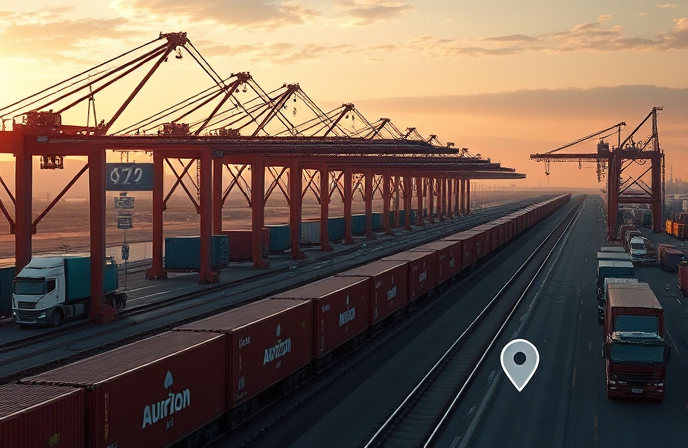
In a significant development for Victoria's freight landscape, Aurizon, Australia's largest rail freight company, has partnered with the Melbourne Intermodal Terminal (MIT). This strategic agreement, effective July 14, 2025, grants Aurizon access to the $400 million MIT facility for containerized freight handling for up to nine years. The MIT, located in Melbourne's northern industrial hub and backed by Aware Super, is equipped with advanced technologies to enhance operational efficiency and capacity.
The partnership is expected to provide substantial benefits for Aurizon and its customers, improving operational efficiency and accommodating growth plans. The terminal's strategic location offers convenient access to major industrial zones and the Port of Melbourne, facilitating efficient connections to the national rail network and supporting new markets. The integration of rail networks and terminals with existing freight demand centers is a key focus, with the MIT's proximity to significant warehousing capacity further enhancing coordination.
Beyond efficiency, the collaboration aims to deliver environmental and supply chain benefits, including support for co-located warehousing and reduced reliance on road transport, contributing to sustainability goals.