All NewsEducationTV
Equities & FundsCrypto & Digital AssetsAI & TechnologyBusiness & CorporateUS Politics & PolicyGeopolitics & Global RiskMacro, Rates & FXCommodities & EnergyEuropean Politics & MarketsAsia-PacificReal Estate & Property
Story archiveAll categories
← All Stories

Japan's konbini evolve into fashion hubs and tech-driven service centers

Created at 18 Aug · 2:06 AM1 source↑ Market-relevant
IN SHORT

Japanese convenience stores, known as konbini, are transforming into community hubs and apparel retailers, adopting new formats to meet evolving consumer demand and address labor shortages. This shift includes integrating fast-food preparation, advanced technology, and unique retail experiences.

✉Newsletter

PiQ Daily

Pick your topics. Get only what matters, on your cadence.

Key Numbers

13.5 trillion yenJapan's convenience store market size
US $86.7 billionJapan's convenience store market size
2 minutesPizza preparation time in Seven-Eleven's 2030 concept store
9 billion cupsSeven-Eleven's Seven Café sales by June 2025
10,000 locationsSeven Café Tea expansion target by February 2027
3,500 storesSeven-Eleven digital signage installation target by late 2025
1.17 billion yenLawson's operating revenue
$7.5 billionLawson's operating revenue
120 yenStarting price for straight tea at Seven-Eleven
190 yenStarting price for milk tea at Seven-Eleven

Who's Involved

FamilyMart
Japanese convenience store operator launching new formats
Nigo
Streetwear mogul and creative director for FamilyMart's Famima Park Azabudai
Lawson
Convenience store chain developing retail media and tech-driven concepts
Seven-Eleven Japan
Convenience store chain testing advanced store concepts and expanding beverage offerings
Japan's konbini evolve into fashion hubs and tech-driven service centers

↳ Why This Matters

The evolution of Japanese convenience stores reflects broader trends in retail and labor markets, demonstrating how established businesses are adapting to technological advancements, labor shortages, and changing consumer expectations by diversifying services and embracing new business models.

Key facts

  • Japanese convenience stores (konbini) are evolving beyond traditional retail to become community hubs and apparel purveyors.
  • FamilyMart's new flagship store features streetwear mogul Nigo as creative director.
  • Konbini are increasingly incorporating fast-food preparation and digital media platforms.
  • Technology like self-ordering kiosks and remote staff assistance are being implemented to address labor shortages.
  • Lawson is developing retail media strategies by embedding digital signage and analyzing customer behavior.
  • While major cities maintain 24-hour operations, some rural konbini are reducing hours for worker well-being.

Japanese convenience stores, or konbini, are undergoing a significant transformation, moving beyond their traditional role to become multifaceted community hubs and innovative retail spaces. This evolution is driven by a saturated market, labor shortages, and the need to adapt to changing consumer behaviors and technological advancements.

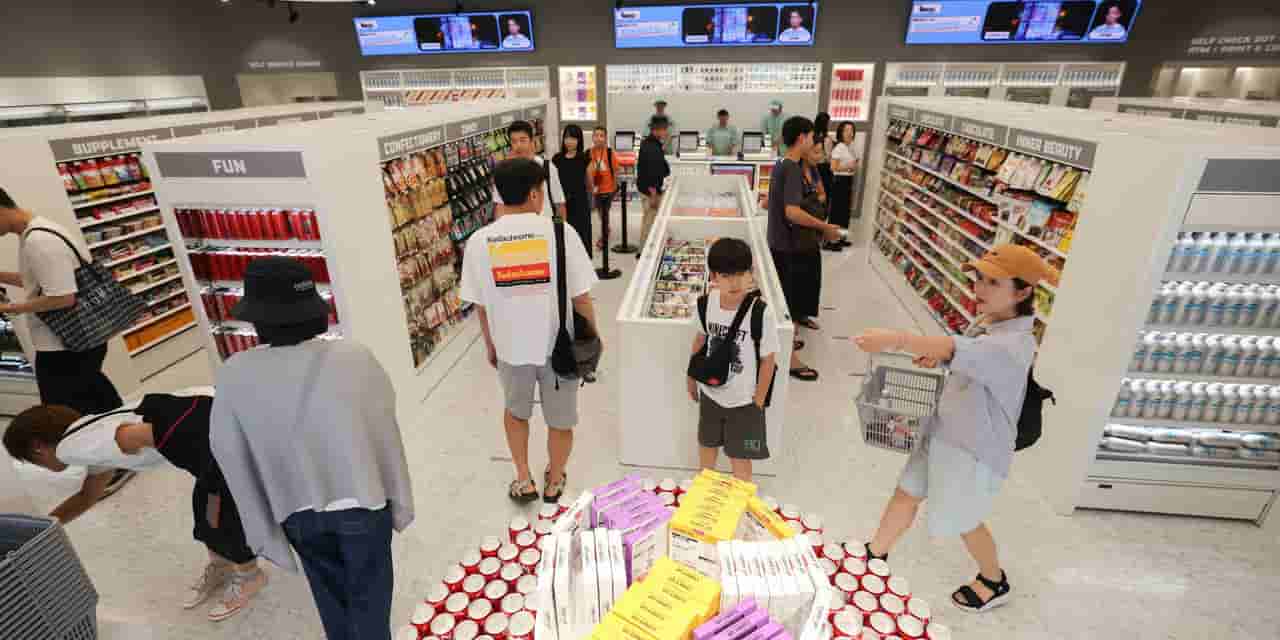
FamilyMart is experimenting with new formats, notably its Famima Park Azabudai store, which features streetwear designer Nigo as its creative director, signaling a move into fashion retail. This initiative aims to attract new customer segments and redefine the konbini experience.

Simultaneously, konbini chains like Seven-Eleven Japan and Lawson are integrating advanced technology and expanding their food service offerings. Seven-Eleven is piloting a 2030 store concept that includes self-ordering kiosks and in-store kitchens capable of preparing items like pizza in minutes. They are also enhancing their beverage services, such as Seven Café Tea, by using machine-mounted screens to entertain customers during preparation time, turning waiting into an opportunity for engagement and potential impulse purchases.

Lawson is pioneering retail media strategies with its 'Real×Tech Convenience' concept, embedding digital signage and leveraging real-time customer behavior analysis. This approach aims to create new revenue streams and enhance customer value.

The broader industry is also adapting to labor challenges through automation and operational shifts. Some stores are implementing low-staff or autonomous modes during nighttime hours, with remote staff assisting multiple locations. While 24-hour operations remain a staple in major urban centers like Tokyo and Osaka, reflecting the urban lifestyle, there is a growing trend in rural areas to shorten operating hours to prioritize worker well-being.

These transformations position konbini not just as places for quick purchases but as integral parts of the social infrastructure, offering high-quality food, essential services, and increasingly, unique retail and media experiences.

Frequently asked questions

A konbini is the Japanese term for a convenience store, known for operating mostly 24/7 and offering a wide range of products and services.

They are evolving into community hubs, fast-food kitchens, and media platforms, incorporating fashion retail, advanced technology, and automation to address labor shortages and meet new consumer demands.

The market reached 13.5 trillion yen (approximately $86.7 billion) in 2025, showing stable post-pandemic growth.

While 24-hour operations are essential in major cities, some konbini in rural areas are adopting shorter hours to improve worker well-being.

What Happens Next

01Seven-Eleven's Seven Café Tea is expected to expand to 10,000 locations by February 2027.
02Digital signage installations at Seven-Eleven are projected to reach 3,500 stores by late 2025.

Get the newsletter.

Pick the topics you actually care about. We'll email when there's news worth your time, on the cadence you choose. Cancel any time from your account.

Cadence

How It Developed

Japanese convenience store operators are launching new formats to cater to new demand in a saturated market.
FamilyMart has enlisted streetwear mogul Nigo as creative director for its new-format flagship store, Famima Park Azabudai.
Konbini are shifting from grab-and-go retail toward fast-food preparation and in-store media platforms.
These changes redefine labor, pricing power, franchise economics, and data monetization.
Seven-Eleven Japan unveiled a store concept for 2030 featuring digital menu boards, self-ordering terminals, and in-store kitchens.
Lawson is entering the retail media space with its 'Real×Tech Convenience' concept store, embedding digital signage and analyzing customer behavior.
Some stores are adopting low-staff or autonomous modes at night, with remote staff assisting multiple locations.
In rural areas, some konbini are adopting shorter operating hours to focus on worker well-being.

Sources

T1
Designer denim and AI concierges: Japan's konbini put a new face forwardNikkei Asia
T2
Japan's Convenience Stores Are Quietly Becoming Fast-Food Chains and ...realgaijin.substack.com
T2
Japanese Convenience Stores (Konbini): Why They're Open 24/7 and How ...realjapannavigator.com
T2
Kojima Calling: Where Japanese Denim Heritage Meets a New Generation - WWDwwd.com

Related Stories

Ippudo operator eyes Indonesian network with halal ramen
17 Aug · 8:41 AM
Japanese restaurant payments firm Zentoshin faces $700m loss after fraud discovery
17 Aug · 3:41 AM
Nestle develops products for weight-loss drug users
17 Aug · 6:04 AM
Retailers face challenge defining 'value' for shoppers this fall
17 Aug · 10:00 AM
Serve Robotics partners with Grubhub for robot delivery expansion
17 Aug · 12:05 PM