Key facts
- Goodwill processes over 4.4 billion pounds of donations annually.
- AI tools are being used by Goodwill to list and sell items online before they reach stores.
- This shift impacts resellers who previously sourced valuable items from Goodwill outlets.
- Goodwill generates $8.5 billion in revenue, which funds job training and community programs.
- The organization is also focusing on sustainability and textile recycling initiatives.
- Goodwill's aftermarket operations involve baling unsold textiles for international resale and recycling.
Goodwill, the world's largest thrift organization, is increasingly leveraging technology, including AI listing tools, to sell desirable items online before they reach its physical stores. This strategic shift aims to enhance competitiveness in the booming resale market and maximize revenue for its job-training and community programs.
Annually, Goodwill handles over 4.4 billion pounds of donations. While most items are cleaned, priced, and sold in its more than 3,300 retail outlets, the organization is now prioritizing online sales for higher-value goods. This move is disrupting the business model of resellers who previously relied on sourcing these items from Goodwill's "bins" or outlets, where clothing is often sold by the pound.
Steve Preston, CEO of Goodwill Industries International Inc., acknowledges the need to be as competitive as for-profit resale entities, which often have significant capital backing. However, he also notes that the increased attention on resale has benefited all players. Goodwill, a nonprofit founded in 1902, operates as a federation of 153 independent organizations across the U.S. and Canada, generating $8.5 billion in revenue in 2023. This revenue directly supports job training and career resources, with local Goodwills placing one in every 513 U.S. hires that year.
Sustainability is a key focus for Goodwill, which diverts over 4 billion pounds of goods from landfills annually. The organization is actively working to become a larger player in recycling and re-manufacturing. Initiatives include a $2 million traceability study funded by the Walmart Foundation to improve reuse and recycling strategies, and a partnership with Reju to advance textile recycling in North America. Goodwill of Greater Washington also collaborates with Trex to recycle plastic bags.
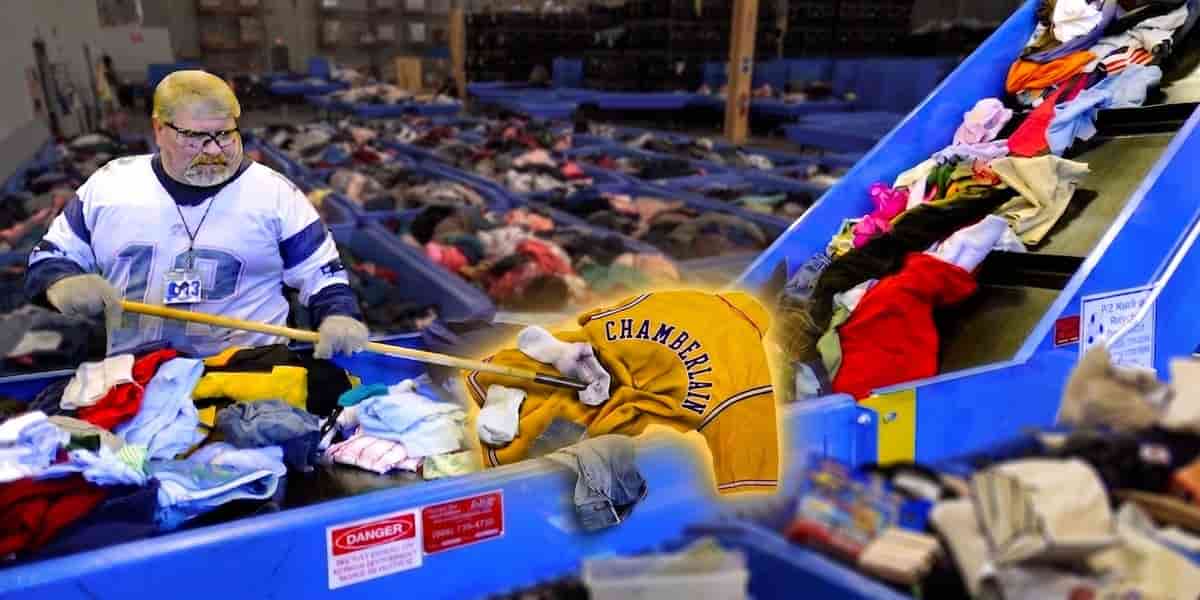
At Goodwill's Taft Outlet, the popular "bins" phenomenon allows customers, many of whom are resellers, to search through clothing priced by the pound. This represents the initial stage of Goodwill's extensive aftermarket system. Unsold textiles are compressed into large bales, weighing 850-950 pounds each, and sold to external vendors. These bales are then shipped globally to Central America, South America, Africa, and the Middle East, where items find new life through resale or recycling. Even single shoes are repurposed. This extensive operation has diverted approximately 50 million pounds of clothing and household items from landfills, with revenue from this global trade fueling Goodwill's community programs.