Key facts
- Ford's new battery plant in Michigan has started production.
- The plant utilizes lithium iron phosphate (LFP) technology licensed from China's CATL.
- The facility will initially produce large-format batteries for energy storage.
- Ford previously canceled significant EV battery deals with SK On and LG Energy Solution.
- The plant, named 'BlueOval Battery Park, Michigan', is fully owned by Ford.
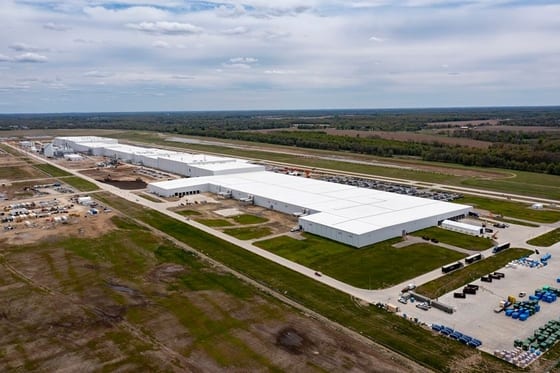
Ford Motor Co. has begun production at its new battery plant in Marshall, Michigan, utilizing technology licensed from China's Contemporary Amperex Technology Co. Ltd. (CATL). This development marks a significant shift in Ford's battery strategy, moving away from earlier plans for electric vehicle (EV) battery production to focus on large-format batteries for energy storage.
The plant's operations are based on a licensing agreement with CATL for lithium iron phosphate (LFP) technology. Ford has stated that matching CATL's technology would have taken a decade, making the licensing approach more efficient. This move comes after Ford canceled two major EV battery deals: an $11.4 billion joint venture with South Korea's SK On and a $6.5 billion supply agreement with LG Energy Solution.
Ford's decision to use CATL's technology faced political scrutiny, particularly after plans for a similar plant in Virginia were rejected due to the Chinese ties. The Michigan facility, named 'BlueOval Battery Park, Michigan,' is fully owned by Ford, but CATL employees are providing training and manufacturing expertise to support the ramp-up. The company aims to employ 800 workers by the end of this year, eventually increasing to 1,700, with a planned annual capacity of 35 GWh in a later expansion phase. Ford expects the plant to produce market-ready battery cells before the end of 2026.
Lisa Drake, Ford's vice president of technology platform programs and EV systems, noted that the existing license and Ford's manufacturing experience made energy storage a natural adjacency. The company also received positive feedback from potential customers regarding the demand for energy storage cells.