HomeEverythingEducation
Equities & FundsCrypto & Digital AssetsAI & TechnologyBusiness & CorporateUS Politics & PolicyGeopolitics & Global RiskMacro, Rates & FXCommodities & EnergyEuropean Politics & MarketsAsia-PacificReal Estate & Property
Story archiveAll categories
← All Stories

Campari defends Aperol from copycats amid booming spritz market

Created at 10 Jul · 12:06 PM1 source↑ Market-relevant
IN SHORT

Campari is intensifying efforts to protect its Aperol brand from imitation spritzes and rival aperitifs as the global spritz market experiences significant growth. The company is implementing promotional campaigns, loyalty programs, and pre-prepared kegs to maintain its market position.

✉Newsletter

PiQ Daily

Pick your topics. Get only what matters, on your cadence.

Key Numbers

4 billionglobal spritz servings in 2024
2.5 billionglobal spritz servings in 2019
26%Aperol's contribution to Campari's revenue
€785 millionAperol global sales last year
$897 millionAperol global sales last year
1.4%Aperol global sales growth last year
2,000Italian venues in Aperol Spritz loyalty program
€10retail price of Aperol in Italy
30-40%price difference for supermarket lookalike products
€547 millionCampari's advertising and promotions spending last year
17.9%Campari's advertising and promotions spending as % of net sales

Who's Involved

Campari
spirits group defending its Aperol brand
Aperol
Campari's top-selling orange aperitif brand
Andrea Neri
managing director of House of Aperitivi at Campari
Sandro Castaldo
professor of marketing at Bocconi University
Theodore Duval-Segard
analyst at AlphaValue
Bacardi
owner of St-Germain elderflower liqueur
Campari defends Aperol from copycats amid booming spritz market

↳ Why This Matters

Campari's efforts to defend Aperol highlight the intense competition and rapid growth within the global spritz market, a key revenue driver for the company. The success of these defense strategies will impact Campari's future growth and profitability, as well as the broader competitive landscape of the aperitif category.

Key facts

  • Campari is actively defending its Aperol brand against imitation products in the rapidly growing spritz market.
  • The global spritz market has seen substantial growth, reaching nearly 4 billion servings in 2024.
  • Aperol is Campari's largest revenue driver, contributing about 26% of total sales.
  • Campari is implementing strategies including promotional campaigns, retailer loyalty programs, and pre-prepared kegs to protect its market share.
  • Rival products, including Hugo Spritz, are gaining traction, and imitation orange-colored drinks are appearing in bars and supermarkets.

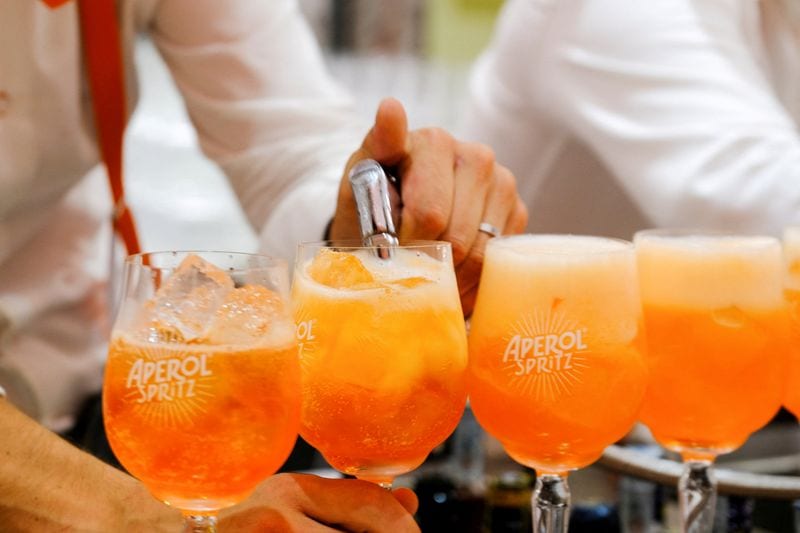
Campari is intensifying its defense of Aperol, its high-growth orange aperitif, against a rising tide of copycat products and rival drinks vying for a share of the booming global spritz market. The company is implementing a multi-pronged strategy, including promotional campaigns and a loyalty program for trusted retailers in Italy, where competition is most intense.

A broader rollout of pre-prepared Aperol Spritz kegs is also underway to secure its position in a market that has seen consumption surge to nearly 4 billion servings in 2024 from less than 2.5 billion in 2019, according to data provider IWSR.

Aperol is Campari's most significant revenue earner, accounting for approximately 26% of its total sales and providing resilience amid weakening consumer demand in the broader sector. The recipe for the century-old Aperol bitter, the key ingredient in the popular spritz cocktail, remains a closely guarded secret.

However, imitation products and rival aperitifs are increasingly appearing in European supermarkets, bars, and restaurants. Andrea Neri, managing director of House of Aperitivi at Campari, noted that since 2023, some establishments have begun serving orange-colored drinks, often on tap, that are not made with Aperol, leading consumers to believe they are drinking the original.

Italy, Campari's second-largest market after the United States, is experiencing the fiercest competition. Alternative cocktails and spritz-style drinks, such as the Hugo Spritz made with elderflower liqueur, are also gaining popularity on menus, particularly in the U.S. and Britain.

Campari has responded by highlighting that not all orange drinks are genuine Aperol Spritzes and has introduced a loyalty program for bars and restaurants that certifies the sale of original Aperol Spritz cocktails, now covering 2,000 venues in Italy. While Aperol's global sales grew 1.4% last year to €785 million ($897 million), Neri suggested that growth could have been faster in Italy without the impact of lookalike products, though precise data is unavailable.

In supermarkets, similar orange drinks are often priced 30-40% lower than Aperol. Campari has sought to protect its brand through trademark registrations and legal action against smaller competitors. Neri downplayed the impact of supermarket lookalikes, stating it's a common European phenomenon, while marketing professor Sandro Castaldo noted that color is a primary target for imitators, indicating Aperol's strong brand recognition.

The success of Aperol has also spurred interest in other summer drinks like the Hugo Spritz, with Bacardi reporting double-digit sales growth for its St-Germain elderflower liqueur, a key ingredient in Hugos. Campari itself has introduced Sarti Rosa, a pink aperitif, targeting female consumers with a viral marketing campaign. Neri observed a consumer shift towards lower-alcohol aperitifs and increased daytime consumption, prompting Campari to expand its spritz portfolio across multiple brands, including Campari, Sarti, Cynar, Crodino, and Mondoro.

Analysts like Theodore Duval-Segard of AlphaValue believe lookalike products do not currently pose a significant threat, stating that Campari has effectively reinvented the spritz, making the brand and the drink almost inseparable.

Frequently asked questions

Aperol is Campari's biggest earner, accounting for approximately 26% of the company's revenue.

The global spritz market consumption rose to nearly 4 billion servings in 2024 from less than 2.5 billion in 2019.

Campari is implementing promotional campaigns, a loyalty program for retailers, and rolling out pre-prepared Aperol Spritz kegs globally.

The main threat comes from imitation orange-colored drinks served in bars and supermarkets that closely resemble Aperol, often at a lower price point, and from rival spritz drinks like Hugo Spritz.

What Happens Next

01Campari will continue to focus advertising and promotional activity on Aperol.
02Campari will monitor the impact of lookalike products and rival aperitifs on its sales.

Get the newsletter.

Pick the topics you actually care about. We'll email when there's news worth your time, on the cadence you choose. Cancel any time from your account.

Cadence

How It Developed

Campari is increasing efforts to defend its Aperol brand from copycat products.
The global spritz market has grown to nearly 4 billion servings in 2024 from less than 2.5 billion in 2019.
Aperol accounts for approximately 26% of Campari's revenue.
Campari has launched promotional campaigns and a loyalty program for retailers in Italy.
The company is rolling out pre-prepared Aperol Spritz kegs globally.
Bars and restaurants are increasingly serving orange-colored drinks not made with Aperol.
Campari has introduced a loyalty program for bars and restaurants certifying original Aperol Spritz sales.
Supermarket shelves feature orange drinks resembling Aperol that are 30-40% cheaper.

Sources

T1
Campari fights Aperol copycats as rivals chase growing spritz marketReuters

Related Stories

German Automakers Face Delivery Slump Amid China Competition
10 Jul · 9:05 AM
EasyJet board backs Apollo's £5.7B bid, opening door for takeover battle
10 Jul · 8:29 AM
Vinci Airports expects slower traffic growth, remains bullish on Mexico
9 Jul · 8:28 PM
Kirin Holdings accelerates Asia-Pacific health science expansion
10 Jul · 2:30 AM
Airbus workers in Spain strike over working conditions
9 Jul · 5:46 PM