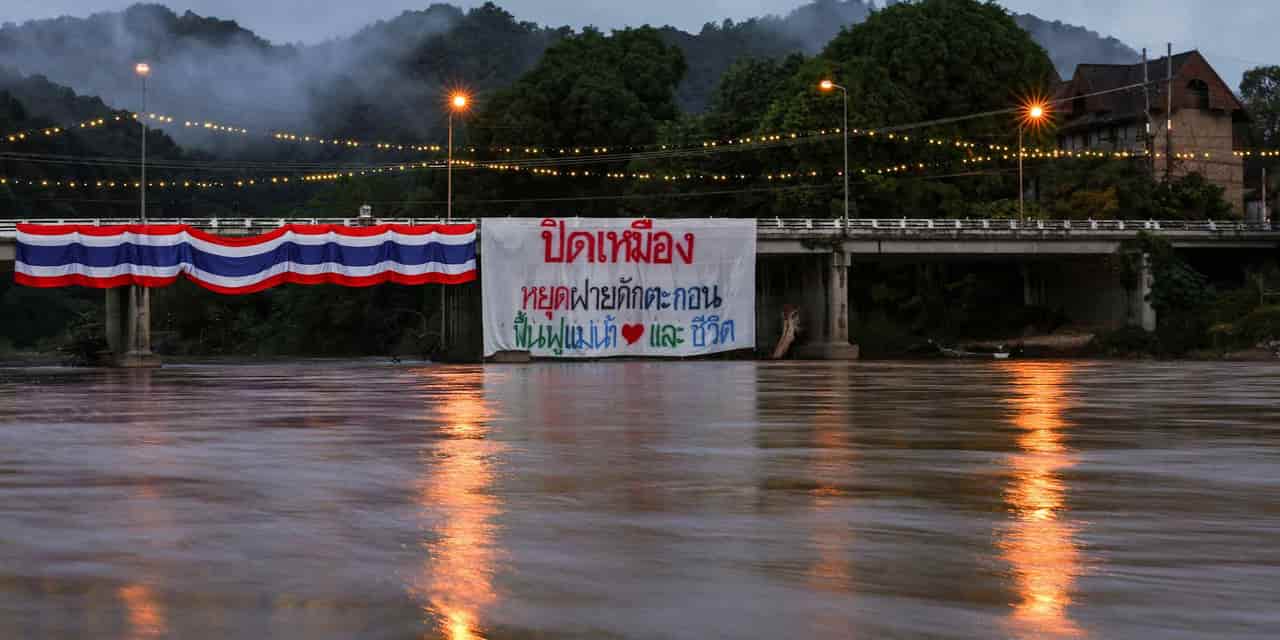
Key facts
- An agreement exists between Thailand and Myanmar to address transboundary river pollution from mining.
- Thai politicians and civil society groups consider the agreement inadequate.
- Concerns include unregulated mining operations.
- Concerns also include restricted access to information.
- The Salween River is a focal point for pollution concerns.
An agreement established between Thailand and Myanmar aimed at addressing transboundary river pollution stemming from mining operations is being widely criticized as insufficient by Thai politicians and civil society groups. These observers express significant concerns regarding the prevalence of unregulated mining activities along shared rivers and the restricted access to vital information necessary for effective environmental monitoring and enforcement. The current pact is seen as falling short of adequately tackling the complex issue of pollution that affects both nations, particularly impacting the Salween River.
Civil society organizations and political figures in Thailand are advocating for more robust and comprehensive measures to ensure genuine pollution control and transparency. They highlight that the existing framework lacks the necessary teeth to hold polluters accountable and to provide the public with the information needed to understand the extent of the environmental damage. The effectiveness of the agreement is questioned due to the ongoing challenges posed by mining operations that continue to operate without sufficient oversight, leading to persistent environmental degradation.