All NewsEducationTV
Equities & FundsCrypto & Digital AssetsAI & TechnologyBusiness & CorporateUS Politics & PolicyGeopolitics & Global RiskMacro, Rates & FXCommodities & EnergyEuropean Politics & MarketsAsia-PacificReal Estate & Property
Story archiveAll categories
← All Stories

South Korea's last season of legal dog meat consumption

Created at 14 Aug · 6:43 AM1 source↑ Market-relevant
IN SHORT

South Korea is preparing for a nationwide ban on the dog meat trade, set to take full effect in February 2027. The recent 'boknal' summer days marked the last before the ban, with many businesses already transitioning to alternative dishes like black goat stew.

✉Newsletter

PiQ Daily

Pick your topics. Get only what matters, on your cadence.

Key Numbers

2027year ban takes full effect
2024year legislation passed
three-yeargrace period for ban
90%respondents with no intention to eat dog meat
80%respondents supporting a ban
95%respondents who had not eaten dog meat in previous year
5,600+businesses affected by legislation
37years restaurant owner Lee Kang-chun has been in trade
70s, 80s and 90sage range of some elderly customers

Who's Involved

Kyu-seok Shim
Reporter
Daewoung Kim
Reporter
Kim Yong-book
Head of Moran Market Merchants' Association
Lee Kang-chun
Restaurant owner and former merchants' association chairman
Yoo Jin-sam
Dog meat stew customer
Kim Jin-suk
Dog meat stew customer
Yoon Suk Yeol
Ousted former President of South Korea
Kim Keon Hee
Former first lady of South Korea and animal welfare advocate
South Korea's last season of legal dog meat consumption

↳ Why This Matters

The impending ban on dog meat consumption in South Korea signifies a major shift in cultural practices and animal welfare standards, reflecting changing societal attitudes and South Korea's global image. It impacts businesses, consumers, and traditional practices, highlighting a broader trend of evolving social norms.

Key facts

  • South Korea's nationwide ban on the breeding, slaughter, and sale of dogs for meat will take full effect in February 2027.
  • The recent 'boknal' summer days were the last before the ban's implementation.
  • Many businesses, particularly in traditional hubs like Moran Market, have already begun transitioning to alternative foods such as black goat stew.
  • Public opinion has shifted significantly, with a large majority supporting the ban and expressing no intention to consume dog meat.
  • The legislation, passed in January 2024, includes a three-year grace period and imposes penalties for violations.
  • Support measures are promised for those affected by the ban.

South Korea is entering the final year before a nationwide ban on the dog meat trade takes full effect in February 2027. The recent 'boknal' period, traditionally a busy time for dog meat restaurants seeking to boost stamina during the hottest days of summer, carried a sense of finality as it was the last before the prohibition.

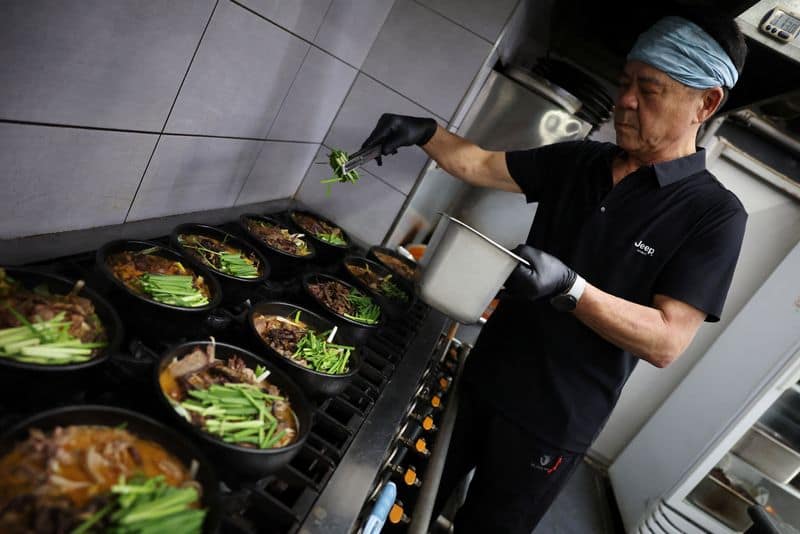
At Moran Market in Seongnam, once a prominent center for dog meat, the lunchtime crowds were notably smaller. Many businesses have already shifted to offering alternatives like black goat stew, while the remaining customers ordering 'bosintang' (dog meat stew) were predominantly elderly.

Kim Yong-book, head of the Moran Market Merchants' Association, described the area as having become "a town of old people," reflecting the long-term decline in dog meat consumption. This decline is attributed to increasing pet ownership and a growing public concern for animal welfare, which has transformed societal attitudes.

A survey conducted before the ban's passage revealed that over 90% of respondents had no intention of eating dog meat in the future, and more than 80% supported a ban. Government data indicates that over 5,600 businesses are impacted by the legislation, with most dog farms already having closed.

The campaign to end the dog meat trade gained significant traction under former President Yoon Suk Yeol and his wife, Kim Keon Hee, an advocate for animal welfare. Parliament passed the legislation in January 2024, establishing a three-year grace period before full enforcement begins in February 2027, with penalties for violations. Authorities have also committed to providing support for affected farmers, distributors, and restaurant owners.

Restaurant owner Lee Kang-chun, who has been in the trade for 37 years, expressed mixed emotions. While acknowledging the ban's positive impact on South Korea's global image and evolving social norms, he conveyed sadness over elderly customers who travel long distances for a meal they believe offers health benefits. Despite soaring costs and minimal profits, he continues to serve the dish for his loyal regulars.

Lee noted that many restaurants have switched to black goat stew, but the transition has been challenging and does not fully compensate for the loss of dog meat sales. Customers like Yoo Jin-sam, who has eaten dog meat since his early twenties, expressed disappointment, lamenting the loss of a dish believed to be good for health. Another customer, Kim Jin-suk, indicated less regret, stating they could simply eat something else.

Frequently asked questions

The nationwide ban on the breeding, slaughter, and sale of dogs for meat will take full effect in February 2027.

'Boknal' refers to the three hottest days of summer in South Korea, traditionally associated with eating stamina-boosting foods.

Public opinion has shifted significantly, with a large majority supporting a ban and expressing no intention to eat dog meat in the future, driven by increased pet ownership and animal welfare concerns.

Violators of the ban will face prison terms and fines.

What Happens Next

01The nationwide ban on breeding, slaughter, distribution, and sale of dogs for meat will be fully enforced from February 2027.
02Authorities will provide support for affected farmers, distributors, and restaurant owners.

Get the newsletter.

Pick the topics you actually care about. We'll email when there's news worth your time, on the cadence you choose. Cancel any time from your account.

Cadence

How It Developed

South Korea's dog meat restaurants experienced busy 'boknal' days for decades.
The third 'boknal' of 2026 was the last before a nationwide ban on dog meat takes effect in February 2027.
Moran Market in Seongnam, a former dog meat hub, saw reduced crowds, with many businesses switching to alternatives.
Dog meat consumption has declined due to rising pet ownership and changing animal welfare attitudes.
A survey indicated over 90% of respondents had no intention of eating dog meat in the future.
Legislation banning the breeding, slaughter, distribution, and sale of dogs for consumption was passed in January 2024.
The law provides a three-year grace period, with full enforcement starting February 2027.
Authorities have pledged support for affected farmers, distributors, and restaurant owners.

Sources

T1
In South Korea, some savour last season of legal dog meatReuters

Related Stories

South Korea Bets Big on Post-AI Economy with Moon Landing, Quantum Chips
14 Aug · 12:06 AM
Microsoft Scales Back China Operations Amid Geopolitical Tensions
13 Aug · 10:07 AM
Taiwan parliament approves three referendums, including on caning sex criminals
14 Aug · 6:41 AM
Indonesia’s Prabowo defends record, touts food self-sufficiency in Independence Day speech
14 Aug · 4:21 AM
New Zealand manufacturing activity expands at slower pace in July amid cost pressures
13 Aug · 10:42 PM