Key facts
- Japan's government has reduced its economic growth forecast for the current fiscal year.
- The revised GDP growth projection for the fiscal year ending March 2027 is 0.9%, down from 1.3%.
- Growth is expected to pick up to 1.1% in the subsequent fiscal year.
- Higher energy costs are expected to push consumer inflation to 2.2% in fiscal 2026.
- Nominal wages are anticipated to increase by 3.1% annually through fiscal 2027.
- The government forecasts a primary budget surplus of 1.4 trillion yen in fiscal 2027.
Japan's government has revised down its economic growth forecast for the current fiscal year, projecting a 0.9% expansion in inflation-adjusted gross domestic product (GDP) for the year ending March 2027. This adjustment from a previous estimate of 1.3% is attributed to the strain of higher oil prices, exacerbated by Middle East tensions, on household spending and corporate profits.
The government anticipates growth will accelerate to 1.1% in the following fiscal year, supported by robust capital expenditures and private consumption. However, the forecast for private consumption growth in fiscal 2026 has been lowered to 0.9% from 1.3%, and capital expenditure growth is now seen at 2.3%, down from 2.8%.
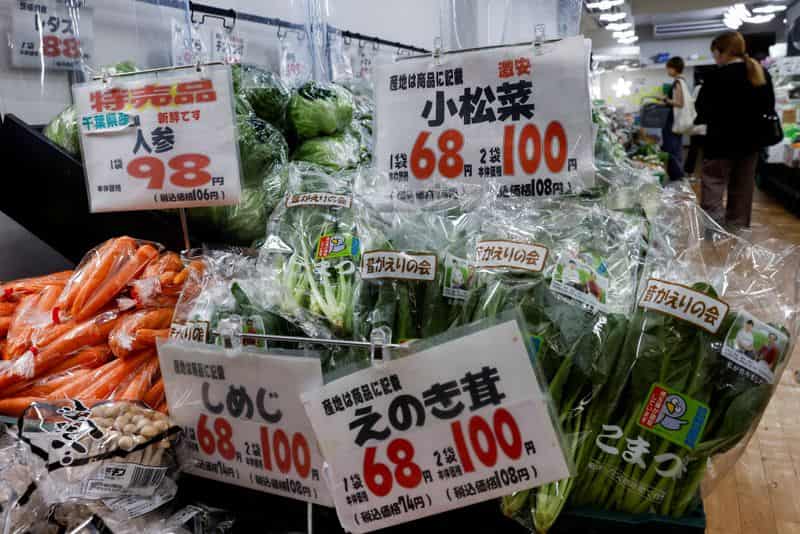
Consumer inflation is projected to reach 2.2% in fiscal 2026, an increase from the earlier estimate of 1.9%, reflecting the impact of elevated energy costs. Despite persistent inflation, the government forecasts nominal wages to rise by 3.1% annually through fiscal 2027, aiming to maintain positive real wage growth.
Furthermore, the Cabinet Office projects that Japan's primary budget balance will shift to a surplus of 1.4 trillion yen ($8.6 billion) in fiscal 2027. This goal, which has been deferred multiple times since the early 2000s, aims to address the nation's significant debt pile, which is the largest among developed economies.