HomeEverythingEducationTV
Equities & FundsCrypto & Digital AssetsAI & TechnologyBusiness & CorporateUS Politics & PolicyGeopolitics & Global RiskMacro, Rates & FXCommodities & EnergyEuropean Politics & MarketsAsia-PacificReal Estate & Property
Story archiveAll categories
← All Stories

China shifts transport focus from expansion to upgrades

Created at 22 Jul · 4:56 AM1 source↑ Market-relevant
IN SHORT

China will prioritize upgrading existing transport infrastructure over large-scale new projects during its 15th Five-Year Plan (2026-2030). This strategic pivot aims to foster balanced regional development and enhance connectivity, efficiency, and resilience within its extensive transport network.

✉Newsletter

PiQ Daily

Pick your topics. Get only what matters, on your cadence.

Key Numbers

2026-203015th Five-Year Plan period
95 percentplanned backbone of national transport network in place by 2030
91 percentcurrent backbone of national transport network
80,000 kilometerstransport network for renewal and digital transformation
500,000 kilometersrural roads to be built or renovated
1,000major freight hubs for improved intermodal connections
77.21 billion yuantotal investment for Three Gorges new waterway project
11.33 billion U.S. dollarstotal investment for Three Gorges new waterway project

Who's Involved

Ministry of Transport
announced the shift in transport infrastructure investment strategy
Xu Chengguang
Vice-Minister of Transport who announced the pivot
Song Guohua
dean of the National College for Excellent Engineers, Beijing Jiaotong University
Fu Yifu
researcher at Jiangsu Su Merchants Bank
Yuan Shuai
researcher at the China City Development Academy
Wang Qiming
deputy head of the National Railway Administration
China shifts transport focus from expansion to upgrades

↳ Why This Matters

This strategic shift in China's infrastructure investment signals a maturation of its development model, moving from rapid expansion to optimizing existing networks for greater efficiency and balanced regional growth. It has implications for domestic economic circulation, international supply chains, and the global demand for construction and related materials.

Key facts

  • China will shift its transport infrastructure investment focus from new large-scale projects to upgrading existing facilities during the 2026-2030 period.
  • The move is intended to promote balanced regional development and enhance connectivity, efficiency, and resilience.
  • Plans include infrastructure renewal and digital transformation across 80,000 km of the transport network.
  • Approximately 500,000 km of rural roads will be built or renovated.
  • Intermodal connections at 1,000 major freight hubs will be improved.
  • International supply chain resilience will be strengthened through expanded shipping routes and air cargo links.

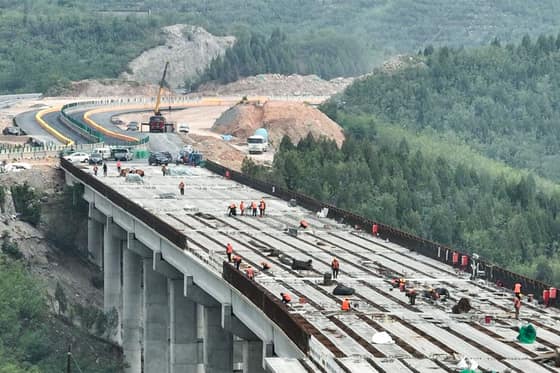
China is set to shift its focus in transport infrastructure development from large-scale expansion to upgrading existing facilities during the upcoming 15th Five-Year Plan period, spanning from 2026 to 2030. This strategic pivot, announced by Vice-Minister of Transport Xu Chengguang, signals an end to an era of simply rolling out new projects and reflects a concerted effort to promote more balanced regional development and enhance connectivity, efficiency, and resilience.

The Ministry of Transport outlined plans to continue improving railway, highway, waterway, civil aviation, and postal infrastructure, while accelerating the development of a more integrated logistics network. Major corridor projects will include coastal high-speed railways, upgraded highways along land borders and coastlines, and transport links along the Yangtze River. The country aims to put 95 percent of its planned backbone national transport network in place by 2030, up from 91 percent currently.

Specific initiatives include infrastructure renewal and digital transformation across approximately 80,000 kilometers of the transport network, the construction or renovation of 500,000 km of rural roads, and improvements to intermodal connections at around 1,000 major freight hubs to streamline cargo transfers. The railway sector, in particular, will increasingly concentrate on enhancing quality, capacity, and integration, building upon China's existing extensive high-speed rail network.

This strategic shift is also exemplified by ongoing mega-projects, such as the Three Gorges new waterway project, which involves an investment of nearly 77.21 billion yuan (about $11.33 billion) to nearly double the throughput capacity of the existing shipping hub. Other notable projects include the Pinglu Canal in Guangxi and the Chongqing-Wanzhou high-speed railway. Experts emphasize that transportation plays a foundational role in economic development, serving national strategies and improving people's lives.

Frequently asked questions

The strategy will be implemented during China's 15th Five-Year Plan period, from 2026 to 2030.

The primary goals are to promote balanced regional development, enhance connectivity, improve efficiency, and strengthen the resilience of China's transport network.

Plans include upgrading railways, highways, inland waterways, civil aviation, postal services, and logistics networks, alongside digital transformation initiatives.

This mega-project aims to nearly double the annual throughput capacity of the existing Three Gorges shipping hub, relieving navigation pressure on the Yangtze River and supporting regional development.

What Happens Next

01China aims to have 95 percent of its planned backbone national transport network in place by 2030.
02Infrastructure renewal and digital transformation will be carried out across 80,000 km of the transport network.
03500,000 km of rural roads will be built or renovated.
04Intermodal connections at 1,000 major freight hubs will be improved.
05The Three Gorges new waterway project is expected to be completed.
06The Pinglu Canal is expected to be inaugurated in September.
07The Chongqing-Wanzhou high-speed railway is planned to open in 2027.
08Beijing's subway line 22 is expected to be basically ready for service by year-end.

Get the newsletter.

Pick the topics you actually care about. We'll email when there's news worth your time, on the cadence you choose. Cancel any time from your account.

Cadence

How It Developed

China's Ministry of Transport announced a pivot from large-scale expansion to upgrading existing transport facilities for the 2026-2030 period.
Vice-Minister of Transport Xu Chengguang stated the shift aims to promote balanced regional development and optimize the spatial layout of economic circulation.
China plans to complete key high-speed railway corridors, upgrade inland waterways, and develop world-class port and airport clusters.
Infrastructure renewal and digital transformation will be undertaken across approximately 80,000 kilometers of the transport network.
The country will also build or renovate 500,000 km of rural roads and improve intermodal connections at 1,000 major freight hubs.
Major corridor projects will include coastal high-speed railways and upgraded highways along borders and coastlines.
China will strengthen international supply chain resilience by expanding global shipping routes and improving air cargo links.
The railway sector will focus on improving quality, capacity, and integration, building on the world's largest high-speed rail network.

Sources

T1
China Pivots From New Transport Projects to UpgradesCaixin Global
T2
China to strengthen integrated transport network by 2030chinadaily.com.cn
T2
China accelerates building modern transport network to support high ...english.scio.gov.cn
T2
China's transport network sees fresh expansion as projects boost ...globaltimes.cn

Related Stories

China Deploys Electric Trucks at Scale for Net-Zero Goals
22 Jul · 4:06 AM
China Expands Central Asian Land Routes Amid Trade Shift
21 Jul · 9:35 PM
China Unveils 19 Measures to Upgrade Domestic Service Sector
21 Jul · 5:21 PM
Nike to tighten online sales in China amid 'cluttered' marketplace
22 Jul · 12:06 AM
China Reconsiders Export Tax Rebates for Key Industries
22 Jul · 1:06 AM