Key facts
- China accounts for over 50% of foreign direct investment in Bangladesh's renewable energy sector.
- Bangladesh aims to generate at least 20% of its electricity from renewables by 2030.
- The country plans to deploy up to 10,000 MW of solar capacity by 2030.
- Chinese companies have invested in and designed key projects like the Mymensingh PV power station and Cox's Bazar wind farm.
- Bangladesh is offering incentives such as tax holidays and duty-free imports for renewable energy projects.
China is significantly increasing its influence in Bangladesh's power sector, now representing over a third of foreign investment as the nation seeks to bolster its renewable energy capacity. According to the Centre for Policy Dialogue, Chinese investors account for more than 50% of the total foreign direct investment in Bangladesh's renewable energy sector.
Bangladesh has ambitious targets, aiming for at least 20% of its electricity generation from renewables by 2030 and 30% by 2041, with a strong focus on solar power. The government plans to deploy up to 10,000 MW of solar capacity by 2030 through public-private partnerships. To attract investment, authorities are offering incentives such as tax holidays and duty-free imports for solar equipment, alongside a new battery energy storage system policy.
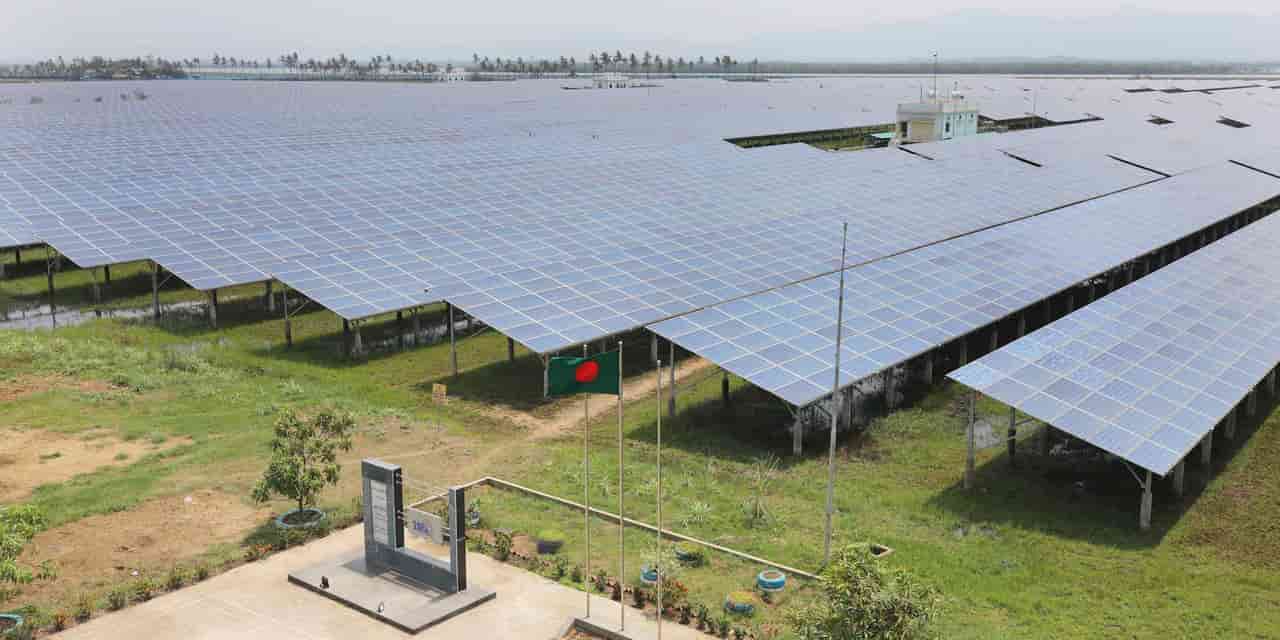
Chinese companies have been instrumental in supporting these goals, investing in and designing key projects like the Mymensingh PV power station and the Cox's Bazar wind farm, Bangladesh's first utility-scale wind project. They also dominate the supply chain for solar home systems and mini-grids.
Despite these efforts, Bangladesh faces challenges in attracting foreign investment, including ensuring project bankability and providing investor guarantees. The government's cancellation of letters of intent for several renewable energy projects has also impacted investor confidence, causing Bangladesh to lag behind regional peers in clean energy market attractiveness.
Mostafa Al Mahmud, chairman of the Bangladesh Sustainable and Renewable Energy Association, highlighted China's leadership in renewables and its cooperative role with Bangladesh. He noted that Bangladesh aims for 40% of its electricity from renewables by 2041 and net zero by 2050, with Chinese investments expected to create tens of thousands of jobs.