Key facts
- Egypt has launched a new monorail line connecting Cairo to its ambitious new administrative capital.
- The East Nile monorail spans 56.6 kilometers and is designed to carry up to 600,000 passengers daily.
- The project cost approximately $2.8 billion and aims to alleviate Cairo's chronic traffic congestion.
- Despite modern amenities, some commuters find the ticket price of 40 Egyptian pounds too expensive.
- Public skepticism persists due to historical issues with infrastructure project execution in Egypt.
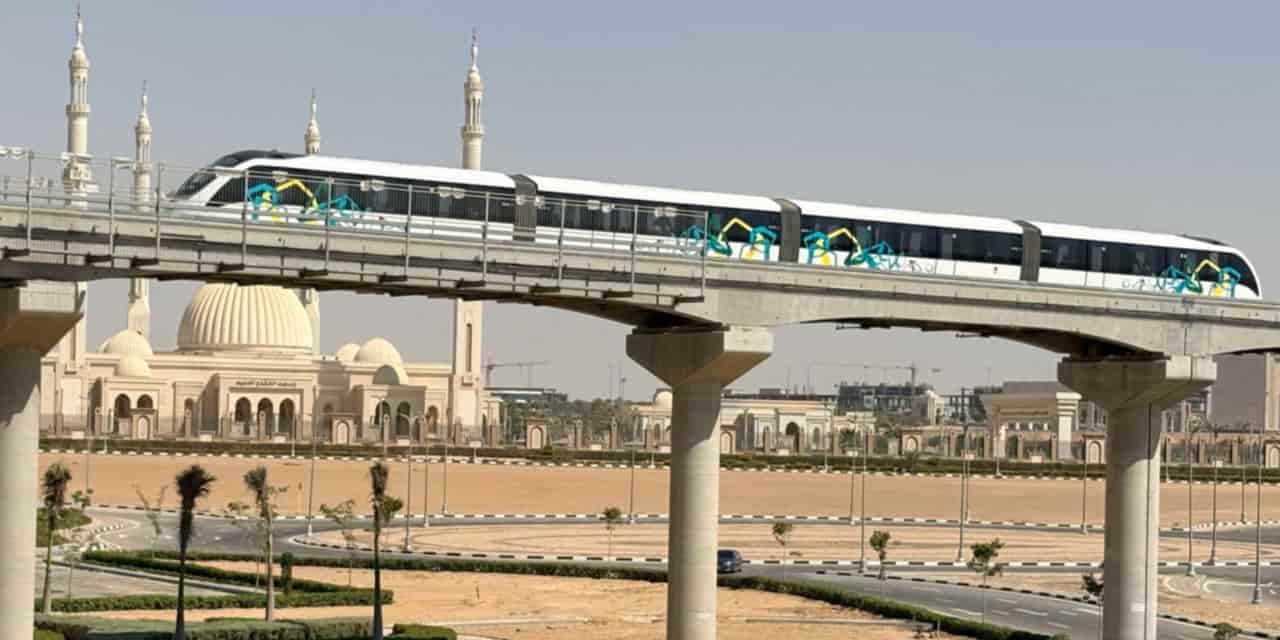
Egypt has launched a new monorail line, the East Nile monorail, connecting Cairo to a new administrative capital being built in the desert. The 56.6-kilometer elevated track is designed to be the world's second-longest single-route monorail, following one in China, and aims to alleviate the capital's severe traffic congestion.
Sixteen of the 22 stations opened in a trial phase on May 6, with the remaining stations expected to be operational within two months. The West Nile monorail, linking Giza to 6th of October City, is scheduled to open in September. The project, costing approximately $2.8 billion, was built in partnership with Alstom, Arab Contractors, and Orascom, with Siemens donating trains.
Passengers have described the ride as clean, comfortable, and offering a unique elevated experience, with some noting it saves money compared to other transport options. However, the fare of 40 Egyptian pounds ($0.76) for a six-station trip has been criticized as too expensive for many commuters. This tension between the monorail's modern appeal and its affordability has been a point of discussion since its opening.
Transportation experts view the monorail as part of a broader strategy to modernize Egypt's mass transit systems, including the metro and Bus Rapid Transit, to address the challenges of a city with over 10 million residents. The government selected the monorail for its perceived lower cost and minimal disruption compared to underground metro construction. Despite the ambitious scale and potential job creation, public skepticism lingers, influenced by past infrastructure projects that faced delays and failed to meet expectations.