All NewsEducationTV
Equities & FundsCrypto & Digital AssetsAI & TechnologyBusiness & CorporateUS Politics & PolicyGeopolitics & Global RiskMacro, Rates & FXCommodities & EnergyEuropean Politics & MarketsAsia-PacificReal Estate & Property
Story archiveAll categories
← All Stories

Zuckerberg advocates for open AI development, dismisses job loss fears

Created at 29 Jul · 4:11 AM1 source↑ Market-relevant
IN SHORT

Mark Zuckerberg has launched a public campaign for open AI development, arguing against centralization and dismissing fears of widespread job losses. He believes AI will foster invention and create new economic opportunities.

✉Newsletter

PiQ Daily

Pick your topics. Get only what matters, on your cadence.

Who's Involved

Mark Zuckerberg
Meta CEO advocating for open AI development
Meta
Company developing AI models and platforms
The New York Times
Publication that interviewed Mark Zuckerberg
The Wall Street Journal
Publication where Zuckerberg penned an op-ed
Zuckerberg advocates for open AI development, dismisses job loss fears

↳ Why This Matters

Mark Zuckerberg's public stance on AI development and its societal impact is significant due to Meta's prominent role in the technology sector. His advocacy for open AI and dismissal of job loss fears could influence industry direction, public perception, and regulatory discussions.

Key facts

  • Mark Zuckerberg has engaged in a significant media push, including an open letter, op-ed, and New York Times interview, to shape the debate around Artificial Intelligence.
  • Zuckerberg's central message is that AI should be open, widely distributed, and empower individuals rather than replace them.
  • He argues that concentrating advanced AI in the hands of a few companies poses economic and political dangers.
  • Zuckerberg believes that open AI development is crucial for American and allied advantage, warning against closing models to prevent access by rivals like China.
  • He dismisses widespread pessimism about AI eliminating jobs, predicting instead that it will create more employment opportunities and foster entrepreneurship.
  • Zuckerberg frames AI's greatest contribution as enabling invention and accelerating discoveries, rather than solely automating existing tasks.

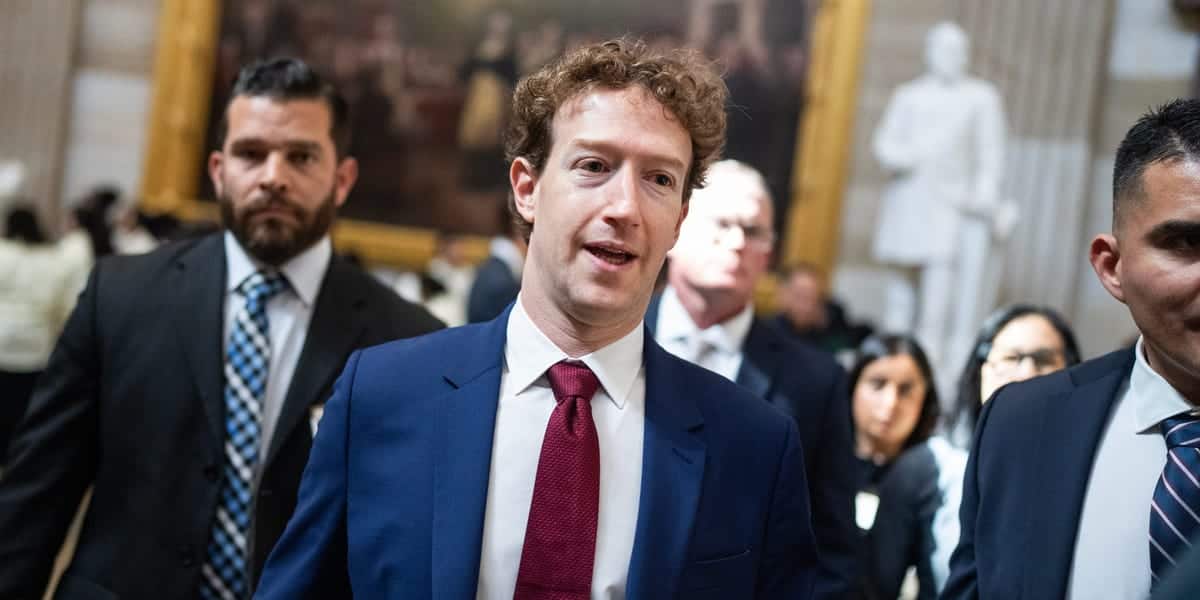
Mark Zuckerberg, CEO of Meta, has undertaken a significant public relations effort to influence the discourse surrounding Artificial Intelligence. Within a single week, he published an open letter, contributed an op-ed to The Wall Street Journal, and granted a rare interview to The New York Times. Across these platforms, Zuckerberg consistently advocated for an open and decentralized approach to AI development.

Zuckerberg articulated concerns that concentrating advanced AI capabilities within a small number of companies could lead to both economic and political dangers. He stated in his open letter that America's strength lies in "decentralized and open innovation," and that restricting AI models to prevent rivals like China from accessing them would ultimately disadvantage the U.S. and its allies.

In his New York Times interview, Zuckerberg challenged the prevailing narrative of AI-induced job losses. He expressed skepticism towards the idea that AI will eliminate most jobs and diminish humanity's relevance, questioning why anyone believing this would actively build such a future. Instead, he posited that widely accessible AI will lead to the creation of more jobs and stimulate a more entrepreneurial economy.

Furthermore, Zuckerberg emphasized that AI's most profound impact will stem from its capacity to facilitate human invention and the creation of entirely new things, rather than merely automating existing work. He wrote in The Wall Street Journal that "Invention, not automation, will be the greatest contribution of superintelligence," suggesting AI could accelerate breakthroughs in fields such as medicine and aid individuals in developing businesses and solving complex problems.
Frequently asked questions

Mark Zuckerberg argues that AI development should be open and decentralized, rather than concentrated in the hands of a few large companies.

He dismisses fears of widespread job elimination, predicting that AI will ultimately create more jobs and foster entrepreneurship.

Zuckerberg believes AI's greatest contribution will be in enabling human invention and accelerating discoveries, rather than solely automating tasks.

He used an open letter, an op-ed in The Wall Street Journal, and an interview with The New York Times.

Get the newsletter.

Pick the topics you actually care about. We'll email when there's news worth your time, on the cadence you choose. Cancel any time from your account.

Cadence
CME Headlines
  • Is AI Making Inflation Better or Worse?
    22 Jul · 3:26 PM

How It Developed

Mark Zuckerberg initiated a public push on AI through an open letter, op-ed, and interview.
Zuckerberg stated AI should be open and widely distributed, not concentrated in a few companies.
He argued that concentrating AI development is economically and politically dangerous.
Zuckerberg believes closing AI models would disadvantage the U.S. and its allies.
He countered the narrative of AI leading to mass job elimination.
Zuckerberg predicts broadly available AI will create more jobs and fuel an entrepreneurial economy.
He emphasized AI's potential for invention rather than just automation.
Zuckerberg suggested AI could accelerate discoveries in medicine and business solutions.

Sources

T1
The 3 biggest takeaways from Mark Zuckerberg's media blitzBusiness Insider

Related Stories

Meta's Zuckerberg says US should not block Chinese AI models
29 Jul · 2:37 AM
Sam Altman suggests pacing AI development for societal readiness
28 Jul · 8:46 PM
Elon Musk Details Grok 4.6 Launch, Teases 2.1T-Parameter Grok 4.7
28 Jul · 4:52 PM
Consumer Electronics Firms Focus on AI Agents for Next-Gen Devices
28 Jul · 9:07 PM
OpenAI and Anthropic Push for US Government AI Safety Review Framework
28 Jul · 4:27 PM