Key facts
- Narwhal tusks have a previously unknown internal spiral structure.
- The tusk's structure is a double helix, with opposing spiral directions in the cementum and dentine layers.
- This unique composition provides the tusk with remarkable stiffness and strength.
- Advanced X-ray imaging techniques were used to map the tusk's structure at multiple scales.
- The findings suggest the tusk's structure allows it to grow straight.
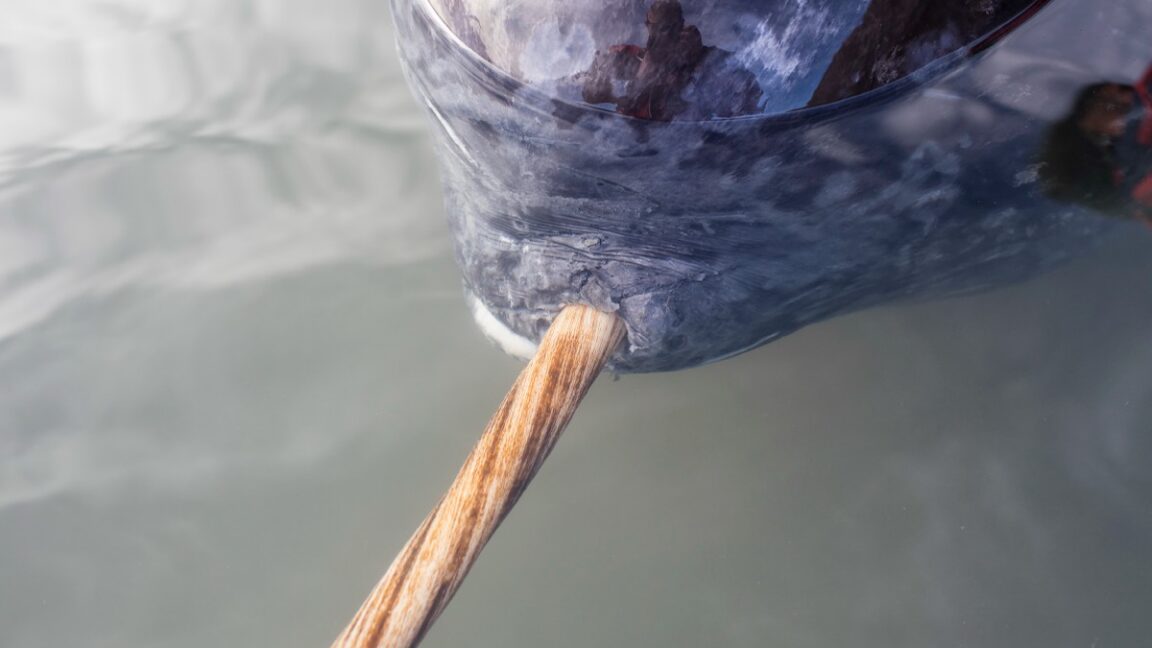
A new study published in Nature Communications reveals that narwhal tusks, long known for their single left-handed spiral, actually possess a complex double-helix structure. Researchers utilized advanced imaging techniques, including X-ray computed tomography and bifringence microscopy, on two male narwhal tusk specimens. The findings indicate that while the outer cementum layer exhibits a left-handed spiral, the inner dentine layer forms a right-handed spiral. This unique structural arrangement is believed to be responsible for the tusk's exceptional stiffness and strength, enabling it to withstand significant bending and twisting forces without cracking and allowing it to grow straight. Scientists are also exploring the potential of narwhal tusks as historical records of environmental changes, given the presence of nerve endings and their role in sensing water conditions.