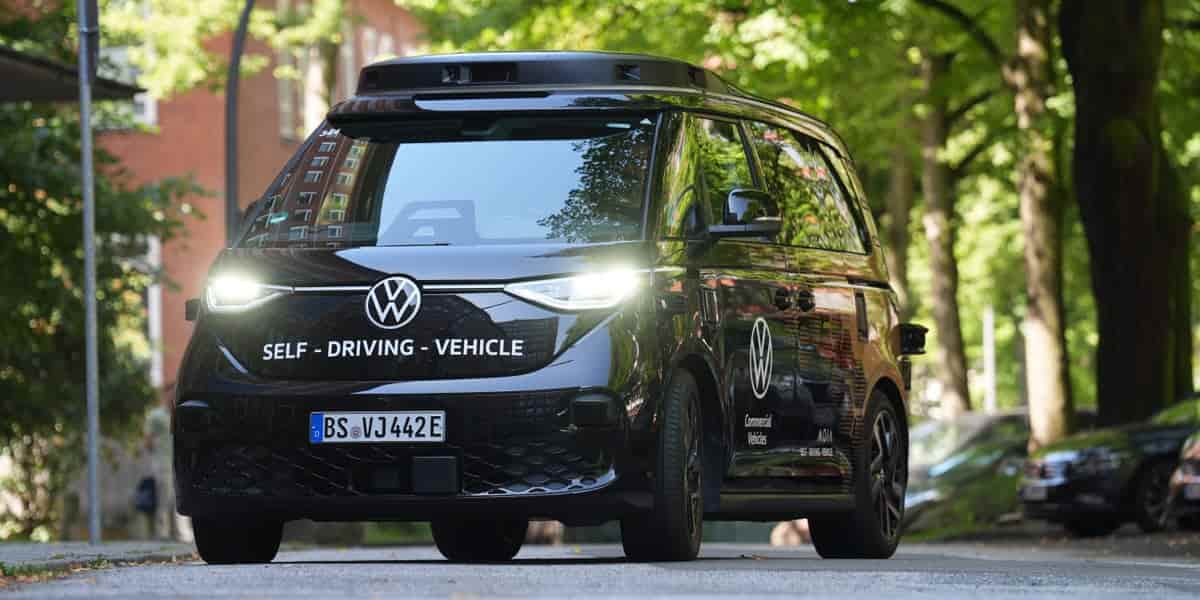
Key facts
- Volkswagen's subsidiary Moia has launched a pilot robotaxi service in Hamburg, Germany.
- The service utilizes self-driving Volkswagen ID. Buzz electric vans.
- Initially, up to five vehicles will operate, with a fleet expansion to ten planned.
- The pilot service is currently free for preregistered users.
- Moia aims for European approval for driverless operations by 2027.
Volkswagen's subsidiary Moia has initiated a pilot robotaxi service in Hamburg, Germany, marking a significant step into the autonomous mobility sector. The service, which uses self-driving Volkswagen ID. Buzz electric vans, is currently available to preregistered residents and operates with a safety monitor behind the wheel. Initially, the fleet will consist of up to five vehicles, with plans to expand to ten, covering approximately four square miles and gradually increasing to fourteen square miles. Rides are free during this pilot phase, which Moia CEO Sascha Meyer described as a crucial milestone for their European autonomous mobility solution. The company is developing a comprehensive platform for autonomous mobility, integrating vehicles, software, fleet management, and booking technology, with recent efforts combining VW vans with Mobileye's autonomous driving technology. Moia's broader business model focuses on providing this platform to fleet operators rather than running a standalone robotaxi service. The Hamburg pilot is part of the government-backed ALIKE project, which explores how autonomous technology can complement public services, with funding extending to mid-2027. Future commercial deployment will depend on regulatory approvals and local mobility strategies. Volkswagen is not alone in this space, with Hyundai Motor Group backing Motional and Tesla also developing its own robotaxi platform. Moia is targeting European approval for driverless ID. Buzz operations in 2027 and plans to launch autonomous services in the U.S. with Beep in Orlando and Uber in Los Angeles.