Key facts
- Protests against data center construction are planned for at least 125 U.S. locations.
- The movement is organized by the grassroots group HumansFirst.
- Key concerns include rising power bills, water resource diversion, and pollution.
- A recent poll indicates low public approval for the pace of data center construction.
- Texas is expected to have the highest number of protests.
- Organizers are calling for transparency and community benefits from data center development.
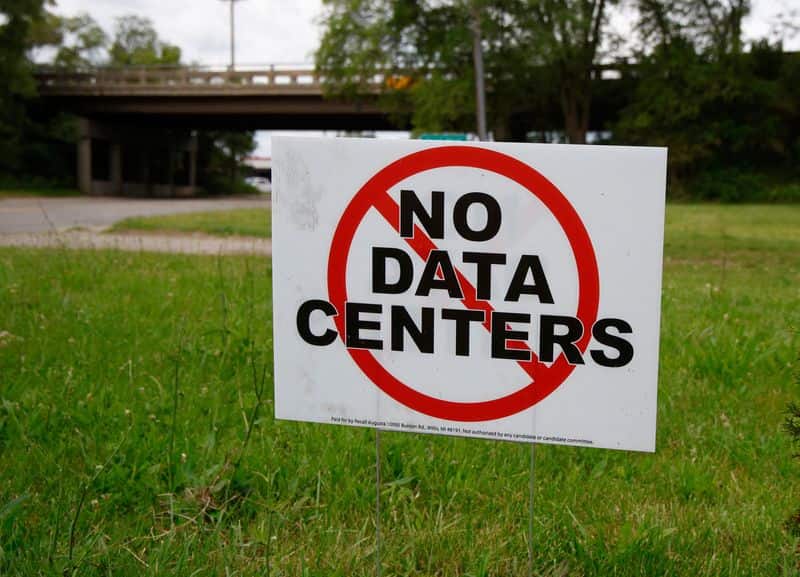
Opponents of the rapid expansion of data centers are organizing the first coordinated national protest effort, with demonstrations planned in at least 125 locations across the United States on Saturday. The movement, spearheaded by the grassroots group HumansFirst, aims to channel growing public anger over the environmental and economic impacts of AI infrastructure.
HumansFirst, co-founded by Amy Kremer, a former leader of the Tea Party movement, is framing the opposition as a nonpartisan issue concerning "unaccountable" buildouts and "unacceptable infringement on our liberty." Protesters are concerned about higher electricity bills, the diversion of water resources, and pollution associated with data centers. A recent Reuters/Ipsos poll found that only a third of Americans approve of the current pace of data center construction, with just 14% supporting a data center in their community for AI projects.
Local officials have been at the forefront of opposition, with some data center projects approved despite resident pushback and limited regulatory scrutiny. Now, state and national politicians are responding to voter concerns. Texas is expected to host the most protests with 16 events, followed by Georgia with 11. Other states like California, Florida, and Pennsylvania are also seeing significant organizing efforts.
Organizers are advocating for transparency in the development process, protection of resources and environmental health, community benefits such as union jobs, and accountability for developers. While Kremer has criticized Republicans for perceived leniency towards Big Tech, some organizers also expressed reservations about policies like moratoriums on data center approvals. The Data Center Coalition, the industry's lobbying group, has previously stated that data centers are committed to being responsible community neighbors.
Individual activists are stepping up to organize local events. Eva Cardona in Texas is motivated by concerns over unregulated AI growth, while Ivan DelSol in California's Imperial County is protesting a proposed data center that could use 260 million gallons of water annually from the Colorado River, calling the usage "dystopian."