Key facts
- The U.S. is proposing new FAA rules to expedite drone deployment, aiming to compete with China in drone technology.
- Companies like Walmart and Amazon are expanding their drone delivery services, with projections of significant market growth and reduced costs.
- The proposed rules would allow certified operators to fly drones beyond visual line of sight, streamlining the process.
- Global drone deliveries are forecast to surge from 13 million this year to over 800 million by 2034.
- Challenges like noise, privacy, and payload limitations remain, but potential cost benefits are a key driver.
The United States is accelerating its efforts to achieve dominance in drone delivery technology, spurred by proposed new rules from the Federal Aviation Administration (FAA) and a perceived race with China.
These proposed regulations, stemming from an executive order by the Trump administration in June 2025, aim to significantly shorten the lengthy process for obtaining waivers to fly drones beyond visual line of sight, a key hurdle that previously hindered scalability. Beth Flippo, head of drone company Dexa, cited this restriction as a reason for the suspension of a pilot program with Kroger, stating that the operation "couldn't scale" due to the need for ground observers.
U.S. Transportation Secretary Sean Duffy emphasized the nation's commitment to leading in this sector, stating, “America – not China – will lead the way in this exciting new technology.”
Major U.S. companies are already investing heavily in drone delivery. Walmart and Amazon, which launched their programs in 2021 and 2022 respectively, are actively expanding their networks. Walmart, partnering with drone provider Zipline, focuses on urgent, convenience-driven items with payloads ranging from 3 to 8 pounds. The retailer aims to have drones operating at over 270 of its U.S. locations by the end of next year, up from 70 currently. Amazon recently opened its 10th U.S. drone delivery network in Baton Rouge, Louisiana, claiming deliveries in under half an hour.
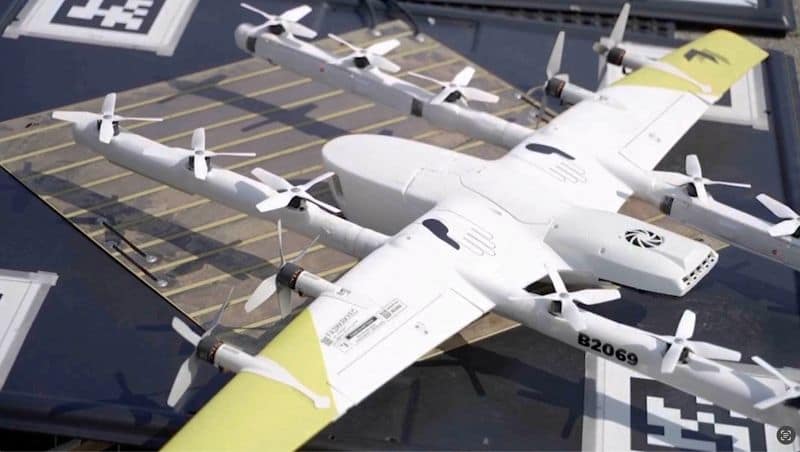
Wing, Alphabet's drone division, which counts Walmart as its largest client, sees a commercial inflection point. Its chief business officer, Heather Rivera, was hired to forge more commercial links with retailers and restaurants. Other food industry players like Papa John's and DoorDash are also developing nascent programs.
Research from PwC forecasts substantial growth, estimating the U.S. drone market will expand by 65% annually through 2034, with global drone deliveries potentially reaching over 800 million annually by then, up from about 13 million this year. The potential cost benefits are a significant draw, with PwC estimating per-delivery costs could fall to as low as $2 by 2034, considerably lower than traditional delivery methods.
While challenges such as noise and privacy concerns from communities persist, the allure of cost savings and speed is driving investment. Most U.S. operators are targeting suburban areas where the infrastructure and population density are conducive to air-based delivery. Walmart claims to have achieved deliveries in under five minutes, often faster than ground services.
In China, the "low altitude economy" is projected to grow significantly, with estimates suggesting it could reach over 2 trillion yuan ($280 billion) by 2030. Companies like JD Logistics are already reporting reduced shipping times for rural customers using drones.
The proposed FAA rules, if adopted, would allow certified operators to fly beyond visual line of sight without extensive waivers, potentially catalyzing "massive, exponential growth," according to Andreas Raptopoulous, CEO of Matternet. This would enable a more efficient, low-manpower operation, where one controller could potentially manage dozens of drones simultaneously, drastically reducing labor costs compared to traditional delivery fleets.