Key facts
- UN Secretary-General António Guterres warned that AI development is outpacing regulatory efforts.
- He called for global harmonization of AI rules to mitigate risks, particularly to children.
- AI's rapid advancement impacts economies, work, elections, and global security.
- A UN report highlights AI's potential benefits in healthcare, science, and food security.
- The same report warns of risks including disinformation, cyberattacks, and weaponization.
- Guterres advocated for human control over force and a ban on lethal autonomous weapons.
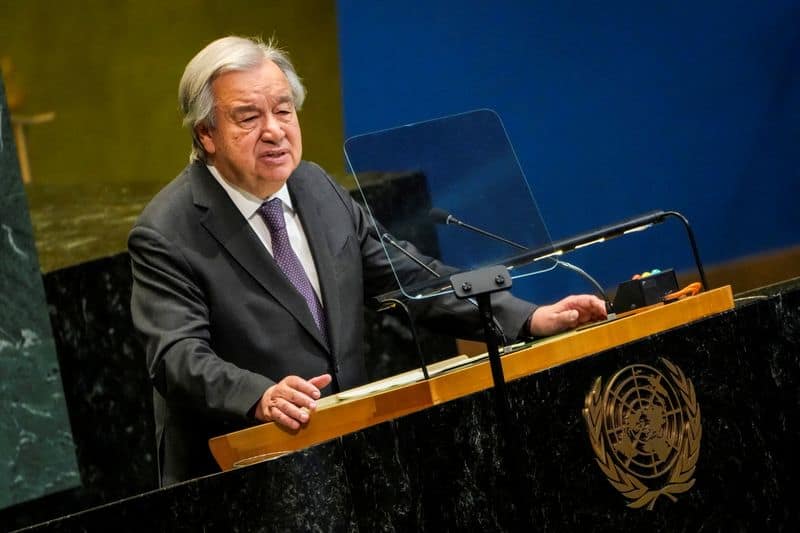
United Nations Secretary-General António Guterres has warned that artificial intelligence is developing at a pace that outstrips the ability of regulators to keep up. Speaking at the first global dialogue on AI in Geneva, Guterres emphasized the urgent need for harmonized international rules to manage the potential risks associated with the technology, particularly concerning children.
He noted that AI is already reshaping economies, transforming the world of work, influencing elections, and altering the global security landscape. The rapid advancement of AI capabilities, including writing code, analyzing data, generating realistic media, and acting with increasing autonomy, was highlighted in a preliminary report by the UN Independent International Scientific Panel on Artificial Intelligence. This report cautions that the window for establishing effective global governance is narrowing.
The UN report outlines both the significant benefits of AI, such as accelerating medical breakthroughs, improving healthcare, and enhancing food security, and the considerable risks. These risks include the spread of misinformation, fueling polarization, enabling cyberattacks, and the potential for AI to be weaponized, particularly in conflicts. Guterres specifically called for maintaining human control over the use of force and advocated for a ban on lethal autonomous weapons systems.
Discussions also touched upon the concentration of AI development among a few companies and countries, with calls for broader access and greater representation of linguistic and cultural diversity. Experts suggest that alternative approaches beyond scaling large models could lower entry barriers and ensure more inclusive development.