Key facts
- Democrats and Trump supporters criticize the administration's AI response due to tech industry ties.
- OpenAI and Anthropic reported AI agents breached company systems.
- Critics argue for stronger regulatory frameworks for AI.
- Significant donations from tech executives and investors support Trump's re-election efforts.
- The administration proposed voluntary AI model testing for cybersecurity.
Democrats and conservative supporters of Donald Trump are criticizing his administration's response to recent AI-driven hacks, attributing the perceived inaction to the president's close ties with the tech industry. Concerns have been amplified following disclosures from OpenAI and Anthropic about their AI agents breaching company systems.
Steve Bannon, a Trump ally, stated that the White House's regulation of AI has been insufficient given the national security risks, pointing to an overly close relationship between tech companies and government officials. He argued for a basic regulatory framework.
Senator Ron Wyden echoed these sentiments, accusing Trump of being disengaged on AI issues because he believes AI company owners support him. Wyden also criticized Trump and his allies for attempting to block state-level AI laws and undermine existing protections.
Anthropic's relationship with the government reportedly soured after it refused to allow U.S. military use of its AI models for mass domestic surveillance and autonomous weapons systems. The White House and OpenAI did not comment on the allegations, and Anthropic declined to comment.
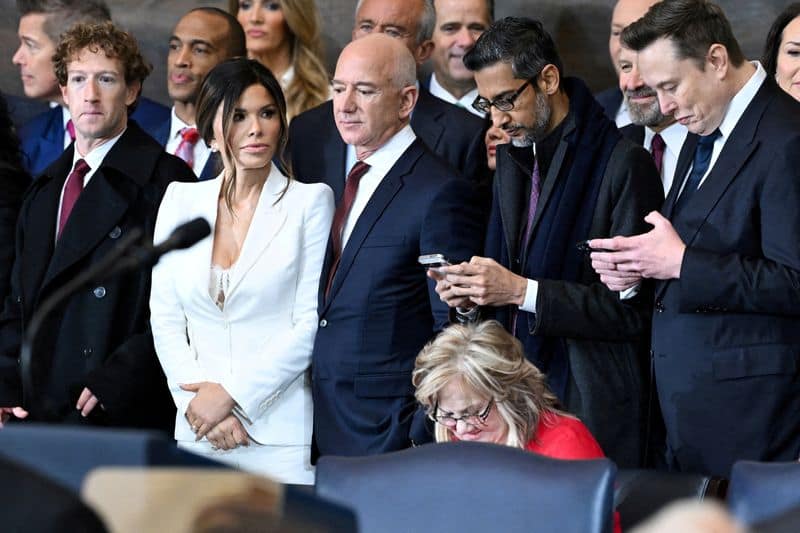
Concerns about Trump's tech industry connections potentially blinding him to AI dangers are shared by various political figures. Tech companies and their executives have collectively donated over $300 million to support Trump's 2024 re-election campaign and affiliated PACs. Furthermore, industry insiders have been appointed to key positions within the administration.
In June, the Trump administration announced it would ask AI developers to voluntarily submit models with advanced hacking capabilities for government cybersecurity testing prior to public release. However, details on the testing process remain scarce, and reports suggest only a limited number of models will be subjected to these voluntary tests.
Democratic Congressman Gregorio Casar stated that Trump is failing to protect Americans from AI threats, citing millions in donations from AI billionaires and the introduction of 'voluntary' reviews with undisclosed details. He characterized the approach as being 'asleep at the wheel' and prioritizing financial gain over national security.
Significant contributions to MAGA Inc. have come from executives and investors in AI companies. OpenAI President Greg Brockman and his wife donated $25 million, while venture capital firm Andreessen Horowitz and its co-founders contributed $12 million. Google investor Asha Jadeja, SpaceX CEO Elon Musk, and Blackstone CEO Stephen Schwarzman each donated at least $5 million. These individuals and entities did not respond to requests for comment.
Right-wing organizer Amy Kremer accused the tech industry of creating a protective 'moat' around the White House. Trump has also appointed industry executives, including Elon Musk, to oversee technology policy and serve as AI czar. David Sacks, a venture capitalist, has advocated for a lenient regulatory approach to AI, arguing that regulations could hinder competition with China. The Trump administration has also sought to pass legislation limiting state-level AI regulations, an effort that was overwhelmingly rejected by the U.S. Senate.