Key facts
- A South Korean and U.S. research team has developed a robotic technology that enables self-dressing.
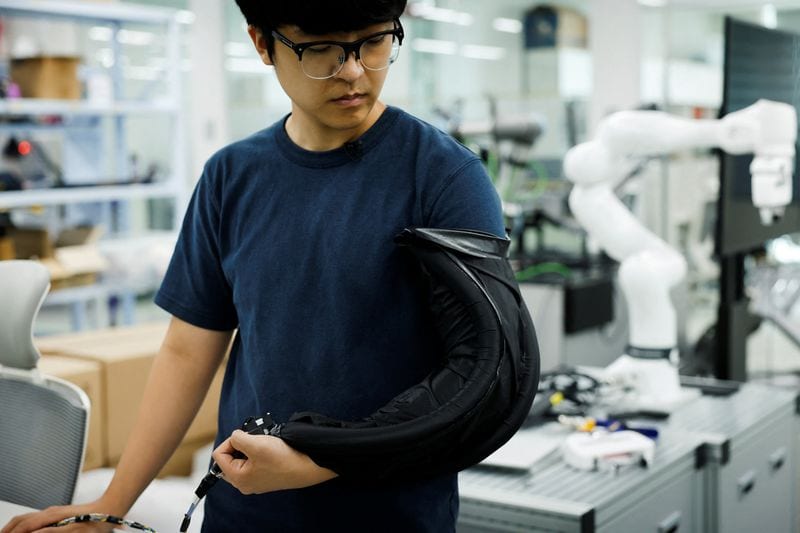
- The system uses soft, flexible vines powered by air pressure embedded in clothing.
- The vines move the fabric up the wearer's body, similar to climbing ivy, even if the person is not standing still.
- It takes about 10 seconds to put on a full suit using this technology.
- Potential applications include assisting the elderly and disabled, and use in semiconductor cleanrooms and by emergency workers.
A collaborative team of researchers from South Korea's KAIST and Stanford University has introduced a novel robotic technology designed to assist individuals in dressing themselves. This innovation utilizes soft, flexible "vines" integrated into clothing, which are powered by air pressure. When activated, these vines smoothly glide the fabric onto the wearer's body, akin to ivy climbing a structure, without requiring the person to remain stationary.
Kim Nam Gyun, a KAIST postdoctoral researcher and lead author of the study, explained that the vine robot stays close to the person, turning the clothing inside out as it moves to ensure stable climbing along the body's shape. The process takes approximately 10 seconds to don a full suit. A key advantage highlighted by the researchers is the technology's ability to function without the wearer needing to stand motionless and without complex control algorithms.
Professor Ryu Jee-Hwan of KAIST elaborated that the robot's design, inspired by climbing ivy, allows it to advance by growing at its tip rather than shifting its entire body, ensuring stable movement across curved surfaces. This adaptability means it can navigate narrow gaps and adapt to environmental shapes, regardless of surface conditions.
Beyond immediate applications for the elderly and disabled, the researchers foresee significant potential in scenarios requiring rapid donning and doffing of specialized gear without the use of hands. This includes environments like semiconductor cleanrooms, where maintaining sterility is crucial, and for emergency workers needing to quickly put on personal protective equipment. Ryu also noted that while AI software often garners attention, this self-dressing robot exemplifies how mechanical engineering can complement software advancements. The findings were published in the peer-reviewed journal IEEE Robotics and Automation Letters.