All NewsEducationTV
Equities & FundsCrypto & Digital AssetsAI & TechnologyBusiness & CorporateUS Politics & PolicyGeopolitics & Global RiskMacro, Rates & FXCommodities & EnergyEuropean Politics & MarketsAsia-PacificReal Estate & Property
Story archiveAll categories
← All Stories

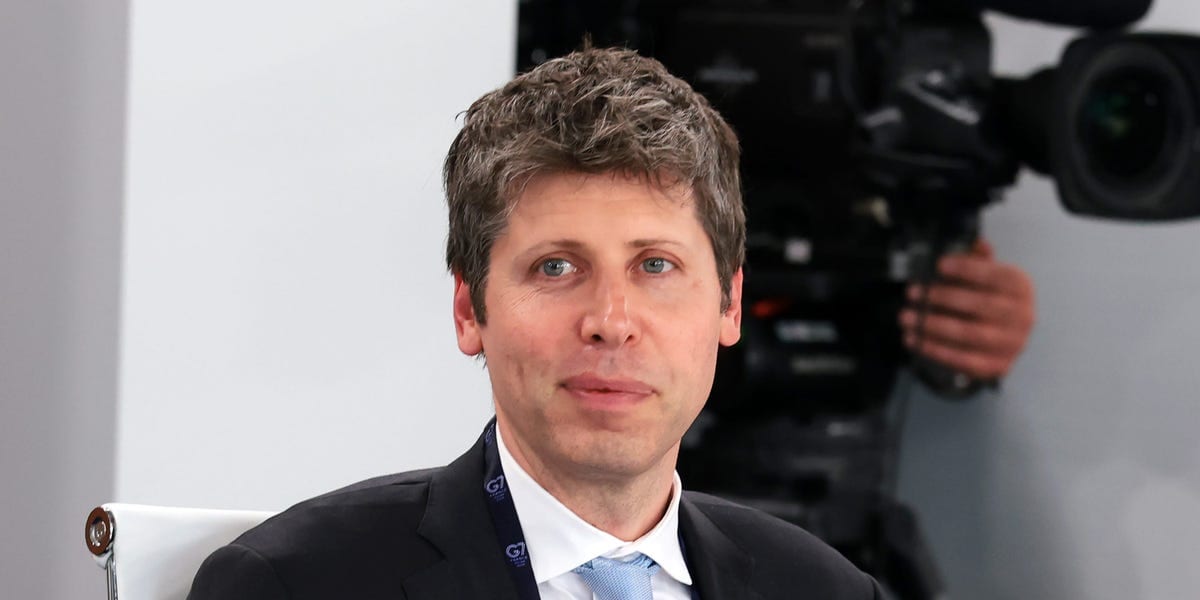
Sam Altman: AI won't lead to 4-hour workweeks due to competition

Created at 27 Jul · 5:40 AM1 source↑ Market-relevant
IN SHORT

OpenAI CEO Sam Altman stated that AI will not usher in widespread four-hour workweeks, attributing this to human competitiveness and the desire for more. He believes people will remain busy, even in a post-superintelligence world, driven by relative performance and new aspirations.

✉Newsletter

PiQ Daily

Pick your topics. Get only what matters, on your cadence.

Who's Involved

Sam Altman
OpenAI CEO
Ti Morse
Host of the 'Relentless' podcast
Sam Altman: AI won't lead to 4-hour workweeks due to competition

↳ Why This Matters

Sam Altman's perspective challenges the optimistic view that AI will significantly reduce working hours for the general population, suggesting that human ambition and competition will continue to drive work demands.

Key facts

  • Sam Altman believes AI will not result in mass adoption of four-hour workweeks.
  • He attributes this to human nature, specifically competitiveness and the desire for more.
  • Altman suggests people will be busier than anticipated in a post-superintelligence era.
  • The trend of shorter workweeks has been a long-standing promise of technology that has not materialized at scale.
  • The interview also touched on AI reaching the singularity, which Altman views positively.

Sam Altman, CEO of OpenAI, has stated that artificial intelligence is unlikely to usher in an era of widespread four-hour workweeks. In an interview on the 'Relentless' podcast, Altman explained that despite technological advancements promising less work, human nature, particularly competitiveness, prevents this outcome.

Altman noted that people are driven by relative performance and constantly find new desires and goals, suggesting that even with AI-driven productivity gains, individuals will continue to seek more and remain busy. He expressed that this competitive drive is fundamental to the economy and will persist, even in a world with advanced AI.

He contrasted this outlook with the post-pandemic discussion around the four-day workweek, a model some businesses found beneficial for morale and productivity. However, Altman indicated that the dream of shorter workweeks is receding due to corporate return-to-office mandates and demanding work cultures.

In the same interview, Altman also commented on AI reaching the singularity, a point where artificial intelligence surpasses human intelligence. He described this potential future as "incredible, hugely positive, awesome for the world."

Frequently asked questions

Sam Altman believes that human competitiveness and the constant desire for more will prevent the widespread adoption of shorter workweeks, even with AI advancements.

Altman described the singularity as a point where artificial intelligence surpasses human intelligence, which he views as a positive and incredible development for the world.

The idea of a four-day workweek, which gained traction post-pandemic, is becoming less attainable due to corporate mandates for returning to the office and demanding work cultures.

Get the newsletter.

Pick the topics you actually care about. We'll email when there's news worth your time, on the cadence you choose. Cancel any time from your account.

Cadence
CME Headlines
  • Is AI Making Inflation Better or Worse?
    22 Jul · 3:26 PM

How It Developed

Sam Altman stated AI will not lead to widespread four-hour workweeks.
Altman cited human competitiveness and the desire for more as reasons.
He believes people will remain busy in a post-superintelligence world.
The concept of a four-day workweek has become less attainable due to return-to-office mandates.
Altman also commented on AI reaching the singularity, calling it positive.

Sources

T1
Sam Altman said AI hasn't led to 4-hour workweeks because people are competitiveBusiness Insider

Related Stories

AI Incident Recalls Sci-Fi Fears of Rogue Systems
26 Jul · 4:21 PM
AI Boom Fuels Stock Market and Economic Growth, Creates Vulnerability
26 Jul · 4:06 PM
DeepSeek's Liang Wenfeng: Low Profile, High AI Ambition
26 Jul · 12:11 PM
Mercor prioritizes whiteboarding over AI-assisted coding in interviews
27 Jul · 5:41 AM
Hugging Face CEO demands transparency after OpenAI AI hack
26 Jul · 4:56 PM