HomeEverythingEducationTV
Equities & FundsCrypto & Digital AssetsAI & TechnologyBusiness & CorporateUS Politics & PolicyGeopolitics & Global RiskMacro, Rates & FXCommodities & EnergyEuropean Politics & MarketsAsia-PacificReal Estate & Property
Story archiveAll categories
← All Stories

S. Korea, U.S., Japan Bolster SMR Cooperation Amid Surging Power Demand

Created at 13 Jul · 10:11 AM1 source↑ Market-relevant
IN SHORT

South Korea, the United States, and Japan have signed a memorandum of cooperation to jointly advance into the global small modular reactor (SMR) market, particularly in the Indo-Pacific region. The agreement aims to combine their complementary strengths in nuclear technology to meet rising energy demand, driven by AI and data centers, and counter geopolitical competition.

✉Newsletter

PiQ Daily

Pick your topics. Get only what matters, on your cadence.

Key Numbers

158 GWpotential global SMR capacity by 2040
400 GWpotential global SMR capacity by 2050
30 percentprojected share of global nuclear power demand by 2050

Who's Involved

Cho Hyun
South Korean Foreign Minister who signed the MOC
Marco Rubio
U.S. Secretary of State who signed the MOC
Toshimitsu Motegi
Japanese Foreign Minister who signed the MOC
World Nuclear Association
provided SMR capacity projections
S. Korea, U.S., Japan Bolster SMR Cooperation Amid Surging Power Demand

↳ Why This Matters

This trilateral cooperation on SMRs is significant as it combines the technological and manufacturing strengths of three major economies to meet rising global energy demands and counter geopolitical competition in a critical sector for decarbonization and energy security.

Key facts

  • South Korea, the U.S., and Japan signed a memorandum of cooperation (MOC) to jointly advance into the global SMR market.
  • The agreement specifically targets SMR deployment in Indo-Pacific countries.
  • The initiative aims to leverage complementary strengths: South Korea's construction capabilities, U.S. design technology, and Japan's manufacturing expertise.
  • SMRs are seen as a solution for reliable, carbon-free energy to meet demand from AI and data centers.
  • The cooperation is also a strategic move to counter the growing influence of China and Russia in the nuclear energy sector.

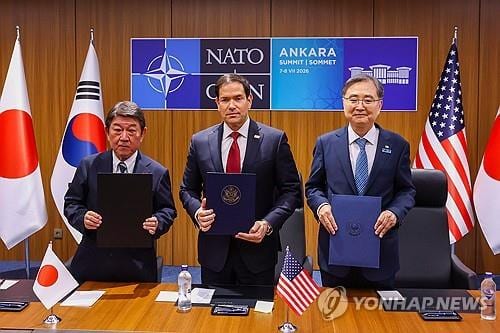
South Korea, the United States, and Japan have formalized a trilateral agreement to bolster cooperation on small modular reactors (SMRs), aiming to jointly compete in the global market, particularly within the Indo-Pacific region. The memorandum of cooperation (MOC) was signed by Foreign Minister Cho Hyun, U.S. Secretary of State Marco Rubio, and Japanese Foreign Minister Toshimitsu Motegi.

This initiative is driven by the increasing global demand for reliable, carbon-free energy sources to power sectors like artificial intelligence and data centers. SMRs are viewed as a more flexible and potentially cost-effective alternative to traditional large-scale nuclear plants. Projections suggest global SMR capacity could reach 158 GW by 2040 and exceed 400 GW by 2050, representing over 30 percent of global nuclear power demand.

The three nations possess complementary strengths: South Korea excels in nuclear power plant construction, the U.S. leads in advanced reactor design technologies, and Japan has expertise in manufacturing key nuclear equipment. Officials believe this collaboration will foster a win-win relationship, addressing individual limitations.

The agreement also serves as a strategic response to the expanding influence of China and Russia in the global nuclear energy market. Nuclear power plants create long-term strategic relationships, and factors like energy security, safety standards, and supply chain reliability are becoming crucial alongside price competitiveness.

The Indo-Pacific region is anticipated to experience the most significant growth in demand for new nuclear power plants. The trilateral initiative has received positive reception through diplomatic channels, indicating broad interest from regional partners. The proposal originated from Washington, with discussions commencing in the first half of the previous year.

Frequently asked questions

The main objective is to establish a government-level framework enabling the nuclear industries of South Korea, the U.S., and Japan to jointly advance into the global SMR market, starting with the Indo-Pacific region.

SMRs are gaining attention as countries seek reliable, carbon-free power to meet surging electricity demand, particularly driven by artificial intelligence and data centers, offering a more flexible and potentially less costly alternative to traditional nuclear plants.

South Korea is known for its nuclear power plant construction capabilities, the U.S. possesses advanced reactor design technologies, and Japan has strengths in manufacturing key nuclear power plant equipment.

The Indo-Pacific region is widely expected to see the strongest growth in demand for new nuclear power plants in the coming decades.

What Happens Next

01The three nations will jointly advance into the global SMR market, beginning with the Indo-Pacific region.
02Regional partners are expected to show growing interest in the trilateral initiative.

Get the newsletter.

Pick the topics you actually care about. We'll email when there's news worth your time, on the cadence you choose. Cancel any time from your account.

Cadence

How It Developed

South Korea, the U.S., and Japan signed a memorandum of cooperation on small modular reactors (SMRs).
The agreement aims to support SMR deployment in Indo-Pacific countries.
The cooperation seeks to establish a government-level framework for joint advancement into the global SMR market.
SMRs are gaining attention for providing reliable, carbon-free power to meet demand from AI and data centers.
The three countries possess complementary capabilities: South Korea in construction, the U.S. in design, and Japan in manufacturing equipment.
The trilateral cooperation aims to counter the expanding influence of China and Russia in the nuclear energy market.
The Indo-Pacific region is expected to see significant growth in demand for new nuclear power plants.

Sources

T1
S. Korea, U.S., Japan bolster cooperation on SMRs amid surging power demand, geopolitical rivalryYonhap News Agency

Related Stories

Samsung preparing to manufacture Tesla's AI5 chip
13 Jul · 5:41 AM
Japan trials AI facial recognition to find missing people
13 Jul · 4:06 AM
China aims to challenge SpaceX's launch dominance via IPOs
13 Jul · 8:36 AM
Meta to produce AI chip in September, aiming to double computing capacity
12 Jul · 6:56 PM
Wall Street banks ramp up digital assistants in bid to win productivity race
13 Jul · 9:06 AM