Key facts
- Gaianixx, a Japanese chip materials startup, is expanding production to meet AI-driven demand.
- The company plans to start trial mass production by the end of the year.
- Rapidus, another Japanese firm, is targeting 2nm mass production by 2027 with support from major corporations and the government.
- Japan holds significant technological advantages in semiconductor manufacturing equipment, materials, and testing.
- Japanese firms are crucial suppliers of essential components and materials for the global AI semiconductor industry.
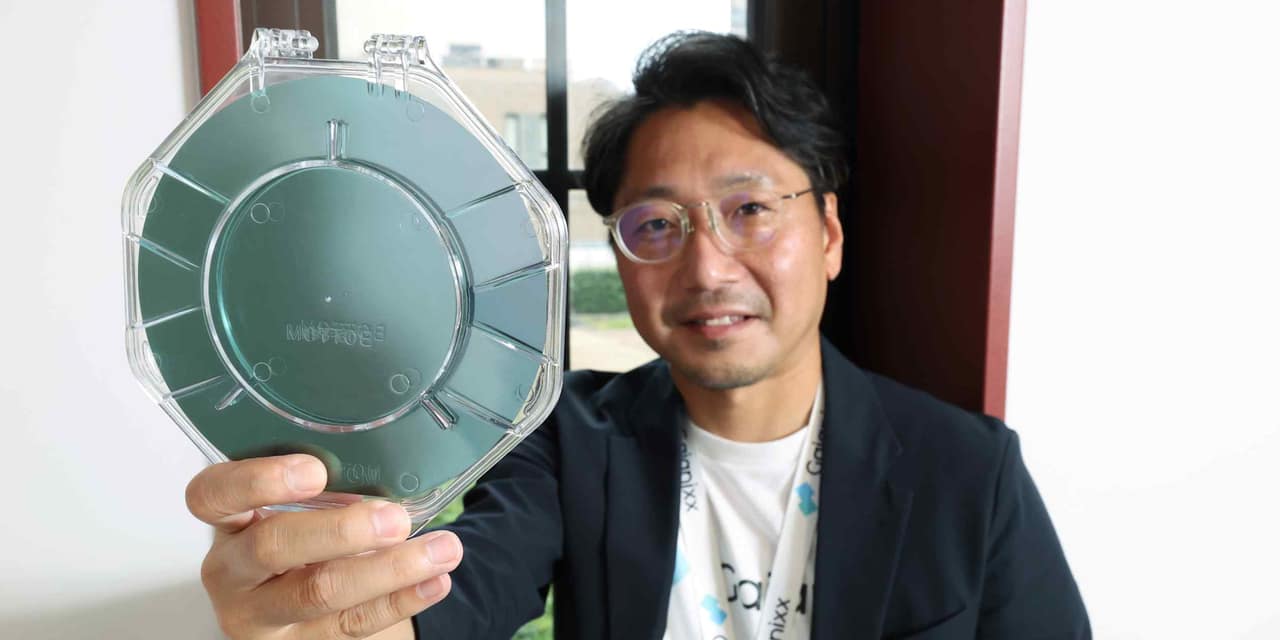
A Japanese chip materials startup, Gaianixx, spun off from the University of Tokyo, is expanding its production capabilities to capitalize on the burgeoning artificial intelligence market. The company, led by co-founder and CEO Kento Nakao, anticipates commencing trial mass production by the end of this year, buoyed by commitments from major customers.
This development aligns with Japan's broader strategic push to regain prominence in the global semiconductor industry, particularly in the context of AI. Another key player, Rapidus Corporation, a Japanese semiconductor company established in August 2022, is aggressively pursuing the development and manufacture of 2-nanometer node chips, with a target for mass production by 2027. Rapidus is a significant undertaking, backed by a consortium of major Japanese corporations including Toyota, Sony, and NTT, alongside substantial government support. Its objective is to establish a high-performance foundry crucial for AI, autonomous driving, and edge computing applications, thereby enhancing Japan's competitiveness.
Japan's historical strength in the semiconductor sector, though peaking in the 1980s, persists through world-class expertise in specialized areas. Japanese companies dominate global market shares in critical segments such as semiconductor manufacturing equipment, materials, testing and inspection, power devices, and automotive electronics. In the current AI-driven era, their influence is amplified across various functional categories. These include strategic fab equipment leaders like Tokyo Electron and SCREEN Holdings; AI test, inspection, and yield control specialists such as Advantest and Lasertec; wafer material providers like SUMCO and precision processing firms like DISCO; and automotive and power semiconductor manufacturers including Renesas Electronics and ROHM. Furthermore, companies like IBIDEN, Shinko Electric, Kyocera, Murata Manufacturing, Resonac, TDK, and Taiyo Yuden are vital for advanced packaging and the 3D fab ecosystem.
While global discussions on AI semiconductors often highlight companies like NVIDIA, AMD, and TSMC, the foundational contributions of Japanese firms in manufacturing equipment, materials, and specialized components are indispensable. Their control over essential equipment, process modules, yield management, and foundational materials like silicon wafers and packaging solutions underpins the entire advanced manufacturing process. This strategic positioning is critical for the future development of AI technologies.