HomeEverything
Equities & FundsCrypto & Digital AssetsAI & TechnologyBusiness & CorporateUS Politics & PolicyGeopolitics & Global RiskMacro, Rates & FXCommodities & EnergyEuropean Politics & MarketsAsia-PacificReal Estate & Property
← All Stories

Hyundai Motor's Namyang R&D Center Embraces Digital Engineering and AI

Created at 1 Jul · 11:55 PM1 source↑ Market-relevant
IN SHORT

Hyundai Motor Group's Namyang R&D Center is transforming into a digital engineering hub, focusing on software-defined vehicles (SDVs), AI technologies, and next-generation mobility solutions. The facility is leveraging virtual testing, 3D scanning, and wire cars to accelerate development and enhance vehicle quality.

✉Newsletter

PiQ Daily

Pick your topics. Get only what matters, on your cadence.

Key Numbers

3.3 million square meterssize of the Namyang R&D park
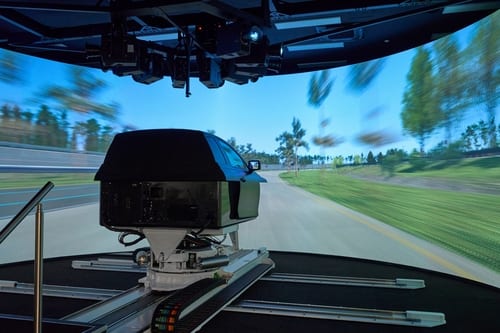
270-degreewraparound screen in the driving simulator
1,000 pointspoints measured on vehicle bodies for inspection

Who's Involved

Hyundai Motor Group
automotive group developing new mobility solutions
Jeong Pil-young
head of the driving performance concept development team
Kim Sang-yeon
head of the pilot electronic control development team
Hyundai Motor's Namyang R&D Center Embraces Digital Engineering and AI

↳ Why This Matters

Hyundai Motor Group's investment in digital engineering and AI at its Namyang R&D Center signals a strategic pivot towards software-defined vehicles, aiming to accelerate development cycles, enhance product quality, and maintain a competitive edge in the rapidly evolving automotive industry.

Key facts

  • Hyundai Motor Group's Namyang R&D Center is transitioning to a digital engineering hub.
  • The facility is developing software-defined vehicles (SDVs) and AI technologies.
  • A driving simulator can reduce vehicle testing time from months to about a week.
  • Robotic arms with 3D scanners inspect vehicle body dimensions with sub-millimeter accuracy.
  • The NOVA Lab uses 'wire cars' to validate electrical systems and detect software bugs.
  • Hyundai is increasingly relying on digital simulations and virtual engineering for vehicle development.

Hyundai Motor Group's Namyang R&D Center, located in Hwaseong, South Korea, is undergoing a significant transformation into a digital engineering hub. The sprawling campus, traditionally known for designing and testing physical vehicles, is now prioritizing the development of software-defined vehicles (SDVs), artificial intelligence (AI) technologies, and advanced mobility solutions.

During a recent media tour, the center showcased its evolving capabilities. The new Driving Simulator Studio allows engineers to conduct virtual test drives, evaluating driving performance and road response in a digital replica of the proving ground. This technology has drastically reduced testing time from one to two months to approximately one week.

Further enhancing precision and efficiency, the Digital Measurement Center employs robotic arms with high-precision 3D scanners to inspect vehicle body dimensions at over 1,000 points with sub-millimeter accuracy. The Additive Manufacturing Solution Center utilizes industrial 3D printers to rapidly produce complex prototype parts directly from digital designs, bypassing the need for molds.

A key element of the SDV transition is the Next-generation Open Validation & Automation (NOVA) Lab, which features 'wire cars.' These full-scale replicas of a vehicle's electrical architecture allow engineers to identify software bugs and validate electronic systems before physical prototypes are constructed. This approach is crucial as vehicle competitiveness increasingly relies on software architecture, computing power, and AI algorithms.

This shift towards virtual engineering, where digital twins and simulations replace traditional physical testing, reflects a broader industry trend. Hyundai Motor Group aims to leverage these digital technologies to reduce development time, improve quality, and strengthen its technological leadership in the future of mobility.

Frequently asked questions

The center is transforming into a digital engineering hub, focusing on software-defined vehicles (SDVs), AI technologies, and next-generation mobility solutions.

The driving simulator has shortened the vehicle testing process from one to two months to about a week by allowing engineers to evaluate driving performance in a virtual environment.

Wire cars are used in the NOVA Lab to physically assemble a vehicle's entire electrical system to verify functions, communications, and diagnostic capabilities before a prototype is built, helping to detect software bugs.

What Happens Next

01Continued development of AI technologies for future mobility solutions.
02Further integration of digital twins and simulations into the vehicle development process.

Get the newsletter.

Pick the topics you actually care about. We'll email when there's news worth your time, on the cadence you choose. Cancel any time from your account.

Cadence

How It Developed

Hyundai Motor Group's Namyang R&D Center is evolving into a digital engineering hub.
The center is focusing on software-defined vehicles (SDVs) and AI technologies.
A new driving simulator allows for rapid virtual testing of vehicle performance.
Robotic arms with 3D scanners ensure sub-millimeter accuracy in vehicle body inspections.
The Additive Manufacturing Solution Center uses 3D printers for rapid prototype part creation.
The NOVA Lab uses 'wire cars' to detect software bugs before physical prototypes are built.
Hyundai is shifting towards virtual engineering, using digital simulations to optimize vehicles.
The company aims to reduce development time and enhance quality through digital technologies.

Sources

T1
Inside Hyundai Motor's Namyang R&D Center: Building the future of mobilityYonhap News Agency

Related Stories

Wayve courts automakers with AI driving system that learns like humans
1 Jul · 10:12 AM
Toyota deploys AI agents to speed vehicle development and production
1 Jul · 5:40 AM
AI Startup Oxmiq Raises $35 Million for Chip Architecture
1 Jul · 1:19 PM
Fish Named After Blackpink's Jennie; China Unveils 6G Smart City
1 Jul · 7:35 AM
China Battery Group Plans Patent Pool to Fend Off IP Lawsuits
1 Jul · 7:10 PM