Key facts
- South Korean conglomerates will invest a total of 312 trillion won ($201.7 billion).
- Investments will focus on AI, small modular reactors (SMRs), chips, electronics, and space industries.
- Hanwha Group will invest 55 trillion won in aerospace and AI sectors.
- SK Group plans to build a 2-gigawatt AI data center.
- The initiative is part of President Lee Jae Myung's plan to boost national technology and industrial power.
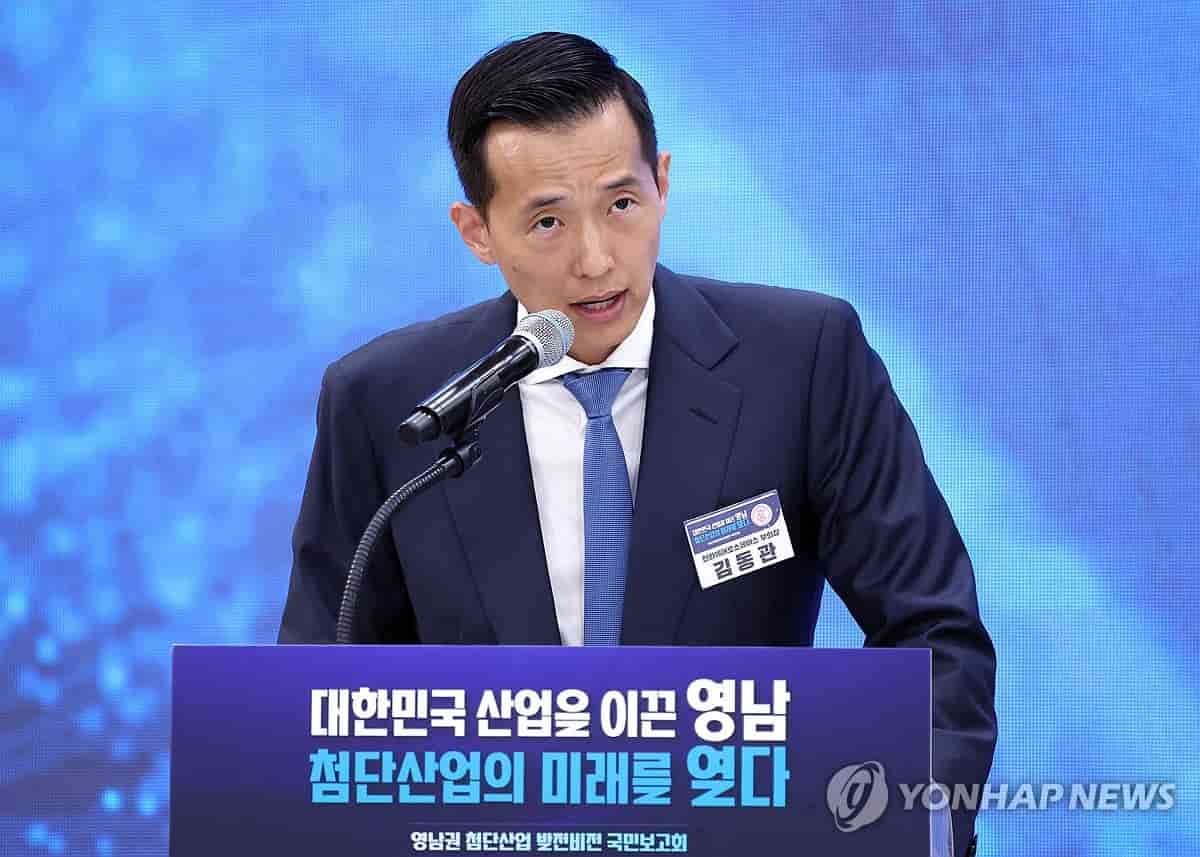
South Korean conglomerates are set to invest a combined 312 trillion won (approximately $201.7 billion) in cutting-edge industries, including artificial intelligence (AI) and small modular reactors (SMRs), primarily in the southeastern Yeongnam region. The initiative, unveiled by groups such as Hanwha, Hyundai Motor, Samsung, and SK, aims to leverage the region's existing industrial infrastructure to foster growth in sectors like chips, electronics, and space.
This broad investment drive is part of President Lee Jae Myung's ambitious tripolar mega projects, designed to advance technologies nationwide and position South Korea as a leader in the emerging AI era. Similar investment announcements have already been made for the southwestern and central regions.
Specific commitments include Hanwha Group's plan to invest 55 trillion won in satellites, launch vehicles, and AI data centers for its space and defense sectors. Hyundai Motor Group will allocate 42 trillion won towards developing AI-based autonomous driving, manufacturing AI, and future aviation technologies. Samsung Group intends to invest 60 trillion won to establish mass-production lines for humanoid robots and next-generation batteries. SK Group announced a significant investment of 140 trillion won, in partnership with overseas entities, to construct an AI data center with a 2-gigawatt power capacity.
Further investments include Doosan Group's 5.1 trillion won commitment to SMRs and other energy projects, and LG Group's 9.4 trillion won allocation for premium home appliance research and development, alongside expanding semiconductor substrate production capacity. The Ministry of Finance and Economy highlighted that these investments will create a comprehensive national semiconductor production chain, with different regions specializing in manufacturing, packaging, and next-generation chip development.
The government also plans to promote the application of physical AI across various industries, establishing a "cutting-edge robot belt" for innovation in the southeastern region. The strategy aims to cultivate new growth engines in shipbuilding, automobiles, space, defense, and energy, transforming the southeastern area into a global hub for advanced manufacturing, with particular government support for the space and defense sectors.