HomeEverything
Equities & FundsCrypto & Digital AssetsAI & TechnologyBusiness & CorporateUS Politics & PolicyGeopolitics & Global RiskMacro, Rates & FXCommodities & EnergyEuropean Politics & MarketsAsia-PacificReal Estate & Property
← All Stories

Global Scammers Exploit US AI Tech to Target Victims

Created at 30 Jun · 4:55 AM2 sources↑ Market-relevant2 events
IN SHORT

An investigation revealed that global scammers are leveraging U.S. artificial intelligence technology to target thousands of victims worldwide. The methodology involved analyzing leaked scam center data, including device connections from compounds in Myanmar linked to sanctioned entities.

✉Newsletter

PiQ Daily

Pick your topics. Get only what matters, on your cadence.

Key Numbers

202,013connections made by devices at four scam compounds in Myanmar
fourscam compounds in Myanmar analyzed
19countries represented by interviewed scammers
58scam victims interviewed
three dozencurrent and former scammers interviewed
25new scam compounds in Myanmar identified
13new compounds using Starlink IP addresses

Who's Involved

Associated Press
Investigative news agency that analyzed scam data
FRONTLINE
PBS documentary series collaborating on the investigation
C4ADS
Organization that analyzed AI misuse at scam centers
International Justice Mission
Anti-trafficking non-profit that provided data on scam compounds
Scamalytics
Fraud prevention company that provided risk indicators for IP addresses
Spur Intelligence Corporation
Cybersecurity company that reviewed data for ad fraud instances
Karen National Army (KNA)
Armed militia sanctioned by the U.S. Treasury for facilitating cyberscams
Democratic Karen Benevolent Army (DKBA)
Militia sanctioned by the U.S. Treasury for supporting cyberscam centers
Global Scammers Exploit US AI Tech to Target Victims

↳ Why This Matters

The findings highlight the sophisticated methods used by global criminal networks to exploit advanced U.S. technology, underscoring the challenges in combating cybercrime and protecting individuals from increasingly deceptive scams.

Key facts

  • Global scammers are exploiting U.S. AI technology to target victims worldwide.
  • An investigation analyzed device connections from scam compounds in Myanmar linked to sanctioned entities.
  • The Karen National Army (KNA) and Democratic Karen Benevolent Army (DKBA) have been sanctioned for their roles in facilitating cyberscams.
  • New scam compounds in Myanmar have been identified, with some utilizing Starlink IP addresses.

Global scammers are increasingly exploiting U.S. artificial intelligence technology to target victims worldwide, according to an investigation by The Associated Press and "FRONTLINE." The investigation uncovered instances of romantic scams created by impersonating individuals using AI.

The methodology involved analyzing tens of thousands of leaked scam center files, videos, and photos. This included an examination of over 200,000 device connections from four scam compounds in Myanmar, which have been linked to entities sanctioned by the U.S. government. The data, obtained by the International Justice Mission and shared with the AP, logs devices' geographic coordinates and IP addresses, allowing for the identification of internet traffic origins and hosting companies.

Risk indicators from Scamalytics, including blacklists and its own risk score, were used to enrich the data. However, the dataset captures only geolocation-enabled devices, suggesting the actual internet infrastructure is larger than recorded. Spur Intelligence Corporation identified instances of ad fraud within the data, which were subsequently removed by the AP.

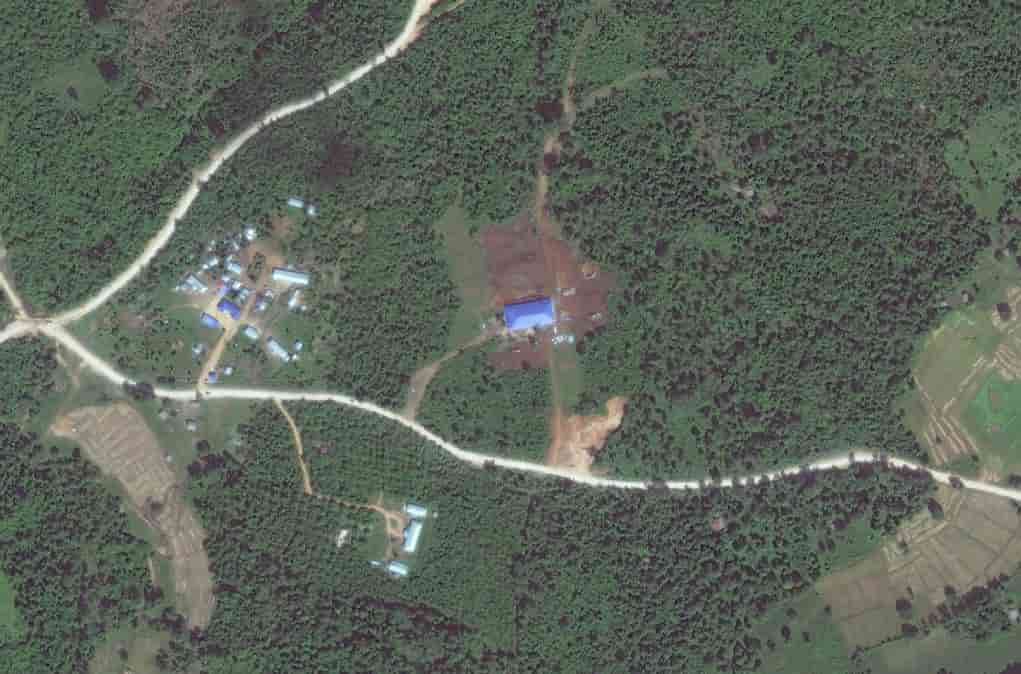
Telecommunications companies and internet service providers play a role by connecting scammers to the internet, hosting fraudulent platforms, and masking locations through VPNs or proxy networks. Devices were geolocated to compounds including Tai Chang, Deko Park, KK Park, and a new compound near Hpakalu, Myanmar.

KK Park operates under the protection of the Karen National Army (KNA), an armed militia affiliated with the Myanmar military. The U.S. Treasury designated the KNA as a transnational criminal organization in May 2025 for its role in facilitating cyberscams and human trafficking. The KNA has profited from scam operations by leasing land to criminal syndicates. Following a demolition campaign against KK Park in October 2025, scammers dispersed, with some moving to the emerging site in Hpakalu.

Deko Park and Tai Chang are in territory controlled by the Democratic Karen Benevolent Army (DKBA), which was sanctioned by the U.S. Treasury in November 2025 for supporting cyberscam centers. Rescued trafficking victims have reported torture and beatings by DKBA soldiers at the Tai Chang compound.

Additionally, the International Justice Mission identified 25 new scam compounds in Myanmar that have appeared or grown since the crackdown in October 2025. Analysis of device activity at these sites between March and June 2026 revealed that at least 13 used Starlink IP addresses.

Frequently asked questions

Scammers are using U.S. AI technology to create various scams, including romantic scams where individuals are impersonated.

The investigation focused on scam compounds in Myanmar, including Tai Chang, Deko Park, KK Park, and a new compound near Hpakalu.

The U.S. Treasury has sanctioned the Karen National Army (KNA) and the Democratic Karen Benevolent Army (DKBA) for their roles in facilitating cyberscams and human trafficking.

Scammers are leveraging U.S. artificial intelligence technology and, in some cases, Starlink IP addresses for their operations.

What Happens Next

01The Associated Press and "FRONTLINE" will release an upcoming documentary on the investigation.
02Further analysis of device activity at new scam compounds in Myanmar will continue.

Get the newsletter.

Pick the topics you actually care about. We'll email when there's news worth your time, on the cadence you choose. Cancel any time from your account.

Cadence

How It Developed

Global scammers are using U.S. AI technology to target thousands of victims.
One scammer impersonated a woman to create romantic scams.
An investigation analyzed tens of thousands of leaked scam center files, videos, and photos.
Analysis of device connections from four scam compounds in Myanmar linked to sanctioned entities was conducted.
Interviews were conducted with 58 scam victims and three dozen current and former scammers from 19 countries.
Data from International Justice Mission revealed at least 13 new scam compounds in Myanmar used Starlink IP addresses.
The Karen National Army (KNA) was designated by the U.S. Treasury as a transnational criminal organization for facilitating cyberscams and human trafficking.
The Democratic Karen Benevolent Army (DKBA) was sanctioned by the U.S. Treasury for supporting cyberscam centers.

Sources

T1
Four days to make victims fall in love: How global scammers use US tech to fleece peopleAP News
T1
Methodology for AP/'FRONTLINE’ investigation into how US tech is abused for global scamsAP News

Related Stories

Apple Accelerates Software Updates Amid AI Cybersecurity Threats
29 Jun · 6:54 PM
Apple iPhone 18 Pro supplier list, parts and photos exposed in Tata data leak
29 Jun · 6:30 PM
US university grads blame AI for job search struggles
29 Jun · 6:30 PM
AI Firms Launch $500M Initiative to Aid Workers Through Tech Transition
29 Jun · 9:26 AM
AI Power Shortage Looms as Demand Outstrips Grid Capacity
30 Jun · 2:55 AM