Key facts
- Dogs can differentiate between happy and sad human facial expressions.
- Specific brain regions in dogs, such as the temporal cortex and caudate nucleus, activate in response to happy human faces.
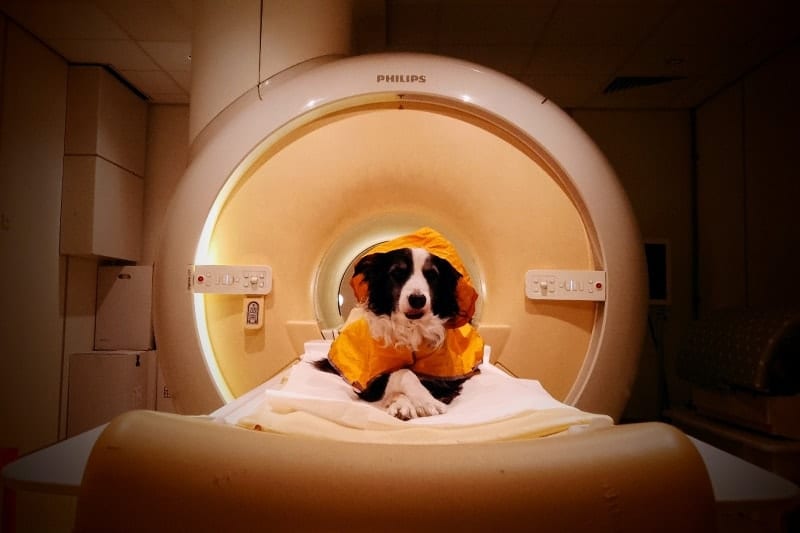
- The study used fMRI scans to observe canine brain activity.
- Dogs also showed an ability to distinguish between anger, sadness, and fear in human faces.
A new study suggests that dogs possess a sophisticated ability to read human emotions by analyzing facial expressions, a capability that may be more developed in canines than in some other species, including chimpanzees. Researchers utilized functional magnetic resonance imaging (fMRI) to observe brain activity in dogs as they were presented with images of human faces displaying various emotions.
The study, published in the journal iScience, involved 14 dogs, predominantly border collies, along with golden retrievers and a Labrador. These dogs underwent extensive training to tolerate the MRI scanner, which required them to remain still for extended periods while wearing noise-reducing headphones.
When shown images of happy human faces, specific areas of the dogs' brains, including the temporal cortex and the caudate nucleus, showed increased activity. The temporal cortex is associated with higher cognitive functions, memory formation, and processing emotions, while the caudate nucleus is linked to reward processing and motivation. Neutral faces did not elicit the same level of response.
Further experiments revealed that dogs could also differentiate between negative facial expressions, such as anger, sadness, and fear, indicating a nuanced understanding of human emotional states beyond a simple positive-negative categorization. This research builds upon prior behavioral studies that demonstrated dogs' sensitivity to human emotions and their ability to respond accordingly.