Key facts
- China's Kimi K3 AI model has garnered significant attention.
- Alibaba and Tencent are investors in Moonshot AI, the developer of Kimi K3.
- Alibaba shares rose as much as 6% and Tencent gained 4% on Monday.
- The Hang Seng Tech Index increased by 4% following the news.
- Concerns about the economics of US-led AI infrastructure emerged due to lower-cost Chinese models.
- South Korean AI chip stocks, including Samsung Electronics and SK Hynix, saw significant declines.
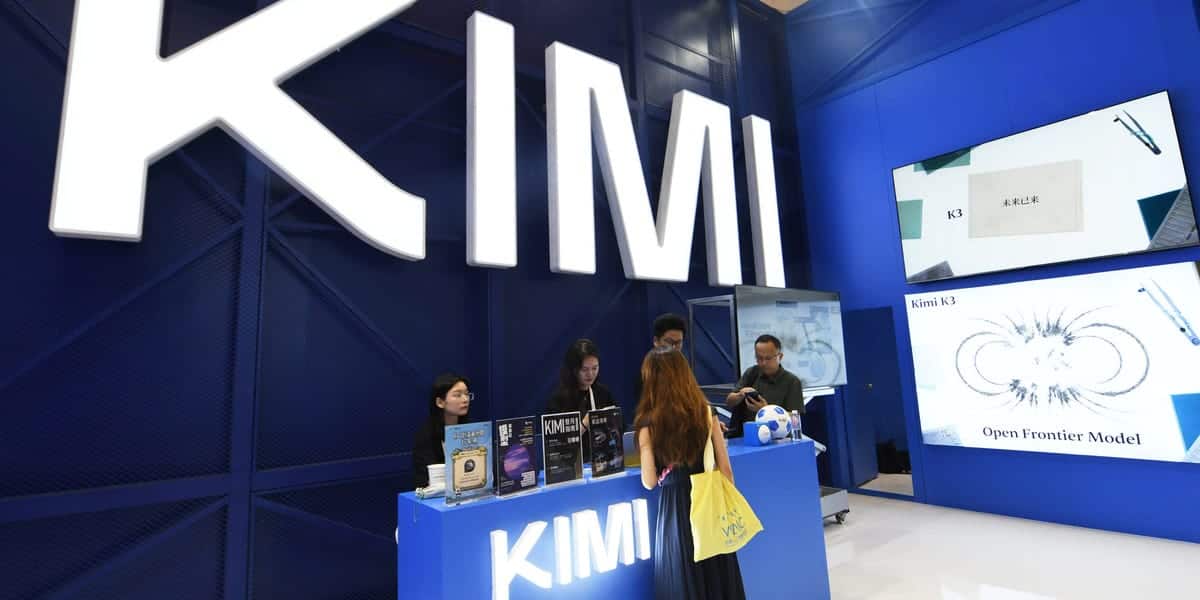
China's Kimi K3 AI model has emerged as a significant development in the global artificial intelligence race, drawing intense interest from investors and intensifying the debate over China's AI capabilities. The model's developer, Moonshot AI, experienced such high demand that it temporarily paused new subscriptions shortly after its launch.
Analysts at Bernstein noted that Kimi K3 represents another instance where China's leading AI laboratories are demonstrating an ability to match the performance of US frontier models, a development that has surprised global investors. Beyond the excitement surrounding Moonshot AI itself, the success of Kimi is directing renewed attention toward Chinese tech giants Alibaba and Tencent, both of whom are investors in the startup. Alibaba holds a 36% stake acquired during a February 2024 funding round, while Tencent is also identified as an investor.
Bernstein analysts suggest that the opportunity for Alibaba and Tencent extends beyond their direct investments. As AI models become increasingly competitive, cloud providers and internet platforms may gain leverage over the model developers. For Alibaba, the success of Kimi is seen as a positive factor for Alicloud's revenue growth. Tencent, meanwhile, may benefit from its desktop AI assistant, Workbuddy, which reportedly garners between 8 million and 9 million monthly visits.
The enthusiasm surrounding Kimi has had a notable impact on stock markets. Alibaba's shares saw an intraday rise of up to 6% in Hong Kong on Monday, while Tencent's stock gained 4%. The Hang Seng Tech Index climbed 4%, with Kimi's performance reigniting the AI narrative that was previously sparked by DeepSeek. The broader Hang Seng Index also saw an increase of over 2%.
However, the rise of competitive, lower-cost Chinese AI models has also fueled a broader debate about AI economics and infrastructure spending. Investors have expressed concerns that these models could diminish the necessity for the substantial investments in AI infrastructure that have underpinned the current market boom. Deutsche Bank analyst Jim Reid noted that Chinese AI models are approaching frontier-level performance while being priced more affordably than comparable US systems, challenging the high compute and capital intensity associated with the current US-led AI stack.