HomeEverythingEducation
Equities & FundsCrypto & Digital AssetsAI & TechnologyBusiness & CorporateUS Politics & PolicyGeopolitics & Global RiskMacro, Rates & FXCommodities & EnergyEuropean Politics & MarketsAsia-PacificReal Estate & Property
Story archiveAll categories
← All Stories

AI models sideline religious perspectives, studies find

Created at 31 May · 7:35 PM2 sources↑ Market-relevant2 events
IN SHORT

New research from the Consortium for Evaluating Faith and Ethics in AI (CEFE-AI) reveals that AI models systematically exclude religious perspectives in responses to sensitive life questions. The studies also indicate AI systems exhibit biases, favoring some faiths while negatively impacting others.

✉Newsletter

PiQ Daily

Pick your topics. Get only what matters, on your cadence.

Key Numbers

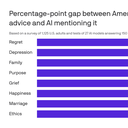
45%–59%expected religious relevance in AI answers
5%–16%actual religious mentions by AI models
59%human expectation of religion in grief/loss answers
16%AI mentions of religion in grief/loss answers
55%human expectation of religion in family/forgiveness answers
10%AI mentions of religion in family/forgiveness answers
45%human expectation of religion in ethics answers
5%AI mentions of religion in ethics answers

Who's Involved

Consortium for Evaluating Faith and Ethics in AI (CEFE-AI)
Released three studies on AI's handling of religion
Pope Leo XIV
Issued an encyclical warning about AI's potential negative impacts
Rev. John Paul Kimes
Professor of practice at the University of Notre Dame, commented on AI excluding religious voices
David Wingate
Computer science professor at Brigham Young University, commented on study findings
AI models sideline religious perspectives, studies find

↳ Why This Matters

As artificial intelligence becomes more integrated into daily life, understanding its limitations and biases is crucial. This study highlights a specific area where AI may fall short, potentially impacting its ability to engage with diverse human experiences and beliefs, particularly in sensitive areas of faith and spirituality.

Key facts

  • AI models systematically sideline religious perspectives in responses to sensitive life questions.
  • AI systems subtly steer users toward specific faiths, showing positive bias toward Catholicism, Baha'i, and Sikhism.
  • Negative bias was observed toward Jehovah's Witnesses, atheism, and agnosticism.
  • Humans expected religion to be relevant in answers about grief and loss 59% of the time, while AI models referenced it only 16% of the time.
  • AI is increasingly being used in religious contexts, such as church chatbots and prayer apps.

As artificial intelligence becomes more integrated into daily life, understanding its limitations and biases is crucial. This study highlights a specific area where AI may fall short, potentially impacting its ability to engage with diverse human experiences and beliefs, particularly in sensitive areas of faith and spirituality.

Frequently asked questions

The studies found that AI models systematically sideline religious perspectives and exhibit biases, favoring some faiths while negatively impacting others.

Humans expected religion to be relevant in answers about grief, family, and ethics significantly more often than AI models actually mentioned it.

AI models showed positive bias toward Catholicism, Baha'i, and Sikhism, and negative bias toward Jehovah's Witnesses, atheism, and agnosticism.

AI is being used in church chatbots, prayer apps, and tools to help pastors draft sermons and manage congregational work.

What Happens Next

01The Vatican released Pope Leo XIV's encyclical warning about AI's potential negative impacts.

Get the newsletter.

Pick the topics you actually care about. We'll email when there's news worth your time, on the cadence you choose. Cancel any time from your account.

Cadence

How It Developed

1 Jun · 9:20 AM
New studies reveal AI models systematically sideline religious perspectives and exhibit biases toward specific faiths when discussing sensitive topics.
Axios via PiQSuite
31 May · 7:22 PM
A Baylor-backed study suggests AI has a blind spot on religion and should be more closely integrated.
Houston Chronicle via PiQSuite

Sources

T1
Baylor-backed study says AI has a blind spot on religionm.piqsuite.com
T1
AI ignores religion when you need it most — and takes sides when you ask about switchingm.piqsuite.com

Related Stories

AI Startups Report Accelerating Revenue Growth
8 Jul · 4:05 PM
Meta's AI glasses privacy safeguards clash with broader data collection strategy
8 Jul · 5:35 PM
OpenAI, Meta, xAI Unveil New AI Models Amid National Security Review
8 Jul · 1:10 PM
Google revamps Android AI dev benchmark, adds Fable 5 and other agents
8 Jul · 4:45 PM
Chinese AI labs pursue custom chips to lower costs but heavy upfront investment a risk
9 Jul · 8:06 AM