Key facts
- Amazon's Zoox has received U.S. approval for commercial deployment of its driverless robotaxis.
- This is the first time a U.S. agency has granted an exemption from rules requiring human controls for an autonomous vehicle.
- The National Highway Traffic Safety Administration (NHTSA) will allow Zoox to deploy up to 2,500 vehicles over the next two years.
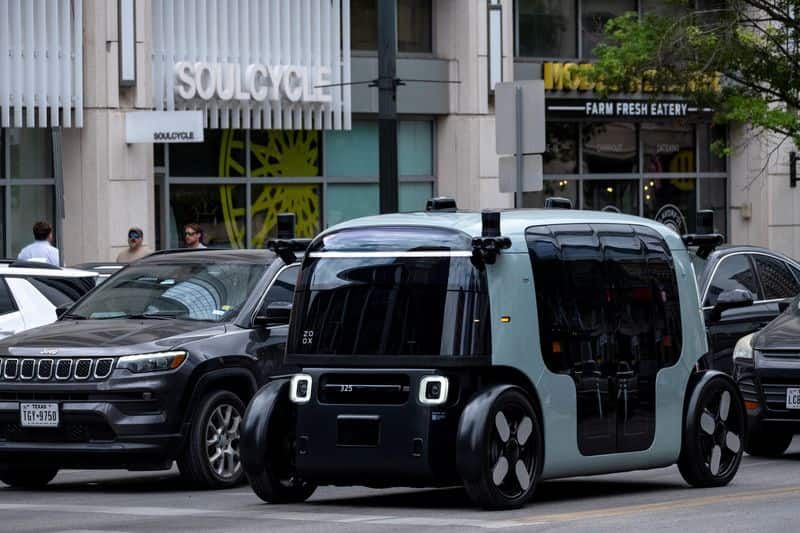
- Zoox's electric vehicle features inward-facing seats and lacks a steering wheel or pedals.
- NHTSA will impose additional reporting requirements on Zoox regarding crashes and operational issues.
Amazon's autonomous vehicle subsidiary, Zoox, has received a significant U.S. approval for the limited commercial deployment of its driverless robotaxis. This marks the first time the National Highway Traffic Safety Administration (NHTSA) has granted an exemption from federal safety rules that mandate human driving controls, a critical step for vehicles designed from the ground up without them.
NHTSA Administrator Jonathan Morrison stated that Zoox's systems meet or exceed the performance requirements of compliant vehicles, but the agency will monitor their operation closely. The exemption allows Zoox to deploy up to 2,500 vehicles annually for the next two years and to charge passengers for rides, subject to state and local approvals. This development positions Zoox ahead of competitors like Tesla, which is also producing a driverless vehicle but has not yet outlined its regulatory approval path, and Alphabet's Waymo.
As part of the approval, NHTSA will impose specific reporting requirements on Zoox concerning incidents such as crashes or inappropriate stops. The agency retains the authority to revoke the exemption if significant safety issues arise. This move comes as regulators grapple with evolving safety standards for autonomous technology, with NHTSA also proposing to update existing rules designed for human drivers. Recently, NHTSA issued a strong letter to AV developers highlighting concerns about driverless vehicles interfering with law enforcement and other first responders, underscoring the ongoing safety scrutiny in the sector.