Key facts
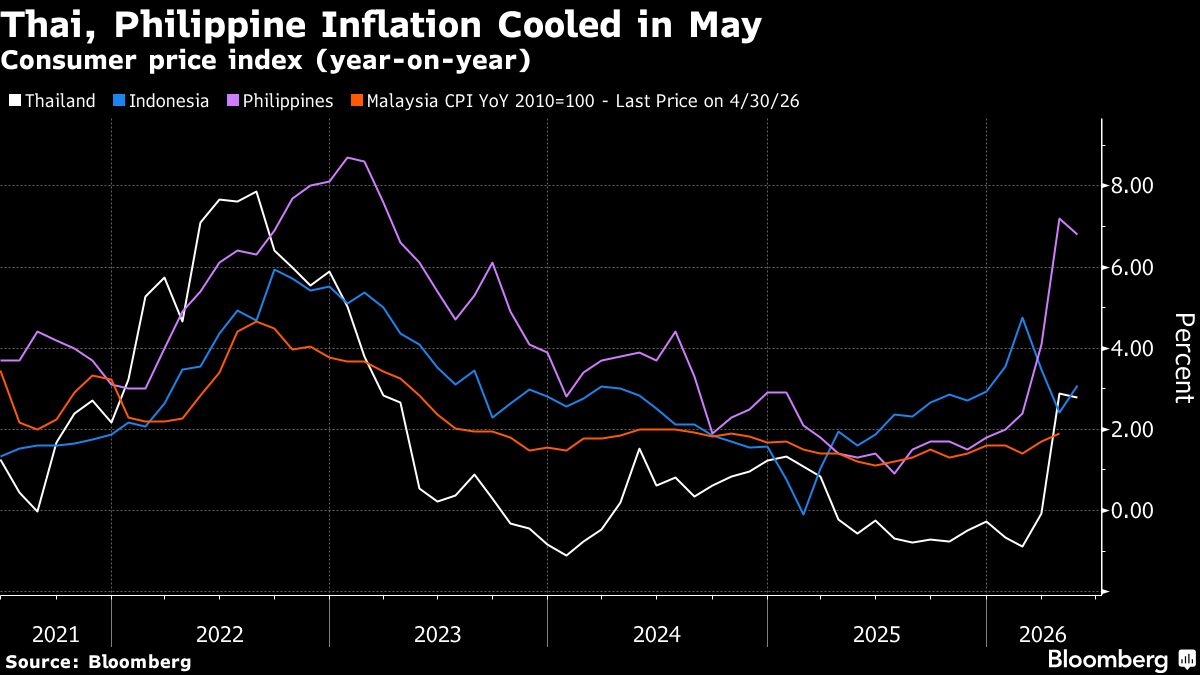
- Philippines inflation slowed to 6.8% in May from 7.2% in April.
- Lower price growth in transport, food, and housing contributed to the Philippines' inflation slowdown.
- The Bangko Sentral ng Pilipinas plans to proceed with a rate hike despite slowing inflation.
- Sri Lanka's inflation accelerated to 4.7% in April, driven by a 14.3% surge in transport prices.
- Kazakhstan's National Bank cut its base rate by 100 basis points to 17%.
- Kazakhstan aims for single-digit inflation by 2026, forecasting 9-11%.
- Switzerland's annual inflation rate remained at 0.6% in May.
- Dallas Fed President Lorie Logan noted rising oil prices as a renewed inflationary driver.
- Inflation in some Southeast Asian nations has eased, potentially reducing pressure for rate hikes.
Global inflation data presents a mixed picture, with some nations experiencing slowdowns while others see accelerations. In the Philippines, consumer price index (CPI) inflation decelerated to 6.8% year-over-year in May, a notable decrease from 7.2% in April and below analyst forecasts of 7.5%-7.9%. This slowdown was primarily attributed to lower price growth in the transport, food, and housing sectors. Despite this deceleration, the Bangko Sentral ng Pilipinas intends to proceed with a planned interest rate hike.
In contrast, Sri Lanka reported an acceleration in its national CPI inflation to 4.7% year-on-year in April. This rise was significantly influenced by a substantial 14.3% surge in transport prices. Core inflation in Sri Lanka also increased, climbing to 4.4% in April from 2.7% in March.
Kazakhstan's National Bank (NBK) took an unexpected move, cutting its base rate by 100 basis points to 17%. This decision was made despite the central bank acknowledging prevalent inflationary tendencies. The NBK's stated aim is to achieve single-digit inflation by 2026, and it has revised its inflation forecast for that year to 9-11%. The bank also upgraded its GDP growth forecast for 2026 to a range of 4.5-5.5%.
Switzerland's annual inflation rate remained stable at 0.6% in May, mirroring April's figure. Monthly CPI saw a 0.2% increase, which was below the 0.3% forecast. Core annual inflation held steady at 0.3%. Contributing factors to the monthly increase included higher housing rentals, hotel prices, and fuel costs. The persistent strength of the Swiss franc continues to exert deflationary pressure, a factor of concern for the Swiss National Bank (SNB).
In the United States, Dallas Fed President Lorie Logan highlighted that rising oil prices are contributing to renewed inflationary pressures. This suggests that the Federal Reserve may need to consider further interest rate adjustments to effectively combat inflation. The easing of inflation in some Southeast Asian nations offers central banks some relief, potentially reducing pressure for further interest rate hikes as fuel price pressures diminish.