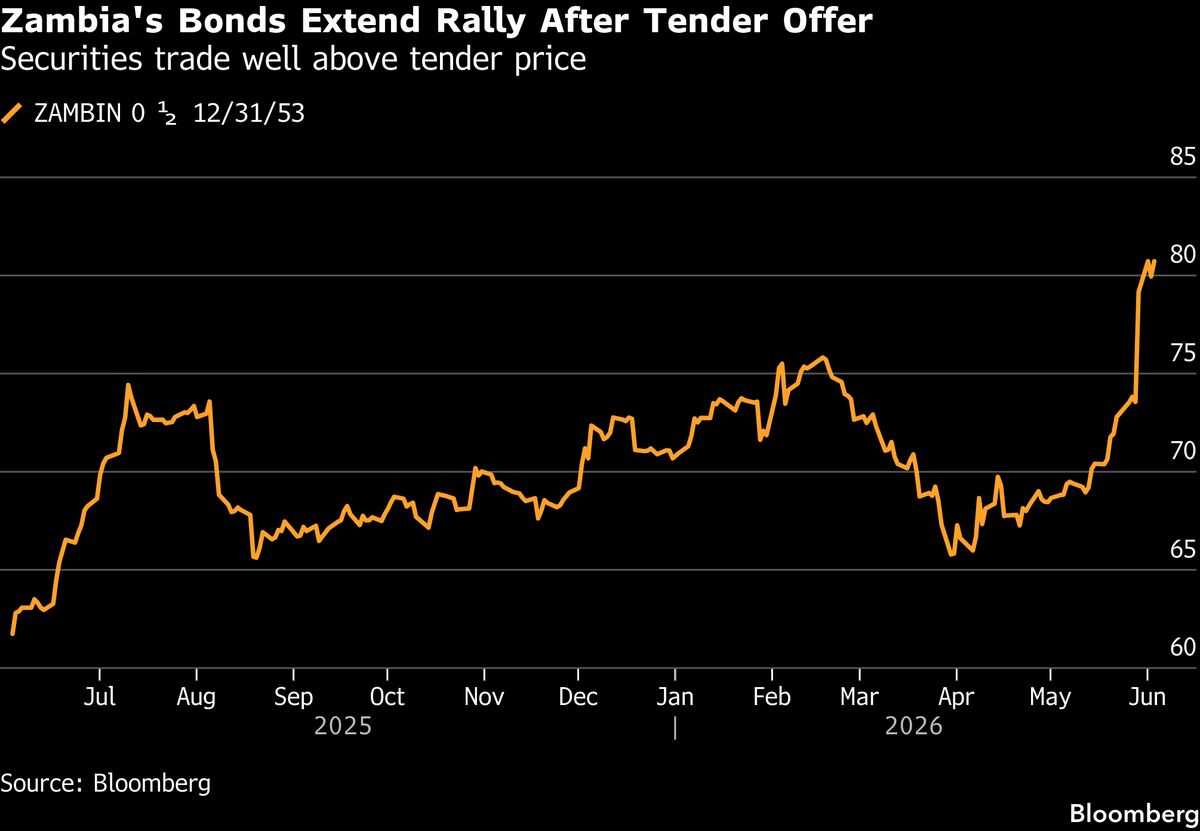
Bangladesh has requested a new loan arrangement from the International Monetary Fund (IMF), aiming to exit its current $5.5 billion program. The move comes as the nation seeks a realistic reform agenda aligned with national priorities and current economic conditions. Meanwhile, Zambia will negotiate with bondholders after a group blocked its attempt to buy back a $1.36 billion bond. Separately, Mozambique has signaled a willingness to devalue its currency ahead of an IMF delegation visit in June, following an early repayment of $630 million in IMF debt. The IMF also appointed Alvaro Piris Chavarri as its new mission chief for Venezuela.
✉Newsletter
PiQ Daily
Pick your topics. Get only what matters, on your cadence.
Key Numbers
$5.5 billionBangladesh's current IMF program size
$1.36 billionZambia's bond buyback attempt value
$630 millionMozambique's early IMF debt repayment
Who's Involved
International Monetary Fund (IMF)
global financial institution providing loans and economic advice
Bangladesh
nation seeking a new IMF lending deal
Zambia
nation negotiating with bondholders on debt restructuring
Mozambique
nation signaling currency devaluation willingness ahead of IMF visit
Alvaro Piris Chavarri
new IMF mission chief for Venezuela
Venezuela
nation seeking debt restructuring and global financial reintegration
Key facts
Bangladesh has requested a new loan arrangement from the IMF.
Bangladesh is exiting its current $5.5 billion IMF program.
Zambia will negotiate with bondholders.
A group of bondholders blocked Zambia's attempt to buy back a $1.36 billion bond.
Mozambique has indicated a willingness to devalue its currency.
Mozambique made an early repayment of $630 million in IMF debt.
An IMF delegation is scheduled to visit Mozambique in June.
Alvaro Piris Chavarri has been appointed as the IMF's new mission chief for Venezuela.
Venezuela seeks to restructure its external debt.
Bangladesh has formally requested a new loan arrangement from the International Monetary Fund (IMF), signaling its intention to exit the current $5.5 billion lending program. Officials confirmed that the government is seeking a new framework for lending that aligns with current economic conditions and national priorities, aiming for a realistic reform agenda. This development is part of Bangladesh's broader economic strategy.
In parallel, Zambia is set to engage in negotiations with its bondholders. This follows an unsuccessful attempt by the nation to buy back a $1.36 billion bond before an anticipated coupon increase, an action that was blocked by a group of bondholders. These discussions are a component of Zambia's ongoing debt restructuring process.
Mozambique's government has also indicated a potential willingness to devalue its currency. Such a move could potentially enhance export competitiveness but carries the risk of increasing import costs and fueling inflation. Authorities in Mozambique are preparing for an IMF delegation's visit scheduled for June. This preparation follows a recent policy shift that included the early repayment of $630 million in debt owed to the IMF.
Furthermore, the International Monetary Fund has appointed Alvaro Piris Chavarri as its new mission chief for Venezuela. Piris Chavarri currently holds the position of assistant director in the IMF's African Department and serves as the mission chief for Ethiopia. This appointment occurs as Venezuela endeavors to restructure its external debt and seeks reintegration into the global financial system.
↳ Why This Matters
Bangladesh has formally requested a new loan arrangement from the International Monetary Fund (IMF), signaling its intention to exit the current $5.5 billion lending program. Officials confirmed that the government is seeking a new framework for lending that aligns with current economic conditions and national priorities, aiming for a realistic reform agenda. This development is part of Bangladesh's broader economic strategy.
Frequently asked questions
Bangladesh is seeking a new arrangement because the current program's reform conditions are harder to implement due to changing economic conditions and global uncertainty.
The current IMF program was expanded to $5.5 billion.
The previous program included reforms on revenue mobilization, energy subsidy rationalization, and exchange rate flexibility.
Bangladesh has raised fuel prices twice in six weeks and increased power tariffs to ease subsidy pressures.
What Happens Next
01IMF staff mission expected in the coming weeks to begin detailed negotiations.
02Bangladesh to start talks with IMF on a framework for the new lending program.
Get the newsletter.
Pick the topics you actually care about. We'll email when there's news worth your time, on the cadence you choose. Cancel any time from your account.