Key facts
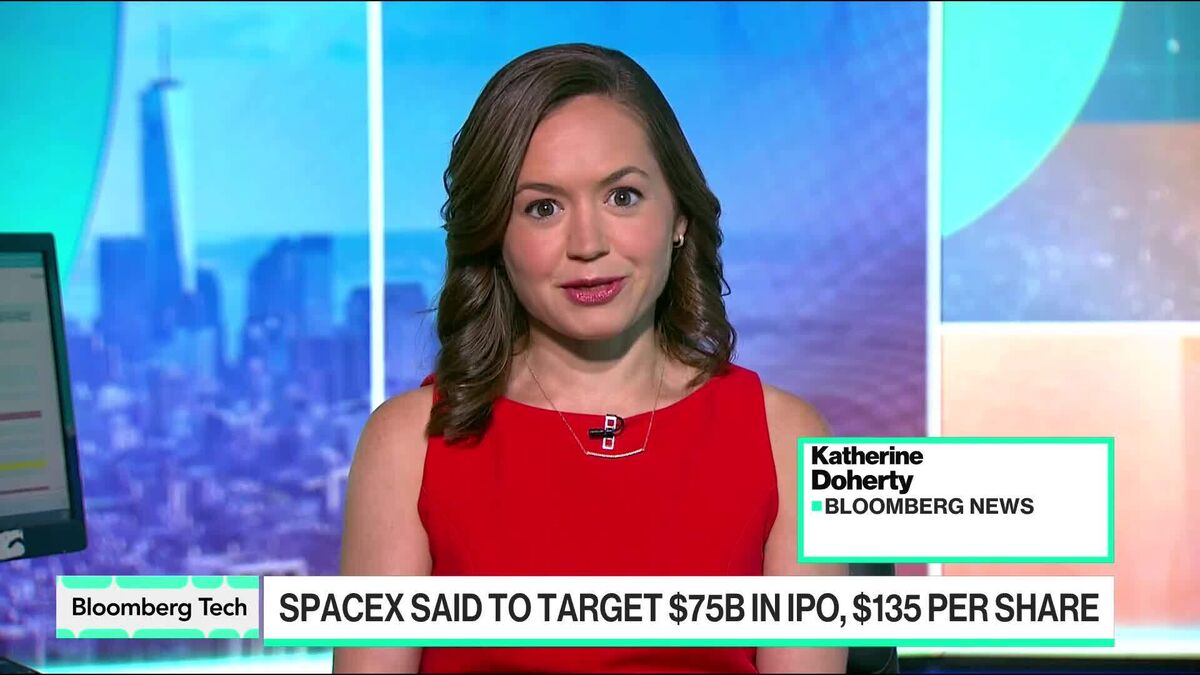
- SpaceX has set its IPO price at $135 per share.
- SpaceX aims to raise $75 billion through its IPO.
- SpaceX is valued at an estimated $1.75 trillion for its IPO.
- The SpaceX IPO is anticipated to be the largest in history.
- SpaceX's investor roadshow begins Thursday.
- SpaceX IPO pricing is expected on June 11.
- SpaceX is expected to begin trading on the Nasdaq on June 12.
- Investor demand for the SpaceX IPO has surpassed $250 billion.
- The offering is reportedly three and a half to four times oversubscribed.
- SpaceX plans to allocate up to 30% of its shares to retail investors.
- Fidelity has reduced its account minimum to $2,000 for retail IPO access.
- Kraken is offering tokenized SpaceX IPO access through its xStocks platform.
SpaceX is poised to launch its Initial Public Offering (IPO), with pricing set at $135 per share and a target valuation of $1.75 trillion, aiming to raise a record $75 billion. This offering is anticipated to be the largest in history, surpassing previous benchmarks. The company's investor roadshow is scheduled to begin on Thursday, with pricing expected on June 11 and trading to commence on the Nasdaq on June 12. Investor demand has been exceptionally strong, with indications that the offering is oversubscribed, with demand reportedly reaching $150 billion to over $250 billion, approximately two to four times the amount SpaceX aims to raise.
Significant portions of the offering are being allocated to individual investors, with Fidelity lowering its account minimum to $2,000 for retail access and SpaceX planning to allocate up to 30% of shares to retail investors across Europe and other regions, managed through a lottery system due to high demand. Crypto exchange Kraken is also offering access to eligible users in over 110 markets through its xStocks platform, providing tokenized shares (SPCXX) that represent a claim backed 1:1 by the underlying stock, allowing for trading post-allocation, though excluding users in the US, Canada, Australia, and the UK.
Despite the strong demand, market concerns persist. Analysts from Citi suggest the market can absorb these mega-IPOs, citing modest initial index weights due to low free floats. However, the IPO's size and potential liquidity drain are being tested alongside earnings from other major tech companies. AT&T shares have seen declines due to fears that SpaceX's Starlink satellite internet could disrupt traditional telecom services. Furthermore, SpaceX's IPO documents are inaccessible in mainland China and Hong Kong, potentially limiting participation from those regions due to an 'Error 1009' message.
SpaceX will not be fast-tracked for inclusion in the S&P 500 index, as S&P Dow Jones Indices will maintain its existing methodology, requiring companies to meet specific criteria including one year of public trading and four consecutive quarters of positive GAAP earnings. This decision impacts investors seeking exposure through the benchmark index. Meanwhile, other companies in the aerospace and defense sector are also seeing IPO activity, with Applied Aerospace & Defense pricing its IPO at $20 per share, raising $650 million and valuing the company at $3.54 billion, listing on the NYSE under the ticker AADX. EchoStar's stock surged after selling spectrum licenses to SpaceX for $17 billion, positioning it as a proxy for SpaceX ahead of its IPO, and options volume for EchoStar has increased due to this anticipation. Employees and university endowments holding SpaceX stock are expected to benefit financially from the IPO.