Key facts
- Agricultural futures faced selling pressure due to potential US tariffs on Brazil.
- US jobless data came in higher than expected.
- US commercial crude inventories fell by 8 million barrels in the week ending May 29th.
- Copper futures rebounded after mid-session losses.
- Goldman Sachs and Citigroup raised copper price forecasts.
- Central banks purchased 244 tonnes of gold in Q1 2026.
- US corn export inspections are projected at 1.90 million metric tons next week.
- Soybean export inspections could be 600,000 MT, down 16% from the prior week.
- The Philippines booked 190,000 metric tons of soy meal.
- Soybean futures settled lower at 1117'4 due to weak sales and Brazilian competition.
- Corn futures declined for a sixth consecutive session.
- July hog futures confirmed support at the $100 level.
Agricultural futures faced selling pressure driven by multiple factors, including the threat of US tariffs on Brazil and a higher-than-expected US jobless report. Favorable crop conditions for corn and soybeans also contributed to the downward trend, alongside broader geopolitical tensions creating market uncertainty. In energy markets, US commercial crude inventories decreased by 8 million barrels to 433.7 million barrels in the week ending May 29th, marking the sixth consecutive weekly decline. Despite this sharp drop, AgResource Company anticipates that a lasting break in energy prices is unlikely due to a tight balance sheet.
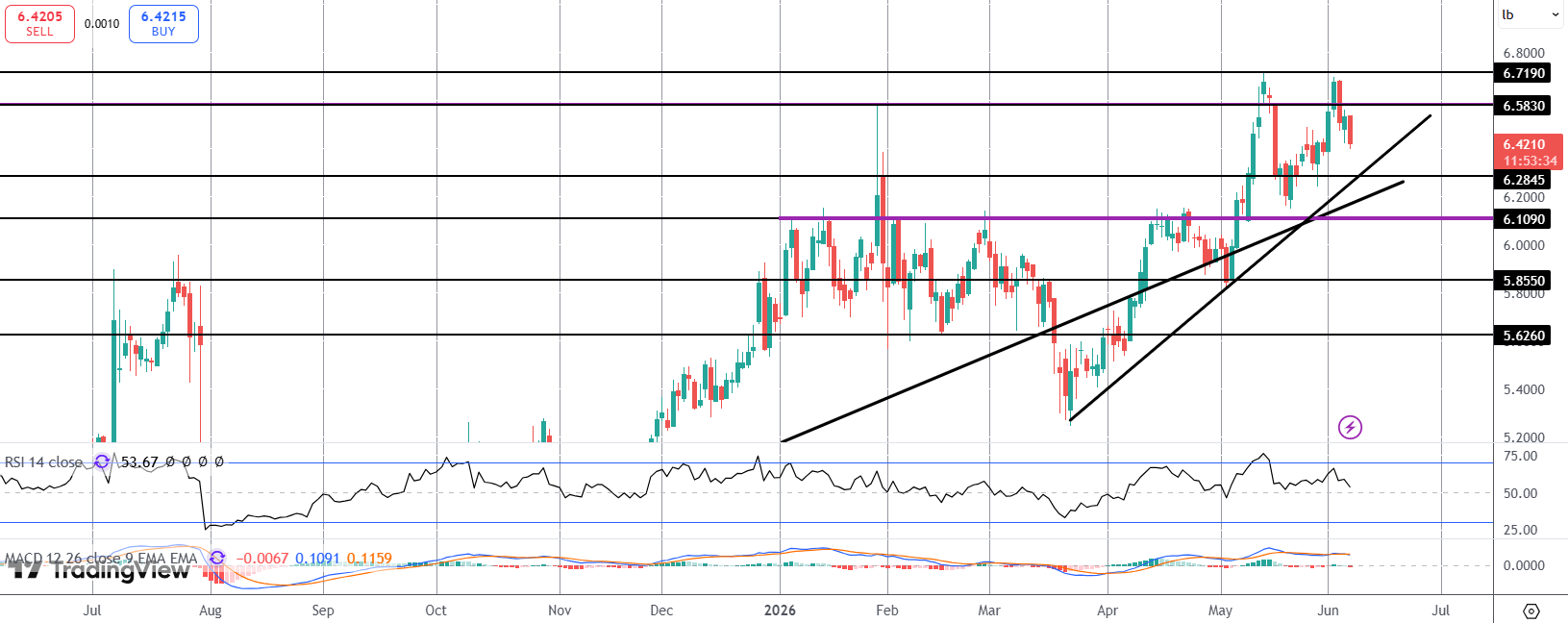
Copper futures experienced a mid-session rebound, recovering from earlier losses to turn positive. Goldman Sachs and Citigroup have raised their copper price forecasts, citing projected supply shortfalls and mine disruptions. In the precious metals market, central banks purchased 244 tonnes of gold in Q1 2026, which is providing a structural floor for the metal. Looking at agricultural exports, next week's US corn export inspections are projected at 1.90 million metric tons, representing a 10% increase from the previous week. June Census corn exports are estimated at 8.09 million metric tons. Conversely, soybean export inspections could see a decrease of 16% from the prior week, totaling 600,000 metric tons. The Philippines has booked 190,000 metric tons of soy meal.
Agricultural futures have been consolidating as managed money liquidations reduced the market's risk premium. Mixed US weather forecasts and a jobs report with caveats have contributed to choppy trade. Soybean futures settled lower at 1117'4, impacted by an 8% week-over-week drop in export sales and increased competition from Brazil. Corn futures also declined for a sixth consecutive session. Wheat futures showed mixed activity, influenced by rainfall in China. Market participants are awaiting the upcoming USDA report. In other commodity news, CME hog futures recovered from an early decline, having been initially pulled lower by sharp drops in cattle markets. July hogs confirmed support at the $100 level and closed near session highs.