Key facts
- The U.S. federal government launched a new AI strategy with $2.3 billion in funding.
- The U.S. administration is developing AI chatbots for medical diagnosis and prescription.
- President Trump is open to the U.S. government taking ownership stakes in AI giants.
- The Trump administration endorsed D-Wave's second quantum computing approach.
- IBM plans to invest over $10 billion in quantum computing over five years.
- IBM aims to prepare 30 million people for AI by 2030 with a focus on mindset.
- The ECB is urging banks to prepare for AI cybersecurity risks.
- Amgen CEO Bob Bradway has invested in AI for drug discovery since 2012.
- Palantir CEO Alex Karp criticized "tokenmaxxing" in AI.
- Indian Prime Minister Narendra Modi is promoting sovereign AI capabilities.
- Wyoming Governor Mark Gordon signed an executive order for AI data center development.
- Utah Senate President J. Stuart Adams requested a 75% reduction in Kevin O'Leary's AI data center project.
The U.S. federal government has initiated a new AI strategy, allocating $2.3 billion to foster wider adoption and enhance public trust in AI technologies. This initiative aims to bridge the "adoption gap" and address concerns regarding AI's integration into society. Concurrently, the administration is developing AI chatbots for medical diagnosis and prescription, a move that has prompted physicians to voice concerns about potential AI-introduced problems in healthcare. President Trump has also expressed openness to the U.S. government acquiring small ownership stakes in major AI companies, allowing the American public to benefit from their substantial valuations, a concept echoed by OpenAI CEO Sam Altman and Senator Bernie Sanders. Furthermore, the Trump administration has publicly endorsed D-Wave's second quantum computing approach, with the company's CEO detailing the specifics of this support and their ongoing work.
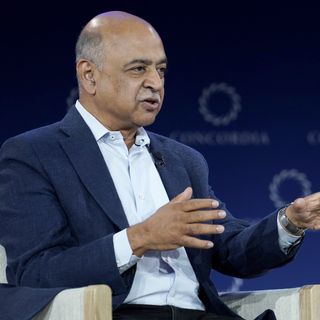
Globally, IBM is making a significant commitment to quantum computing, planning to invest over $10 billion in research and development, manufacturing, and partnerships over the next five years, with the goal of a large-scale, fault-tolerant quantum computer by 2029. IBM is also reorienting its AI training programs to emphasize a continuous learning mindset rather than specific skillsets, aiming to prepare 30 million individuals by 2030 and expanding access to its AI coding agent, IBM Bob. In Europe, the European Central Bank (ECB) is advising banks to proactively address escalating cybersecurity risks posed by advanced AI models, noting that over 85% of European banks already utilize AI, but frontier models could lower barriers for attackers. Amgen CEO Bob Bradway is navigating AI's dual impact, promoting adaptable leadership while recognizing the need for deep scientific expertise, and has been investing in AI for drug discovery since 2012, with plans for agentic AI in 2026. Palantir CEO Alex Karp has criticized "tokenmaxxing" in AI as akin to porn addiction, warning that excessive token usage without clear business objectives leads to "slop" and that AI requires systems like Palantir's AIP to prevent economic harm. In India, Prime Minister Narendra Modi is championing the development of sovereign AI capabilities tailored for the nation's population and languages, signaling a strategic shift beyond its traditional role in global tech services.
Regulatory and development frameworks are also evolving. Wyoming Governor Mark Gordon has signed an executive order to guide AI data center development, aiming to attract investment while managing power costs, water usage, workforce needs, and environmental reviews. Conversely, Utah Senate President J. Stuart Adams has requested a 75% reduction in Kevin O'Leary's proposed AI data center project due to concerns over water conservation, environmental impact, and energy demands, though O'Leary remains committed to the project. AI researcher Gary Marcus views the recent U.S. executive order on AI regulation as a significant milestone, marking a departure from the previous administration's less interventionist stance. Goldman Sachs CEO David Solomon anticipates that AI may lead to a slight decrease in entry-level hiring over the next three years, though the bank intends to continue hiring thousands of interns and graduates. GLAAD CEO Sarah Kate Ellis has cautioned that AI models trained on biased data risk perpetuating harmful rhetoric against the LGBTQ+ community, potentially causing real-world harm, particularly to transgender and non-binary individuals.
Discussions around potential future negotiations with Iran are also underway, with former Trump administration officials Steve Witkoff and Jared Kushner meeting with nuclear experts to prepare for discussions on a memorandum of understanding to end the war and address Iran's nuclear program.