Key facts
- China has tested a new electromagnetic detection system called Airborne Transient Electromagnetic (Atem).
- The system involves a helicopter towing a large coil array.
- Atem works by sending an electrical pulse to create an electromagnetic field.
- This field induces eddy currents in conductive materials, which then emit a detectable signal.
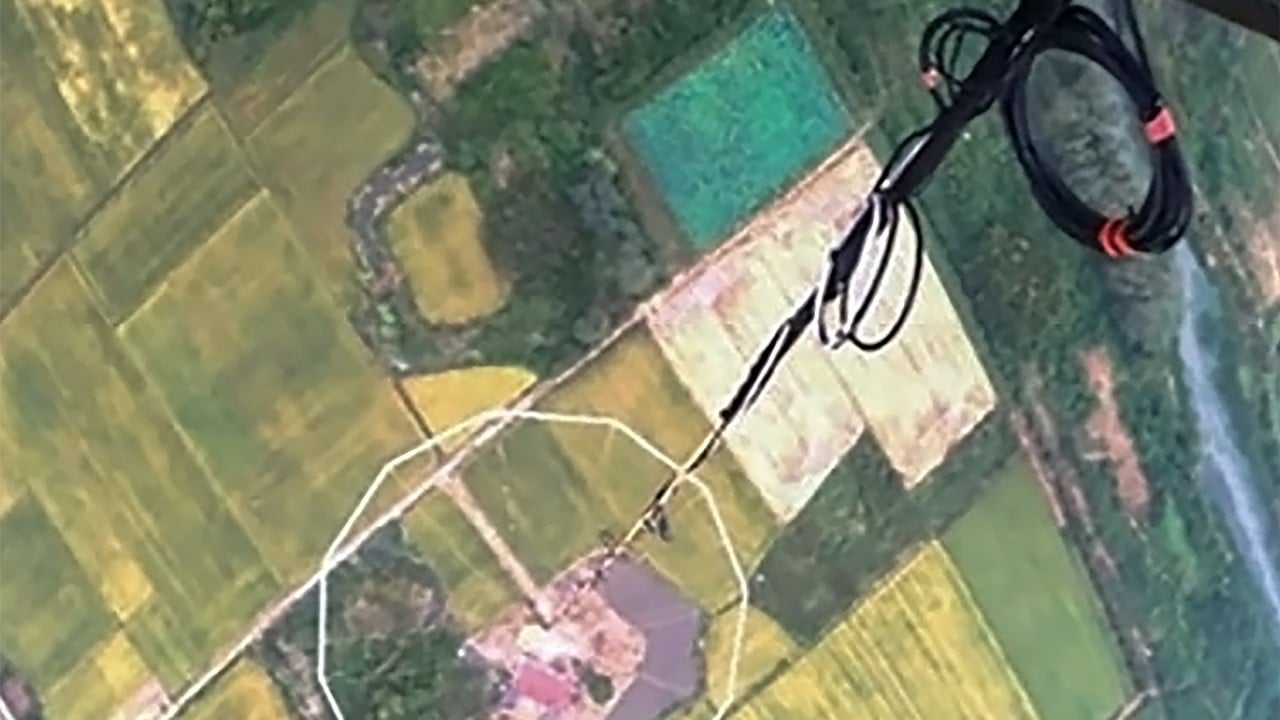
At an undisclosed test site, a helicopter has been observed towing a large, kite-like array of massive coils. This system, identified as Airborne Transient Electromagnetic (Atem) detection, is designed to identify conductive materials, potentially including nuclear submarines, by utilizing powerful electromagnetic pulses.
The Atem system operates by firing a strong pulse of electricity through a giant transmitter coil, generating a brief but intense electromagnetic field. This field penetrates the ground or water. When the pulse is deactivated, the decaying magnetic field induces tiny "eddy currents" in any conductive material it encounters. These eddy currents subsequently generate their own secondary electromagnetic field, which can then be detected.